// SMALL BUSINESS
How Much Does a Website Cost for a Small Business in Canada?

If you have searched "website design cost" or "how much does a website cost," the honest answer is that there is no single number. A website for a small business in Canada can cost anywhere from nothing but your own time to well over twenty thousand dollars, and almost every figure you find online is really describing a different product wearing the same label. The real question is five or six smaller questions stacked on top of each other: who builds it, what it needs to do, who owns it once it exists, and what you keep paying for after launch. This guide will not hand you a made up average, because an average across wildly different products tells you very little about your own project. Instead it walks through the real factors that move the price, the costs that show up only after the first invoice, and the questions that tell you more about a quote than the number at the bottom of it.
Why "How Much Does a Website Cost" Never Gets a Straight Answer
Search for this question and you will mostly find pages written by the people selling you the answer. A website builder's blog will tell you a website should cost almost nothing, because that is what their product costs. A design agency's pricing page will tell you a serious business needs a serious investment, because that is what they sell. A hosting company's guide will spend most of its word count on hosting. None of this makes any of them dishonest exactly, but it does mean the number you land on usually says more about which page you happened to read than about what your business actually needs.
The second problem is that most guides price "a website" as if it were one product, when in practice you are choosing between several structurally different things: a basic online brochure, a lead generating site with forms and booking, an online store, or a fully custom build with its own features. These are not small variations on a theme. They are different projects with different skill requirements, different timelines, and different prices, and comparing a quote for one against the sticker price of another is where a lot of business owners get a number stuck in their head that has nothing to do with what they are about to buy.
What Actually Drives Your Website Design Cost
Underneath all the marketing, a handful of real factors decide what a website costs, and they apply whether you build it yourself, hire a freelancer, or go with an agency.
How much of it is custom versus templated. A site built from an existing template, with your logo, colours and text dropped in, takes far less time than a site designed from a blank page to match a specific brand and layout. Time is the biggest cost in website design and development, whether that time is billed to you directly or built into a subscription price you never see broken out.
How many pages and how much functionality. A five page brochure site with a contact form is a different job from a site with online booking, a members area, multiple languages, or an online store with inventory and payment processing. Every additional moving part adds build time and, usually, ongoing cost to keep it running.
Who writes the words and takes the photos. Content is routinely left out of website quotes, then added back in as a separate line item once the designer asks for text and the business owner does not have any ready. Writing your own website copy or hiring it out is a direct trade between dollars and hours.
Where the skill is coming from. A website builder subscription, a freelancer working solo, a small local agency, and a large agency with a full team all charge differently for the same brief, because they have different overhead, different speed, and different depth of experience behind the result.
What happens after launch. A site is not a one time purchase. Hosting, a domain renewal, security updates, and any changes you want made later are an ongoing cost almost nobody prices clearly up front, which is the subject of the next section.
Five Ways to Get a Website Built, and Who Each One Actually Suits
Rather than a single number, it helps to think in tiers. Each one trades money for time, control, or both.
Do it yourself on a website builder. You pick a template, write the words, and publish it on a drag and drop platform. This is the lowest cash cost of any option, but it is not free: expect real hours spent learning the tool, writing content, and fixing layout quirks that a professional would solve in minutes. It suits a business with a very simple need (hours, location, services, a contact method) and an owner willing to spend a weekend or two on it. It suits almost nobody who needs the site to actively generate leads through search, since most builder templates are not built with search visibility as the priority. For a closer look at that trade-off, see Small Business Website Builder or Hired Help: How to Decide.
Buy a template and hire a freelancer to set it up. A freelance designer or developer installs and customizes an existing template, writes basic on page SEO, and connects a contact form, usually for noticeably less than a fully custom build. This suits a simple brochure site where the budget is tight but you want it to look intentional and function properly, and you are comfortable that the result will look recognizably like other sites built on the same template.
Hire a freelancer or small studio for a custom build. Design and development start from your brand and your actual pages rather than a template, usually costing more than the template route because more hours go into layout, design decisions, and testing. This suits a business that wants a site that looks and feels distinctly its own and has specific functionality beyond a brochure, such as booking, quoting forms, or a simple product catalogue.
Hire a small to mid sized agency. You get a team rather than one person: a designer, a developer, sometimes a strategist or copywriter, usually at a materially higher price than a solo freelancer for a comparable project, because you are paying for more hands, more process, and more accountability if something goes wrong. This suits a business that needs the site done reliably and on a schedule, wants ongoing support from the same team, or needs several integrated systems (booking, payments, a customer database) working together.
Hire a large agency for an enterprise build. Full teams, formal project management, and the highest price tier of the group, usually justified by complex integrations, multiple stakeholders who need to sign off, or compliance requirements that a smaller shop is not set up to handle. This suits a business of meaningful size and complexity. Most small businesses in Canada do not need this tier, and paying for it without needing it is one of the more common ways owners overspend.
Nobody outside your own project can tell you which tier fits from a keyword search alone. The honest way to find out is to write down exactly what the site needs to do before you ask anyone for a number, then get quotes against that specific list rather than a vague idea of "a website."

The Costs Nobody Mentions Until After You Have Paid
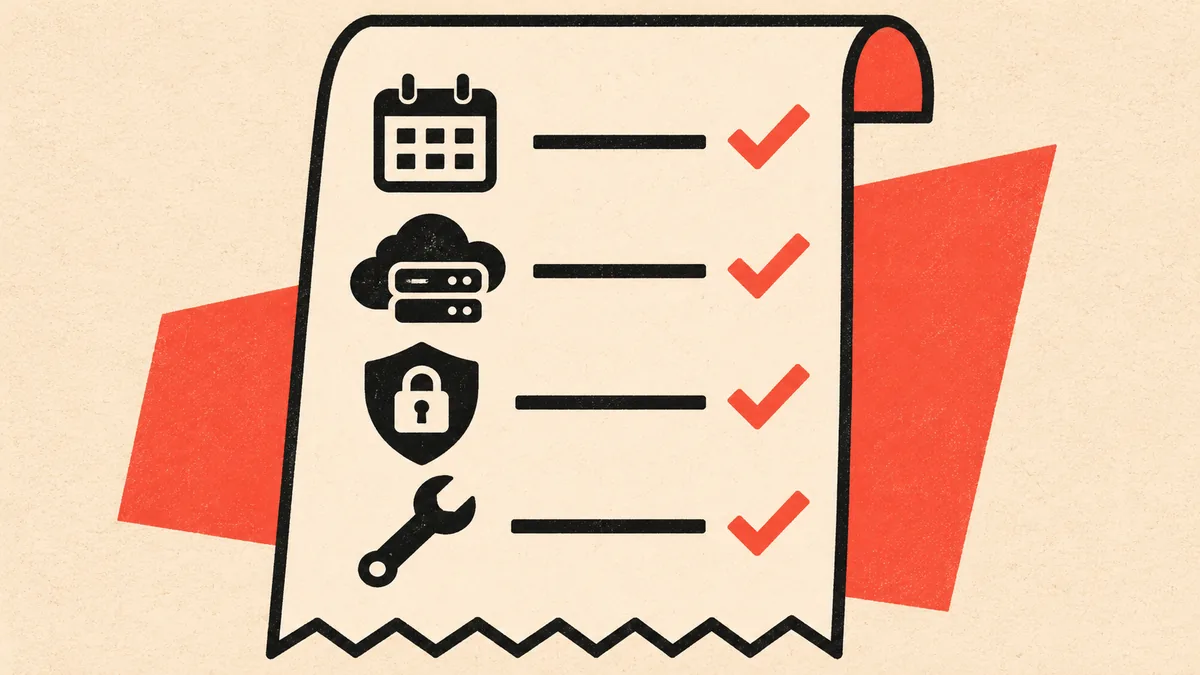
The sticker price for building a site is rarely the full story. A website carries ongoing costs for as long as it stays online, and a quote that only covers the build is an incomplete quote.
Domain name renewal. Domains are often sold cheaply, or even free, for the first year as a promotion, then renew at a higher standard rate every year after. If a quote only shows you the first year's domain cost, ask what the renewal rate is before you sign anything.
Hosting. Somewhere has to actually serve your website to visitors, every day, every year. Hosting ranges from a shared, low cost plan to a managed hosting service bundled into an agency's monthly retainer, and the right tier depends mostly on how much traffic the site gets and how much uptime and support you want behind it. See what small business web hosting in Canada actually involves for a full breakdown.
Security and SSL. Browsers now flag sites without a valid security certificate, and a certificate needs to be kept current. Most modern hosting and website platforms include this, but it is worth confirming rather than assuming.
Maintenance and updates. Software that runs a website, whether a content management system, plugins, or a page builder, needs regular updates to stay secure and keep working. Some providers bundle this into a monthly plan; with others, it is an unpriced gap that only becomes visible the day something breaks.
Content changes. Updating your hours, adding a new service, or swapping out old photos is either something you can do yourself through an easy editor, or something you have to pay someone else to do every single time. Ask how changes after launch are handled, and whether there is a limit on how many you get before extra charges start.
Apps, forms and integrations. A booking calendar, an email marketing connection, a payment processor, or a live chat widget often carry their own separate subscription fees on top of whatever you paid to build the site. These add up quietly if nobody lists them for you up front.
A fair way to think about a website's true cost is as a first year number (the build, plus a full year of everything above) and then a recurring annual number after that, rather than a single build price that quietly ignores everything that follows it.
Who Owns What: Avoiding the Lock-In Trap
One of the most important questions in any website project has nothing to do with the price: who actually owns the domain, the hosting account, and the code once the project is finished?
Some providers, particularly subscription style platforms and a few agencies, build your site on a system that only they control. If you ever want to leave, you cannot simply take the website with you. You may lose the design, the content, or the ability to move to a different host without rebuilding from scratch. This is sometimes a reasonable trade for a lower monthly price and less technical responsibility on your side, and sometimes it is a trap that only becomes obvious the day you try to switch providers and find out the site cannot leave.
Before you sign anything, ask directly: is the domain registered in my business's name, in an account I control? Can I export the website, or move it to a different host, if I want to later? Will I be given the code and files, or only access to edit content inside someone else's system? None of these questions are rude to ask a provider, and a provider who gets uncomfortable answering them is telling you something useful about how the relationship works after you have paid.
What Can Go Wrong, and How to Avoid It
Most website projects go fine. The ones that go wrong tend to fail in a small number of predictable ways, and knowing them in advance is the easiest way to avoid them.
A freelancer becomes unavailable partway through. Solo freelancers sometimes take on more work than they can finish, get busy with a bigger client, or simply become hard to reach. Ask about their current workload and how they handle a gap if something comes up, and get a realistic timeline in writing rather than a vague "a few weeks."
Scope creep without a clear agreement. "Can you also add a booking system" feels like a small ask in the moment and can quietly double a project's size if it was never written down as part of the original scope. A written list of exactly what is included, before work starts, protects both sides.
Content was never actually part of the quote. If nobody wrote the words or chose the photos before the quote was given, assume content is a separate cost or a separate job for you, not something quietly included.
Forms that fail silently. A contact form or booking form that stops sending emails, due to a server setting or a plugin update, can go unnoticed for weeks while a business simply stops hearing from the website. Test every form regularly after launch, not just once on the day it goes live, and ask your provider how a broken form would even be noticed.
No plan for what happens after launch. A business that signs off on a finished site with no agreement about who handles updates, security, or small content changes often finds out the hard way, usually when something breaks right before a busy weekend.
Privacy and accessibility left as an afterthought. Any form that collects a customer's name, phone number or email touches Canadian privacy law (PIPEDA federally, with provincial equivalents in some provinces), and a growing number of businesses are expected to make their sites usable for visitors with disabilities. Neither needs to be complicated for a small business site, but both are worth a direct conversation with whoever builds it, rather than an assumption that it is automatically handled.
GST, HST and What Belongs in a Quote
A Canadian website quote should be clear about tax, and it is a reasonable thing to ask about directly. Under the Canada Revenue Agency's small supplier rule, a business generally has to register for GST or HST once its revenue passes $30,000 in a single calendar quarter or across four consecutive quarters, and must charge it on taxable sales from that point on. A freelancer or small studio under that threshold may legitimately not charge GST or HST at all; a registered studio or agency will, and it should appear as its own line on the invoice rather than folded invisibly into a bigger number. If a quote does not say one way or the other, it is a fair question to ask before you sign.
What a Website Chosen the Right Way Gives Back
- +A site that matches what the business actually needed
Starting from a written list of must have features avoids paying for complexity nobody uses and avoids outgrowing a site within a year.
- +A predictable first year and a predictable year after that
Pricing out hosting, maintenance and renewals up front means no unpleasant invoice six months after launch.
- +A way out if the relationship does not work
Knowing who owns the domain, the code and the content before you sign means you are never stuck with a provider who stops being a good fit.
- +Fewer silent failures
A business that knows to test its own forms and ask about update plans tends to catch small problems before they become missed enquiries.
- +A site search engines and AI tools can actually read
A properly built site, regardless of which tier built it, should load fast and be readable by both people and the AI tools now summarizing search results, which is a build quality question as much as a design one.
- +Confidence in what you are comparing
Understanding the five tiers above means a quote of any size can be judged against what it is actually promising, not just against another number from a different kind of project.
How Underdog Approaches Website Pricing
Underdog Creative Solutions is a Saskatoon based agency working with small and growing businesses across Canada and the United States. We do not publish a single website price because, as this guide explains, "a website" is not one product. What we do instead is start every conversation with what the site actually needs to do, give a clear breakdown of what is included in the build and what carries on as an ongoing cost, and tell a business plainly if a smaller or simpler option would serve them just as well.
We also pay close attention to how AI tools and search engines read a small business website, and we build AI receptionists, create ongoing content, and set up AI business automation that connect naturally to a new or rebuilt website once it exists. You do not need all four to start, and we would rather help you figure out which one solves your actual problem first than sell a bundle you are not ready for.
Getting a Fair Quote for Your Website
Because cost depends so heavily on what you actually need, the most useful thing you can do before asking anyone for a number is write down, in plain language, what the site has to do: how many pages, whether it needs booking, forms, online payments, or a product catalogue, and who is responsible for writing the words and choosing the images.
Worth asking any provider directly, whichever tier you are considering: what exactly is included in this price, and what would trigger an extra cost? Who owns the domain, the hosting account and the code once the project is finished? What happens after launch, who handles small changes, and is that included or billed separately? Is GST or HST included in this number, or added on top? What is a realistic timeline, given everything you have just described to them?
If you want an honest read on what your business actually needs, and what that would realistically cost across the different ways to build it, review our pricing page, message us on WhatsApp at +1 (306) 518-7811, or call +1 (306) 518-7811. You can also book a free 15-minute discovery call.