// SMALL BUSINESS
Small Business Website Builder or Hired Help: How to Decide
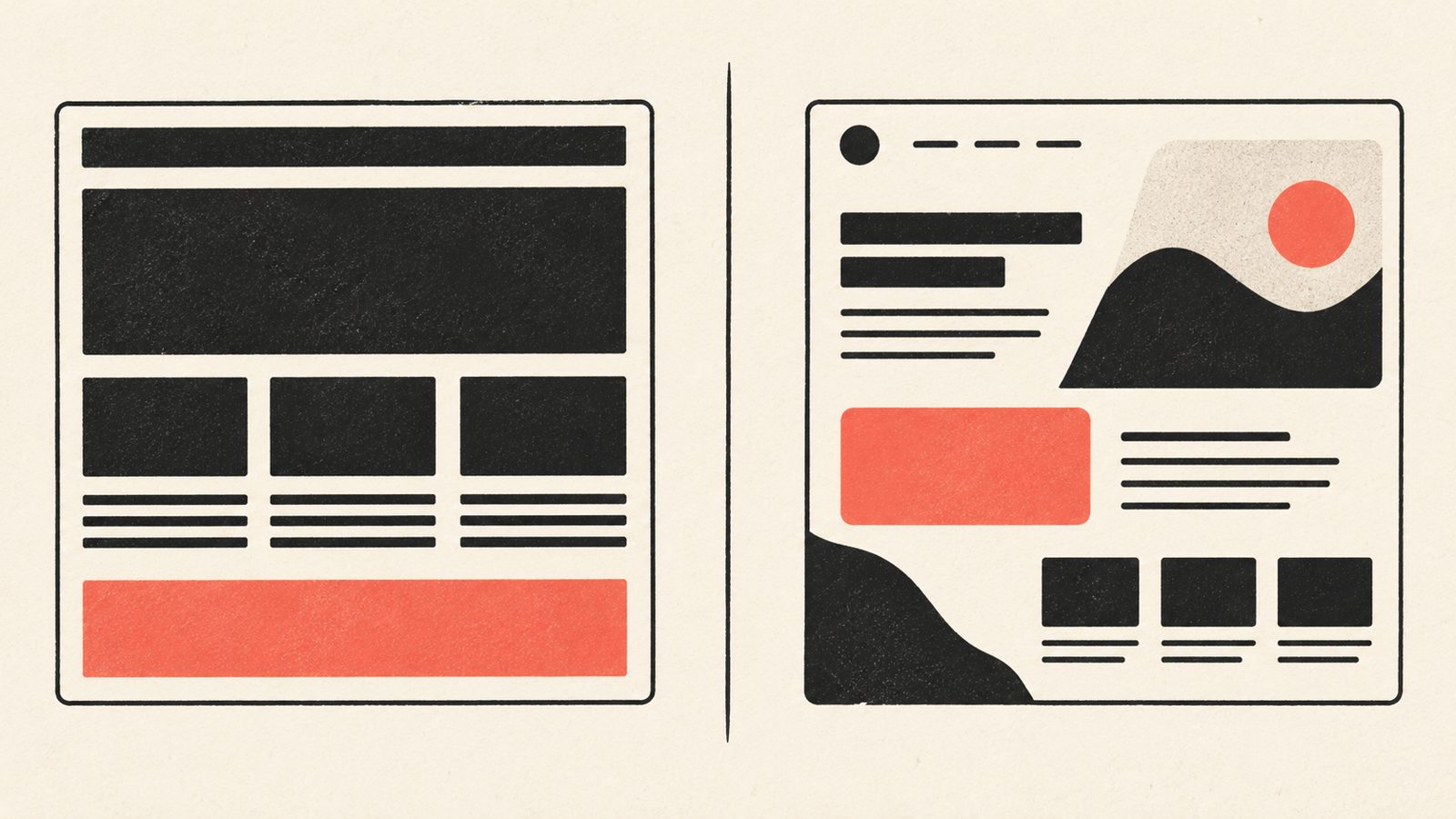
Short answer: a website builder is a reasonable choice if your business is simple, you have real time to build it yourself, and being found by search and AI tools can wait a little. Hiring help tends to be worth it once the business is more complex, time is tight, or the site needs to perform from day one. The rest of this guide helps you work out which situation actually describes your business. Search "small business website builder" and the page fills up with specific platforms ranked against each other, sometimes by an AI generated summary doing the ranking before you even scroll. None of it asks the question that actually matters first: is a do it yourself builder the right tool for your business, or are you setting up a rebuild in a year or two? This guide skips the platform rankings. It walks through a plain framework for deciding, what you actually get from each option, what to look for if you do build it yourself, the real signs a DIY site has quietly become a liability, and when paying for help now costs less than fixing things later.
Why this decision is harder than the comparison lists make it look
Most of what comes up when you search this topic treats the choice like picking a phone plan: compare features, compare price, pick the one with the best score. A website is not that simple, because the right answer depends on your business, not on which builder currently has the most features.
A simple service business that mainly needs people to find its phone number and hours has very different needs from a business selling dozens of products online, booking appointments, or operating in three cities. This diy website vs hiring a designer decision depends on those specifics, not on a feature scorecard that treats every business the same.
The other piece most guides skip is time. Building your own site is rarely free even when the builder itself has no monthly cost worth mentioning, because you are paying with hours you could spend running the business. Whether that trade is worth it depends entirely on how much time you have and how complex the result needs to be, which is exactly what a decision framework needs to account for and a feature comparison cannot.
What you actually get from a website builder versus hiring help
Small business website options in Canada generally fall into two categories: building it yourself with an all in one website builder, or hiring a freelancer, a small studio, or an agency to build it for you.
A website builder for small business owners is usually a drag and drop editor with ready made templates and hosting bundled together, letting you design and publish a site yourself without writing code. You pick a template, swap in your own text and images, and publish. The trade off is that you are working inside the limits of whatever that template and platform allow, and you are the one doing the work.
Hiring help buys you someone else's time and judgement instead of your own. A person who builds websites for a living will usually make different structural decisions than a template nudges you toward: how pages are organized, what loads first, how the site is written so both visitors and search engines understand it quickly, and how it is built to grow instead of getting replaced. You are paying for that judgement and for getting your own time back, not only for the finished pages.
Neither option is automatically better. A builder is a legitimate tool for the right job, and hiring help is not automatically worth it just because it sounds more professional. The decision below is about matching the option to the job, not about which one wins in general.

A plain framework for deciding: start with three questions
There is no single best way to build a small business website that fits every business, which is exactly why the framework below starts with questions about your business rather than a platform. Answer these three plainly before comparing any platforms or quotes. They matter more than any feature list.
How much does the site actually need to do? A business with a handful of services, a set location or two, and a simple way to get in touch needs far less than a business selling products online, taking bookings, running in multiple cities, or needing the site to integrate with other software such as a calendar or a customer list. The more moving parts, the more a template approach tends to strain.
How much time do you actually have, not how much you wish you had? Building a simple site yourself with a builder can realistically take anywhere from a few focused evenings to several weekends, depending on how comfortable you are learning new software and how much content you need to write. If you do not have that time to give, or would rather spend it serving customers, that alone can settle the decision regardless of budget.
Does being found by search engines and AI tools matter right now, or can that wait? A site that only needs to exist as a digital business card, something you link to from a social post or hand out on a card, can get away with less. A site that needs to actually bring in enquiries, and increasingly a site that needs to show up when someone asks an AI tool like ChatGPT or a Google AI Overview a question about a business like yours, benefits from being built with that in mind from the start rather than bolted on afterward.
If your answers point to a simple site, real time available, and findability that can wait, a builder is a reasonable place to start. If any one answer points the other way, that is worth weighing seriously before you commit a weekend to building it yourself.
What are the real limits of building it yourself?
These are not reasons a builder is a bad tool. They are the trade offs that come with the convenience, and knowing them upfront helps you decide with open eyes rather than finding out later.
Design and layout only go as far as the template allows. Templates are built to look reasonable for a wide range of businesses, which means they rarely look exactly right for any one business. You can usually change colours, fonts, and images, but restructuring how a page is laid out is often limited or not possible at all.
The learning curve eats real time, even on tools built to be simple. Formatting one page the way you want, troubleshooting why an image will not resize correctly, or figuring out why a section looks different on a phone than it did while you were editing on a laptop are the kind of small frictions that add up to hours you did not plan for.
Site speed and technical structure are mostly out of your hands. Builder platforms often load more code than a page strictly needs, because the same system has to support every kind of page a customer might build. A slower site affects both visitors, who leave pages that take too long to load, and how easily search engines and AI tools can read and understand the page.
Control over the details that help you get found is usually limited. Things like how a page's title and description appear in search results, how headings are structured so a page's main point is clear to a skimming reader or an AI tool, and how quickly a page actually loads are all harder to fine tune on a template than on a site built with those specifics in mind from the start.
Moving away later can be harder than it sounds. Content you wrote inside one builder's system does not always transfer cleanly to a different platform or to a custom built site. If you outgrow the builder, you may be rewriting more than you expect rather than simply copying your content across.
When does a DIY website start costing more than it saved?
A do it yourself site does not fail on a specific day. It tends to quietly stop being enough, and the signs are usually visible before the cost becomes obvious. Watch for these.
You are spending more time fighting the platform than running your business. If a simple update, like adding a new service or changing your hours, takes an hour of fiddling with a template every time, that is a running cost, even though no invoice ever arrives for it.
The site cannot keep up with what the business has become. A business that started with one service and now offers ten, or that started in one city and now serves three, often outgrows the simple structure it launched with. Trying to force that growth into the original template usually means a messier site rather than a better one.
You need something the platform cannot do well. Custom booking logic, an integration with the software you already use to manage customers or jobs, or a specific kind of page layout a template simply does not offer are common points where a business hits a hard wall rather than a small inconvenience.
The site is visibly behind where the business actually is. If the website still reads like it belongs to a smaller, newer version of your business, it can quietly undercut trust with visitors who are sizing you up against competitors who look more established, whether or not that is a fair comparison.
Any one of these on its own might be worth living with for a while. Two or three of them together are usually the point where paying for a rebuild now is cheaper than the hours and missed opportunities spent working around the limits for another year.
If you decide to build it yourself, what should you actually look for?
If the framework above points toward building it yourself, these are the things worth checking before you commit to a platform, regardless of which one you choose. This guide does not rank or name specific builders, since the right fit depends on your business and these platforms change often. Check for the following yourself.
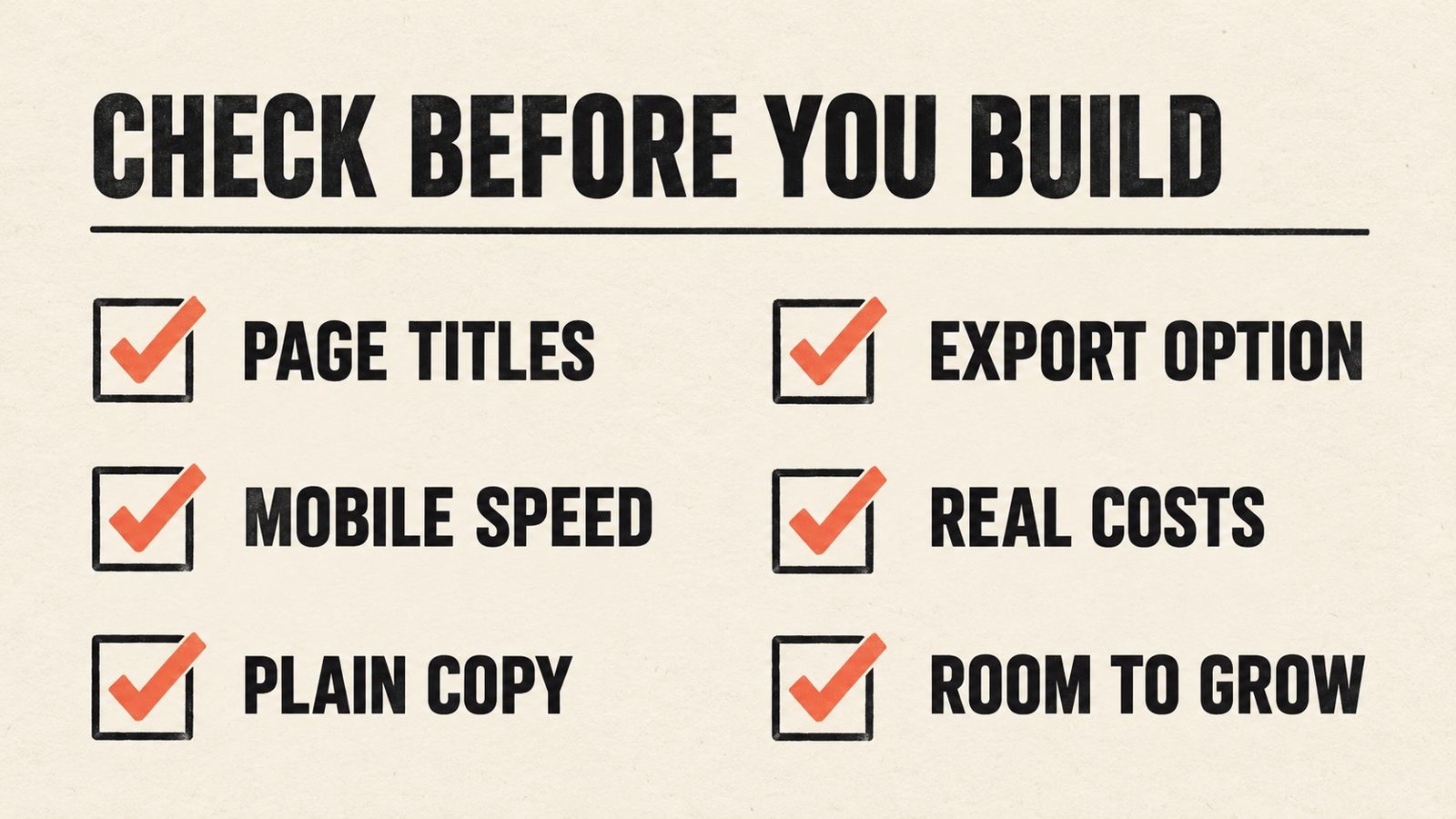
Can you edit the page title, meta description, and heading structure on every page, not just the page text? These details matter for both search engines and AI tools, and some simpler plans restrict access to them.
How does the site perform on a phone on an ordinary connection, not just on the editor's preview? Test a real published page, not the builder's demo.
Can you write plain, specific sentences about what you do and who you serve, or does the template push you toward generic marketing language and flashy visuals that say little? A page that is easy for a visitor and an AI tool to understand usually reads plainly, not impressively.
What happens if you want to leave later? Check whether you can export your content, and understand that even if you can, a full redesign on a new platform usually still means real rebuilding work rather than a simple transfer.
What is actually included in the ongoing cost, beyond the headline plan price? Hosting, a custom domain, email, and higher tier features for things like bookings or an online store are often priced separately, and it is worth seeing the full realistic cost before you commit rather than after.
Does the platform leave room to grow without a full redesign? A site that can add a new page, service, or location without breaking its existing structure will save you from the exact problem described in the signs above.
What getting this decision right gives you
- +A site that matches what your business actually needs
Neither overbuilt for a simple business nor too limited for a growing one, which is the most common way either option goes wrong.
- +Time spent where it actually pays off
Whichever option you choose, you are not quietly losing hours to a tool or a decision that did not fit your situation from the start.
- +A clearer path to being found
A site built, from either route, with plain and specific pages is easier for search engines and AI tools to match to the questions real customers are asking.
- +Fewer surprise costs later
Knowing the real ongoing costs and limits upfront means fewer unpleasant discoveries six months in.
- +Room to grow without starting over
A site built with your next year in mind, not just your current page count, is less likely to need a full rebuild the moment the business grows.
- +A decision you can actually explain
Being able to say clearly why you chose the route you did makes it easier to revisit the decision later if your business changes.
What does this actually cost, either way?
The honest answer is that cost depends on specifics that vary too much from one business to the next to state a single figure, and we are not going to invent one or rank what any particular builder or developer charges. What we can give you are the factors that actually move the price, whichever route you take.
For a do it yourself build: the builder plan tier you need (plans that unlock bookings, an online store, or removing the platform's own branding usually cost more than a basic plan), a custom domain and business email if you want one, and the value of your own time, which is real even though no invoice reflects it.
For hiring help: how many pages and how much complexity the site needs (a handful of informational pages costs less to build than a site with bookings, an online store, or custom functionality), how much of the writing and content you can provide versus needing it created from scratch, whether the result is built on a flexible platform you can update yourself afterward or requires a developer for every change, and what ongoing support or maintenance is included after launch.
If you are getting quotes for either route, ask directly what is and is not included, what happens to your costs if you need to add a page or a feature later, and who owns the result, meaning whether you can move or edit it yourself without being tied to whoever built it. A sensible next step, whichever direction you are leaning, is a short, low pressure conversation about what your actual business needs. Message us on WhatsApp at +1 306-518-7811 or call +1 833-998-1234. You can also book a free 15-minute discovery call at underdogcreativesolutions.com/contact.
How Underdog thinks about this decision
Underdog Creative Solutions is a Saskatoon based agency working with small and growing businesses across Canada and the United States. We do not start every conversation by assuming a business needs a full custom build. Plenty of businesses are well served by a simple, well built site for now, and we will say so rather than talking a business into more than it currently needs.
What we do pay close attention to, whichever route a business takes, is whether the result can actually be found: written in plain, specific language that both people and AI tools such as ChatGPT, Google AI Overviews, and Perplexity can read and understand, built to load quickly, and structured so it can grow without a full rebuild every time the business adds a service or a location. A website rarely solves everything alone. It tends to work best alongside content that keeps it current, an AI receptionist that answers the calls the site generates, and business automation that moves new enquiries into your calendar and customer list without manual retyping. You do not need all of that from day one. Most businesses start with whichever piece is causing the most friction right now, and that is usually the more useful place to begin than buying everything at once.
Frequently asked questions
Talk to Underdog about your website
Not sure which route fits your business? Message us on WhatsApp at +1 306-518-7811 or call +1 833-998-1234. You can also email support@underdogcreativesolutions.com.
Follow Underdog Creative Solutions on Facebook, Instagram, LinkedIn, and YouTube for practical AI and marketing ideas for Canadian small businesses.