// SMALL BUSINESS
Website Copywriting for Small Business: What to Write Yourself and When to Get Help

Search "website copywriting services" and almost every result on the page is someone trying to sell you copywriting: a freelancer's portfolio, an agency's pitch page, a directory of writers ranked by city. Almost none of them answer the question a small business owner actually has, which is simpler: what should my pages actually say, and can I write this myself before I pay someone else to do it? You can write a solid first draft of most of your website yourself. This guide walks through what each core page needs to say, a short checklist for copy that reads clearly to both visitors and AI tools, a few worked examples of turning vague copy into clear copy, and a few honest signs that it is worth hiring a copywriter or an agency instead.
Why does website copy feel like the hardest part of building a small business site?
Most small business owners can picture what they want their website to look like. The wording is harder, because it asks you to explain your own business to a stranger who knows nothing about it and has about five seconds to decide whether to keep reading.
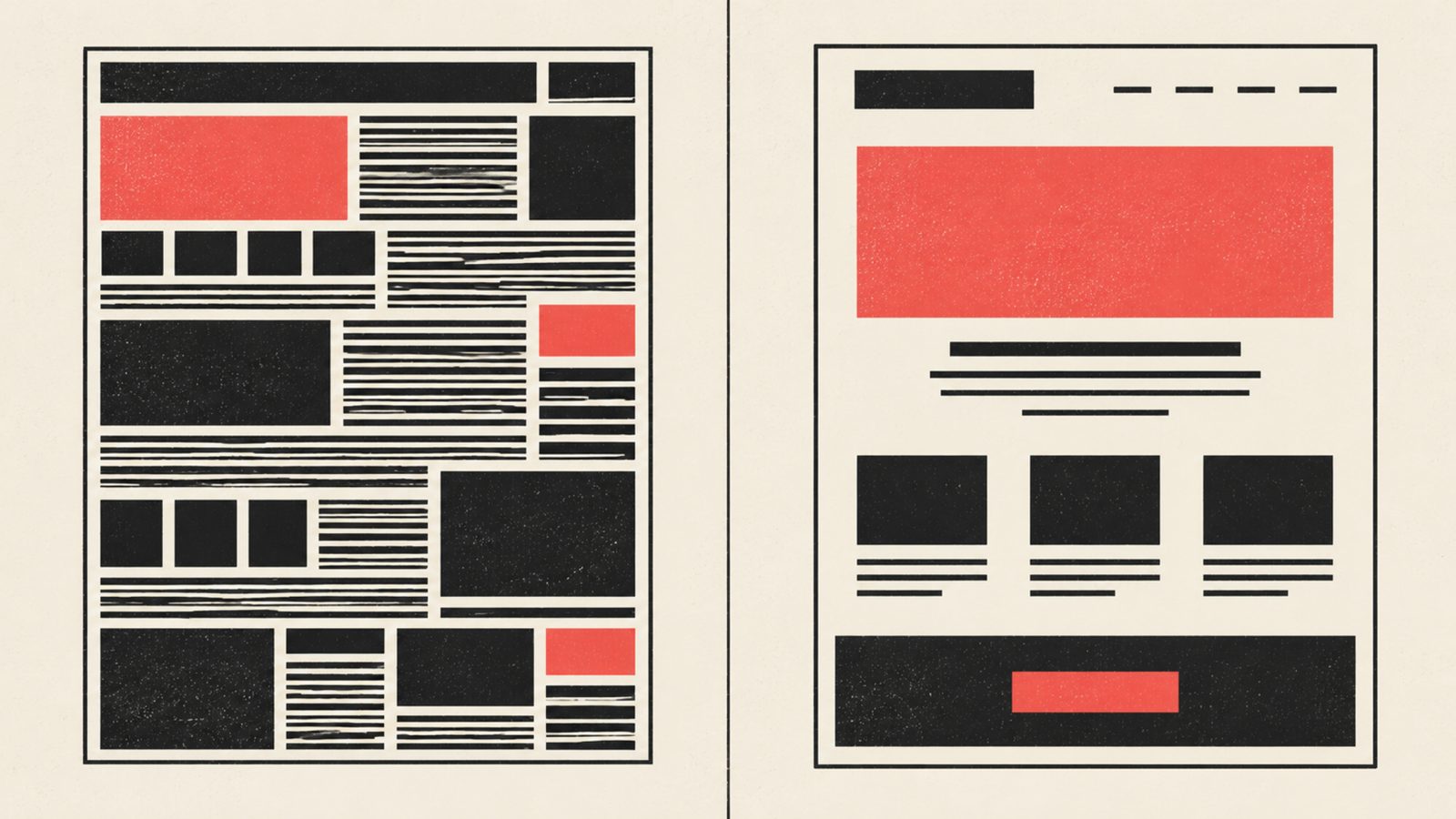
The usual result is one of two problems. Either the copy leans on vague phrases that could describe almost any business in the same industry (quality service, customer satisfaction, years of experience), which tells a visitor nothing specific enough to act on. Or the copy tries to say everything at once: every service, every certification, every reason the business is great, crammed onto one page with no clear next step.
Both problems come from the same root cause. The person writing the copy knows the business too well to see which details actually matter to someone who has never heard of it before. That is not a writing talent problem. It is a perspective problem, and it is fixable with a clear structure to work from.
What does good website copy for a small business actually need to do?
Good website copy does three jobs, in this order, on every page. It tells a visitor they are in the right place, usually within the first sentence or two. It explains, specifically enough to be useful, what you do and who it is for. And it tells the visitor exactly what to do next, whether that is calling, booking, or messaging.
Notice what is missing from that list: being clever, sounding impressive, or using the same language as every competitor in your industry. Clear and specific beats clever almost every time, because a visitor deciding whether to contact you is scanning for an answer, not reading for enjoyment.
The same three jobs now matter for a second kind of reader: AI tools such as ChatGPT, Google AI Overviews, and Perplexity, which read websites to answer people's questions. These tools favour pages that state things plainly: what the business does, where it operates, and what a service actually includes, in sentences that stand on their own rather than copy that only makes sense once a visitor has read three other pages first. Writing clearly for a person and writing clearly for an AI tool turn out to be nearly the same skill. Neither rewards vagueness.
What should each page on your site actually say?
Most small business websites need the same handful of pages to do their job well. Each one has a specific purpose, and each one tends to fail in a predictable way when that purpose gets lost.
The home page has one job: tell a visitor within a few seconds that they are in the right place, and point them toward the next step. It needs a clear statement of what you do and who you do it for, near the very top, before any supporting detail. It does not need your full history, a long list of values, or a paragraph about your mission. Save that for the about page. The most common home page mistake is leading with a slogan or a general statement about the industry instead of a plain sentence about what the business actually does.
The services page should describe what is included in a way a stranger could repeat back to you. Instead of listing a service name alone, describe what happens, roughly how long it takes if that varies in a useful way, and what a customer should expect to provide or decide. If you offer several services, give each one enough space to stand on its own rather than a one line mention buried in a list. This is also the page where being specific pays off most for AI tools, since a clear description of what a service actually involves is exactly the kind of sentence these tools look for when answering a question like "what does a business like this actually do for a typical job."
The about page is where some personality and history belong, but it still needs a point. Visitors read an about page to answer one question: can I trust this business? Answer that with specifics (how long you have operated, what you specialize in, what kind of customer you work with best) rather than general claims about passion or dedication that could describe any business.
The contact page should remove every possible source of friction. State your hours clearly. Give more than one way to get in touch if you offer more than one. If there is a typical response time, say what it is. A contact page that only has a form, with no phone number, email, or expected response time, leaves a visitor unsure whether anyone will actually see their message.
If you run an ecommerce store, product pages deserve the same treatment as a services page: describe what the product actually does and who it suits, not just a list of specifications. Specifications matter, but they rarely answer the question a first time visitor is actually asking.
A short checklist for copy that reads clearly to both visitors and AI tools
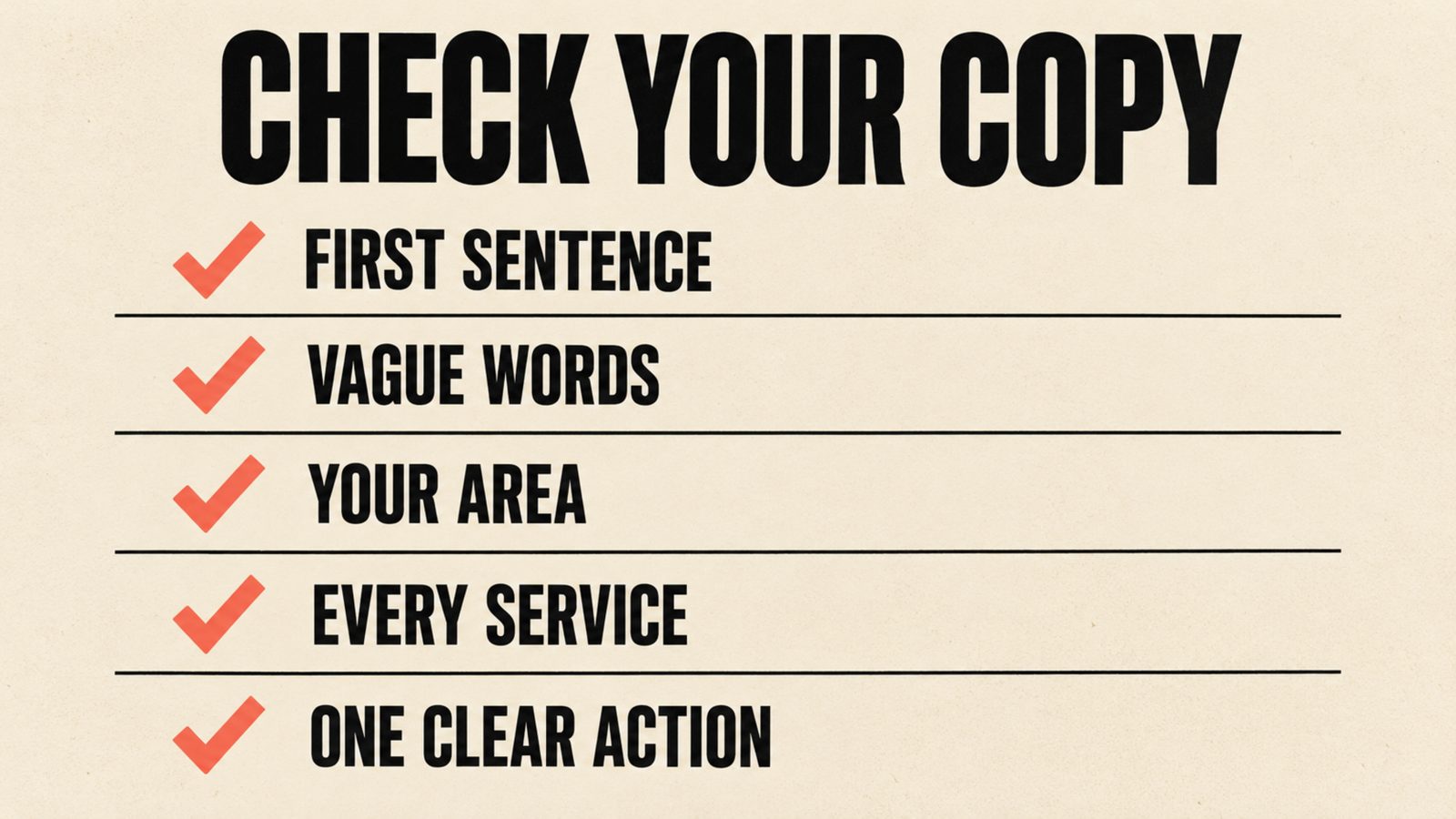
Before you publish a page, run it through these checks. Each one takes a minute and catches the most common problems.
Read the first sentence alone. Could a stranger tell what your business does and roughly who it serves, from that sentence by itself? If not, that sentence needs to move or change.
Count how many times you used a vague phrase (quality, professional, affordable, reliable) without backing it up with a specific detail. One or two is normal. If every paragraph has one, the page is probably saying less than it feels like it is saying.
Look for your city, region, or service area. If you serve a specific place, say so plainly on the page, not just in a footer or a logo. This helps visitors confirm you serve their area, and it helps AI tools match your business to a local question.
Check that each service or product has its own clear description, not just a name in a list. A heading with no body text underneath it is a gap, not a finished section.
Read the page looking only for the call to action. Is it obvious what you want the visitor to do next, and is that same action repeated more than once on longer pages? A visitor who is ready to contact you should never have to scroll back up to find out how.
Finally, have someone who does not work in your business read the page cold and tell you, in their own words, what you do and who it is for. If their summary is close to what you meant, the page is working. If it is vague or wrong, the page needs another pass before anything else does.
Examples: turning vague copy into clear copy
These are examples to show the difference in practice, not a template to copy word for word, since the right wording always depends on your actual business.
Example, a home services business. Vague version: "We provide quality home repair services with years of experience and a commitment to customer satisfaction." Clearer version: "We handle plumbing repairs, fixture installs, and small renovation work for homeowners across the city, usually with same week scheduling for non emergency jobs." The second version tells a visitor what is actually included and sets an honest expectation about timing, without inventing a number that cannot be backed up.
Example, a professional services firm. Vague version: "Our team of dedicated professionals delivers tailored solutions for every client." Clearer version: "We handle bookkeeping, payroll, and year end filing for small businesses with one to twenty employees, and we meet with most clients quarterly to go over the numbers." The clearer version gives a visitor enough detail to know whether they are a fit, which is the real job of the sentence.
Example, a personal services business. Vague version: "Experience the difference at our salon, where beauty meets excellence." Clearer version: "We offer colour, cut, and styling appointments, with online booking and a waitlist for cancellations." The clearer version tells a visitor what to actually do next, which is the one thing the vague version left out entirely.
Who should write their own copy, and who should get help
Writing your own first draft tends to work well if you can describe your business clearly out loud, in a few sentences, without reaching for industry buzzwords. It also works well for a simple site with a handful of pages and services that do not change often, and for an owner willing to spend a few focused hours rather than fitting it in five minutes at a time between other tasks.
It is probably worth hiring a copywriter or an agency if your business is hard to explain simply, perhaps because you serve several very different kinds of customers, or because your pricing and process vary a great deal case by case. It is also worth it if you have tried writing the pages yourself more than once and keep getting stuck, if the website is actively bringing in business and the copy needs to perform rather than just exist, or if you simply do not have the time and would rather spend it running the business. None of these are signs of failure. They are just signs that paying for the time is the better trade for your situation right now.
A middle path works for many small businesses: write your own first draft using the structure above, then pay for a focused edit rather than a full rewrite. This usually costs less than starting from scratch and gives a professional writer something real to sharpen instead of a blank page to fill.
What clear website copy gives you
- +Visitors who know what to do next
A clear call to action on every page means fewer people leaving confused about how to contact you.
- +Fewer unqualified enquiries
Specific descriptions of what you do and who you serve help the right customers self select before they ever call.
- +Pages that hold up over time
Copy built around what your business actually does ages better than copy built around a current trend or slogan.
- +A stronger starting point for SEO
Clear, specific sentences give search engines and AI tools something concrete to match against a person's question.
- +Less time spent explaining the same thing by phone
A page that actually answers common questions cuts down on calls that only exist because the website did not say enough.
- +An easier handoff if you do hire help later
A clear first draft gives any copywriter or agency a real starting point instead of a blank page.
What does website copywriting cost, and what should you ask?
Copywriting costs depend on a handful of factors: how many pages need writing, how much research the writer needs to do to understand your business, whether you want one draft or a revision round built in, and whether the work is priced per page, per project, or by the hour. Because those factors vary so much from one business to the next, we do not publish a single figure here, and it is worth treating any quote given before someone has looked at your actual pages with some caution.
If you are getting quotes, a few questions are worth asking directly. How many pages and how many words are included at this price. Is research time, such as reading your existing materials or a short interview with you, included or billed separately. How many rounds of revisions come with the project. Who owns the final copy, and can you edit it yourself afterward without going back to the writer every time. The clearest way to get a useful answer is to describe your actual pages and ask for a price against that, rather than asking for a general number.
A sensible next step, whether you end up writing the copy yourself or looking for help, is a short, low pressure conversation about what your site actually needs. Message us on WhatsApp at +1 306-518-7811 or call +1 833-998-1234. You can also book a free 15-minute discovery call at underdogcreativesolutions.com/contact.
How Underdog approaches website copy
Underdog Creative Solutions is a Saskatoon based agency working with small and growing businesses across Canada and the United States. Our content solutions work includes writing and tightening website copy, built around what a business actually does rather than generic industry language, and checked against the same plain language structure covered in this guide.
Website copy rarely stands alone. It works best alongside a website that Google and AI tools can actually read clearly, ongoing content that keeps a site current, an AI receptionist that answers calls and captures details the website copy generates, and business automation that moves those details into your calendar and customer list without manual retyping. You do not need all four to start. Most businesses begin with whichever piece is causing the most friction right now, and figuring out which one that is matters more than buying everything at once.
Frequently asked questions
Talk to Underdog about your business
Have questions about your website copy, your wider content plan, an AI receptionist, or business automation? Message us on WhatsApp at +1 306-518-7811 or call +1 833-998-1234. You can also email support@underdogcreativesolutions.com.
Follow Underdog Creative Solutions on Facebook, Instagram, LinkedIn, and YouTube for practical AI and marketing ideas for Canadian small businesses.