// SMALL BUSINESS
Small Business Web Hosting in Canada: What Actually Matters When You Choose

Web hosting is the service that stores your website's files and makes them available to anyone who types in your domain name. If you are not sure whether you even need to think about hosting, the short answer is this: most business owners who hire someone to build their site do not need to choose hosting themselves, but it still helps to know what you are paying for, what happens if something goes wrong, and who actually controls the account. Most search results for hosting are ranked lists comparing one provider against another. That is useful once you already know you need to pick a host yourself. It is less useful if your real question is simpler: do I need to worry about this at all, and if so, what should I actually be checking.
Why Hosting Advice Rarely Answers the Real Question
Most articles about web hosting assume you are the one signing up for a hosting account and comparing plans side by side. For a lot of small business owners in Canada, that is not the situation. Many have a website builder that already includes hosting bundled in, or a developer or agency who set everything up and manages it on their behalf.
That leaves out the question that actually matters. Not which host is fastest or cheapest, but whether your hosting situation is set up in a way that protects your business if something changes. What happens if your developer stops responding. Who can log in and renew the account before it lapses. Whether a slow or unreliable host is quietly costing you visitors without you realizing it.
This guide covers both sides of that: what hosting is in plain terms, and the handful of things actually worth checking, whether you are choosing hosting yourself or reviewing an arrangement someone else already set up for you.
What Is Web Hosting, and How Is It Different From a Website Builder or a Domain Name?
Web hosting is server space that stores your website's files (the pages, images and code that make up your site) and serves them to a visitor's browser whenever someone loads your site. Without hosting somewhere, a website has nowhere to live online.
A domain name (your address, like yourbusiness.ca) is a separate service from hosting. You register a domain through a domain registrar, and you point that domain at wherever your site is hosted. It is common, and perfectly fine, for the domain and the hosting to be managed through two different companies. What matters is that someone in your business knows which company holds each one, and when each is due for renewal.
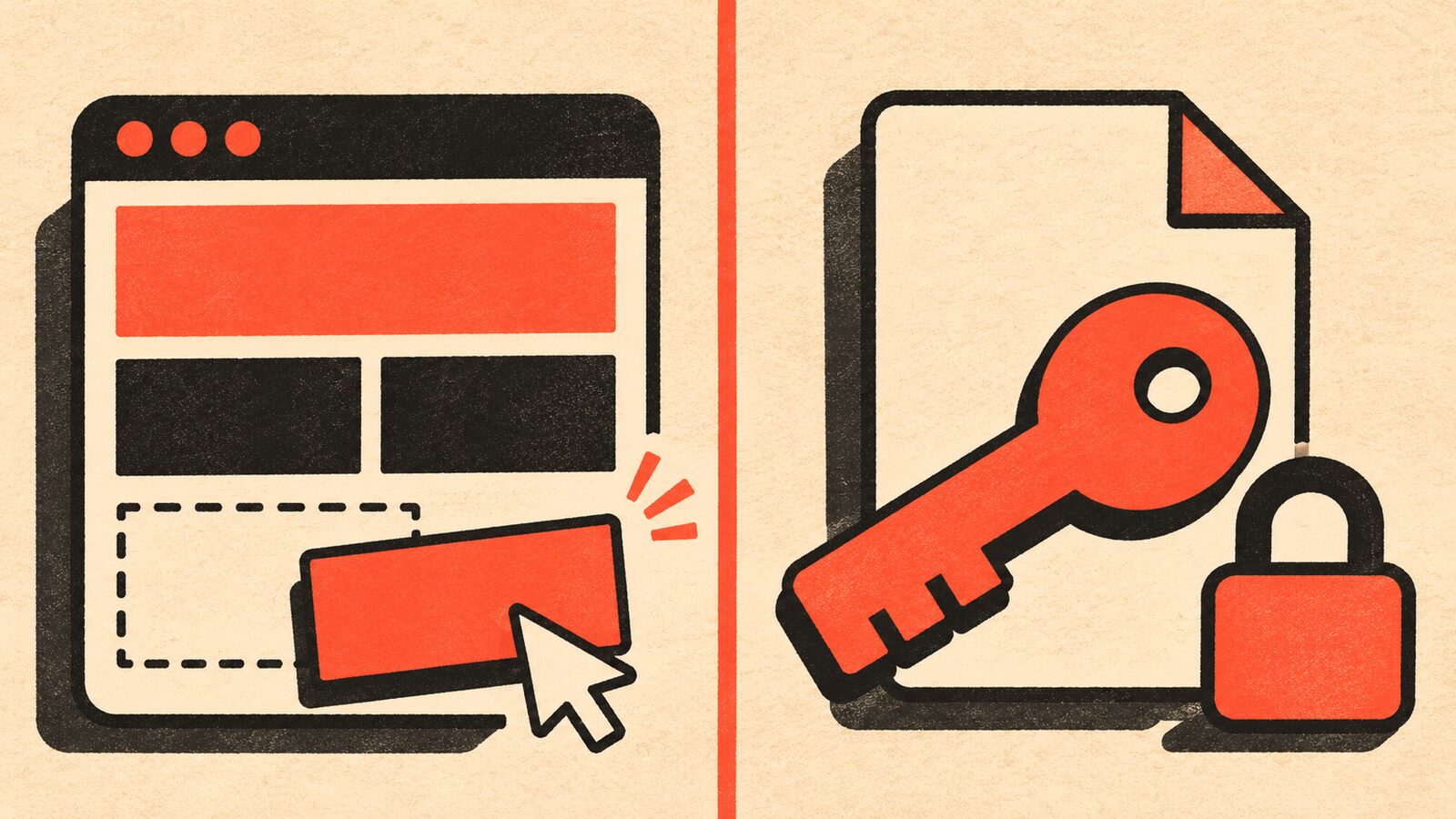
A website builder (the kind where you drag and drop sections to build a page) is a different thing again. Most website builders bundle hosting into the same subscription, so you are usually not choosing a separate host at all when you use one. If your site was built this way, hosting is likely already decided for you, and the more useful question becomes whether that bundled plan still fits your business as it grows, not which outside host to switch to.
An SSL certificate (the padlock icon in a browser's address bar, sometimes called TLS) encrypts the connection between a visitor's browser and your site. Most hosting plans and website builders include this automatically now. If a site does not have it, visitors see a browser warning, which is worth checking regardless of who manages your hosting.
What Actually Matters When You're Choosing or Reviewing Hosting
If you are choosing hosting yourself, or trying to judge whether an existing plan is doing its job, these are the factors that matter more than the marketing name printed on the plan.
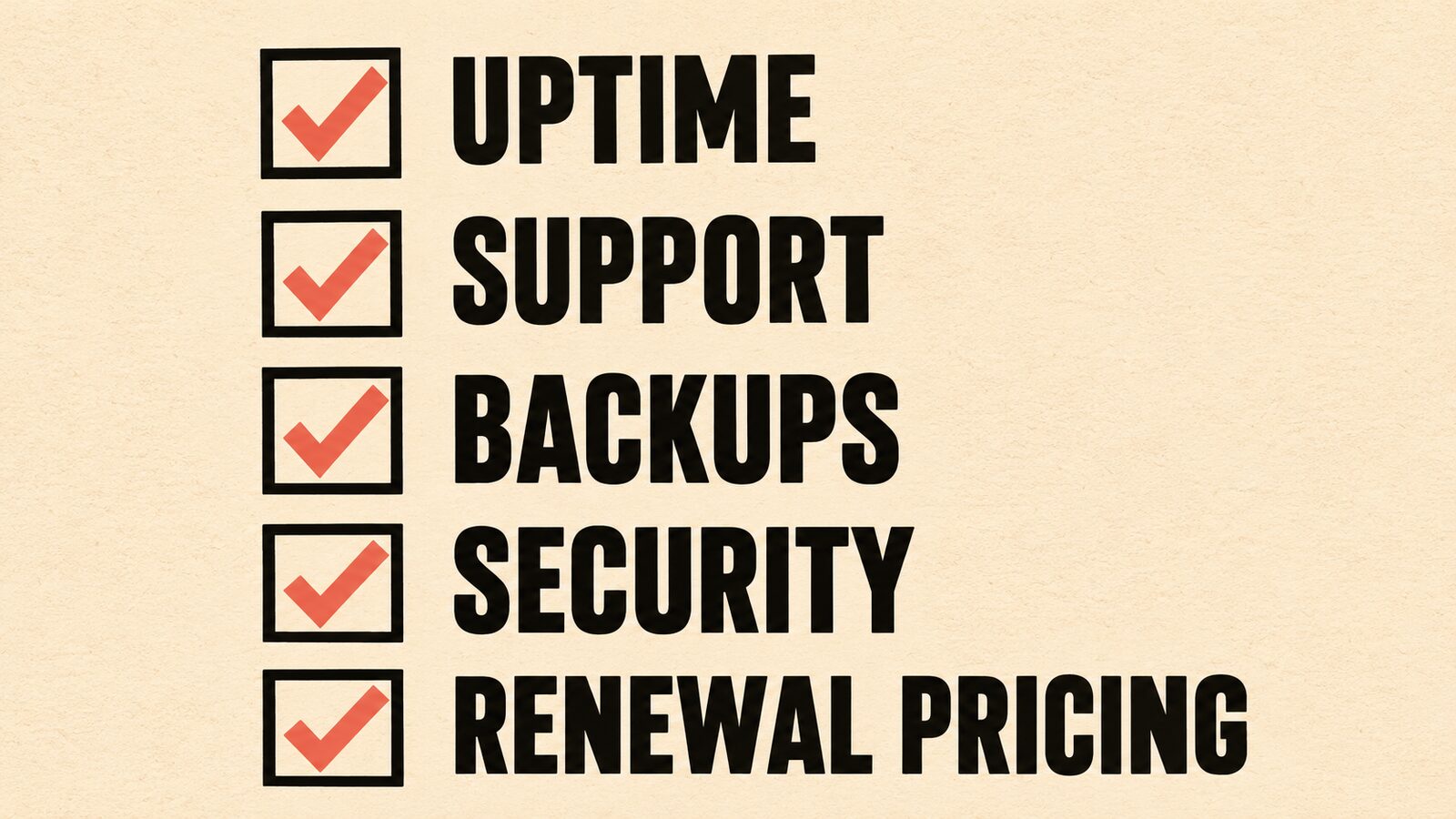
Uptime. This is the percentage of time a host's servers are expected to stay online and reachable. Many hosting providers advertise uptime guarantees around 99.9 percent, which still allows for a few hours of downtime across a year, so no host promises a perfect record. What matters more than the number itself is what happens when downtime does occur: whether you get notified, and how quickly support actually responds.
Support response time. A cheap plan with no real support, and a contact address nobody checks promptly, is a bigger practical risk than a slightly higher monthly cost. Before relying on any hosting arrangement, it is worth knowing how to actually reach a person if the site goes down, and roughly how long that usually takes.
Backups. A backup is a saved copy of your site's files and data from an earlier point in time, so that if something breaks (a bad update, a hacked account, human error) you can restore the site rather than rebuild it from scratch. Ask whether backups are automatic, how often they run, and how far back you could restore if needed. This is one of the most important things to confirm, and one of the easiest to overlook.
Security basics. An SSL certificate (covered above), regular software updates on the hosting side, and basic malware scanning are standard on most reasonable hosting plans today. If a plan does not mention any of these, that is worth asking about directly.
The type of hosting. Shared hosting (where your site sits on a server alongside many other websites, sharing resources) is the most common and affordable option, and it is enough for most small business sites. A busier or more complex site may need a more isolated setup, sometimes called VPS hosting, with dedicated resources set aside for it. Managed hosting (where the provider or your developer handles updates, backups and security for you) trades a bit more cost for a lot less to think about. None of these is universally the right choice. It depends on how much technical maintenance you want to handle yourself.
Renewal pricing. Introductory hosting prices are often lower than what the plan renews at after the first term ends. This pattern is common across the hosting industry generally, not specific to any one provider, so it is worth asking what the price becomes after any introductory period, not only what it costs to sign up today.
Who Should Actually Be Making This Decision?
If you built your own site on a website builder, hosting is almost certainly already included, and the decision that matters is whether the plan tier still fits your traffic and storage needs, not which outside host to move to.
If a developer or agency built your site, ask directly who owns the hosting account and the domain registration: you, or them. This is the gap most hosting guides skip entirely. If the account is in their name and they stop being reachable (the business closes, the freelancer moves on, the agency changes hands), you can end up locked out of your own website with no easy way back in. It is worth confirming, in writing, that your business is listed as the account owner, or at minimum has the login credentials and renewal dates recorded somewhere your team can access.
Example: a bakery owner hires a freelance designer to build a site, and two years later that designer no longer responds to messages. When the hosting bill comes due, nobody at the bakery has the login to pay it, and the site goes offline for a week until the registrar sorts out who has the right to renew it. This kind of situation is avoidable by confirming account ownership before the work begins, not after something goes wrong.
If you are actively comparing hosting plans yourself because you are setting up a new site or the business has outgrown a bundled plan, that is the one case where the uptime, support, backup and pricing factors above genuinely belong in your decision.
Who this does not suit: a business with a stable, working site and a developer or host it already trusts has little to gain from switching hosts just because a review site ranks a different provider higher. Moving hosting providers carries real risk (downtime during the move, broken email, lost configuration) and should be a deliberate decision, not a reaction to a ranked list. If your site is working and you know who owns the account, there is nothing here you need to act on beyond that.
What to Confirm Before Hiring Someone to Build or Host Your Site
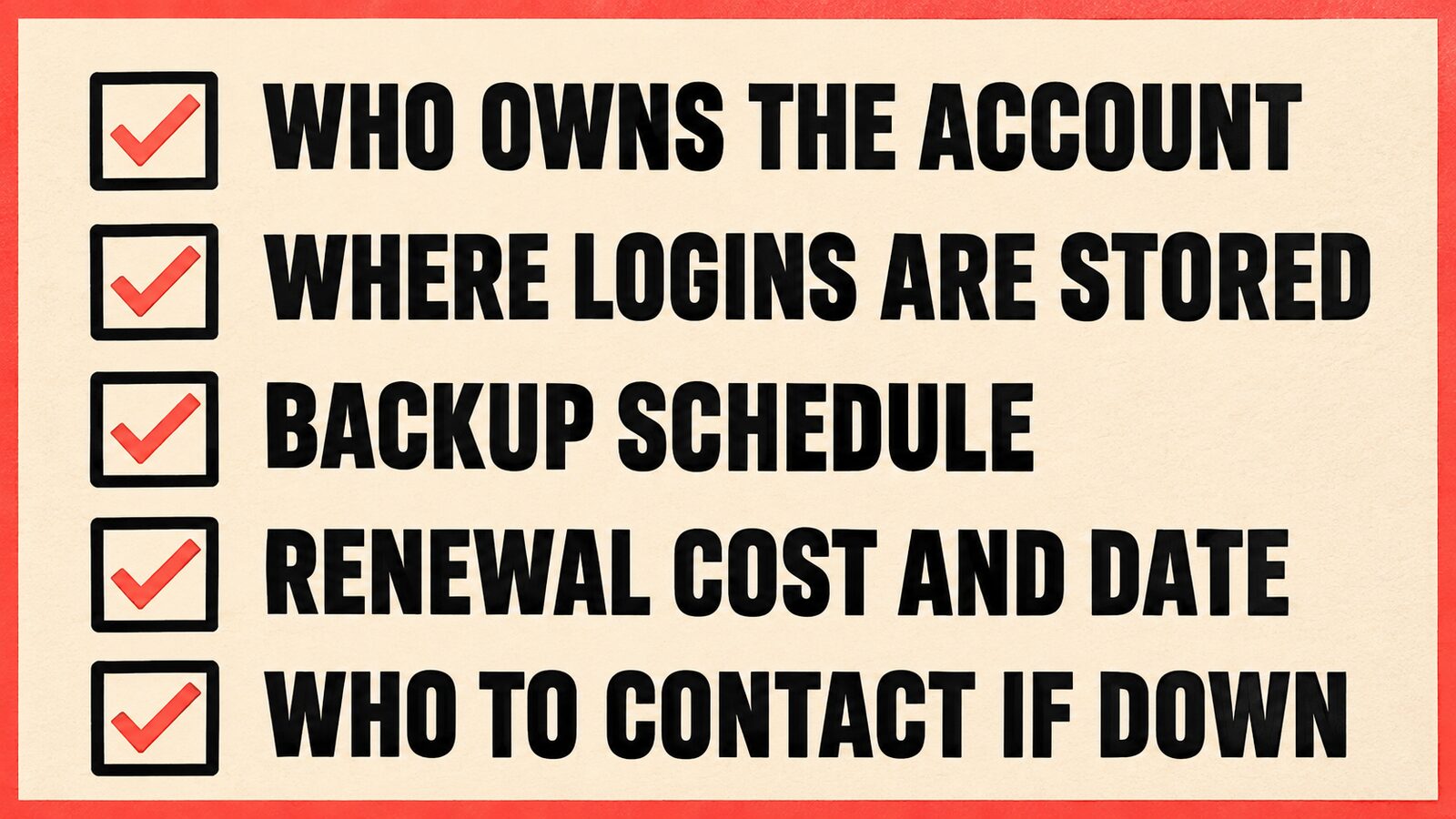
- +Who owns the hosting and domain accounts
Ask whether your business, or the developer's own account, will be listed as the owner. Get this in writing before the project starts, not after.
- +Where the login details are stored
Make sure someone on your team has, or can get, the actual login credentials for both hosting and the domain registrar, not just a verbal promise that it is handled.
- +What backups exist and how often they run
A site with no recent backup is one bad update away from needing to be rebuilt from nothing. Ask how backups work and how to request a restore if you ever need one.
- +What the renewal cost will be, and when
Ask for the price after any introductory period ends, and mark the renewal date somewhere your business will actually see it.
- +Who to contact if the site goes down
Confirm a real contact method and a realistic response time before you need it, not while the site is already offline.
Where Underdog Creative Solutions Fits In
Underdog Creative Solutions builds and manages websites for small businesses across Canada through our website solutions, which means hosting, backups, security updates and renewal dates are handled as part of the website itself rather than left for an owner to track separately. Alongside the website, Underdog also focuses on content that explains your business clearly to both search engines and newer AI tools such as ChatGPT and Google AI Overviews, since being found online now depends on more than search rankings alone. Businesses that want calls and enquiries answered consistently sometimes pair this with an AI receptionist or basic business automation, though none of that is required to have a well hosted, reliable website.
For businesses that already have a working website and a host they trust, none of this requires switching anything. The useful first step is simply knowing the answers to the ownership and backup questions above, whoever manages your site today.
Related reading: Website Builder or Hired Help: How to Decide, Website Copywriting: What to Write Yourself and When to Get Help, Local SEO Services: What to Expect for the Money and SEO for Small Business in Canada (and Where AI Search Fits In).
What a Managed Website and Hosting Arrangement Actually Costs
Hosting and website costs vary by business size, the complexity of the site, and how much ongoing support is included, so there is no single figure that fairly applies to every business. Rather than guess at a number, the more useful questions to ask any provider, Underdog included, are what is included in the quoted price, what happens to that price after the first year, and who you contact if something breaks.
If you want a plain answer about what this would look like for your specific business, message Underdog Creative Solutions on WhatsApp at +1 306-518-7811 or call +1 833-998-1234. You can also book a free 15-minute discovery call at underdogcreativesolutions.com/contact, with no pressure to commit on the call.