// SMALL BUSINESS
Hiring a Copywriter for Your Small Business: What to Know First
You want better words somewhere on your website, in your emails, or in your ads, and hiring a copywriter is the option you keep circling back to. The hard part is not deciding that good copy matters. It is working out what a copywriter actually does that you cannot easily do yourself, how that is different from a content writer, and what you are actually paying for before you sign anything. Most of what shows up when you search for this is job postings aimed at people trying to become a copywriter, not guidance for someone trying to hire one. This is the second kind of guide: what a copywriter does, how a typical project runs, what drives the cost, the questions worth asking before you commit, and when hiring one is not the right move yet.
Why is hiring a copywriter so confusing?
Part of the confusion is the title itself. Copywriter gets used for people who write website pages, people who write blog posts, people who write ads, and sometimes all three. Job boards blur it further, since many postings mix copywriting duties with general content or social media work under one title.
Part of it is cost. Ask five people what a project should cost and you will get five different answers, often because they are quietly pricing five different scopes of work. A single landing page is not the same job as a year of weekly blog posts, even though both can get called copywriting.
And part of it is risk that is hard to see upfront. Hiring the wrong writer does not usually look like a disaster. It looks like copy that reads fine, goes live, and quietly does nothing: no clearer enquiries, no better conversion, nothing you can point to. By the time you notice, you have already paid for it and lost the time it took to brief, wait for and review.
What does a copywriter actually do?
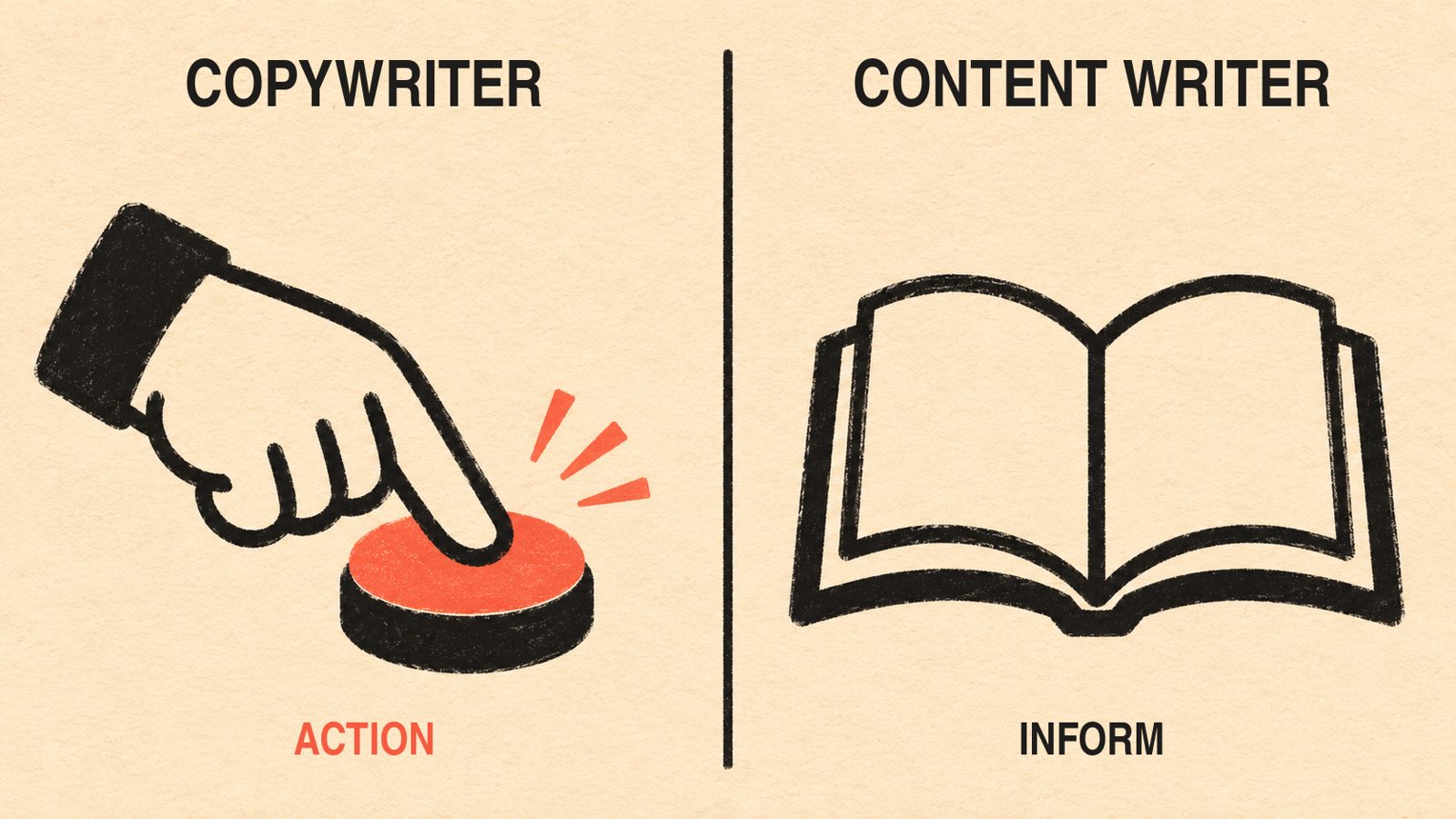
A copywriter writes words meant to get someone to do something: book a call, buy a product, sign up, reply to an email. The job is persuasion with a purpose, built around your actual offer and your actual customer, not general writing about your industry.
That is different from a content writer, whose job is usually to inform or educate: blog posts, guides, explainer articles. Content writing earns attention and trust over time. Copywriting is built to move someone from reading to acting, usually in one page, one email, or one ad.
In practice the line blurs. Plenty of freelancers do both, and a single website project often needs both: a clear, persuasive homepage (copywriting) sitting beside a blog that explains your services in more depth (content writing). What matters is knowing which job you are actually hiring for, so you are not paying copywriting rates for content work, or expecting conversion-focused writing from someone hired to write blog posts.
As an example, a plumbing company hiring someone to rewrite its homepage and service pages is hiring a copywriter. The same company hiring someone to write a monthly blog post about seasonal maintenance tips is hiring a content writer. Some people do both well. Fewer do both equally well.
How does a copywriting project usually work?
Most projects follow a similar shape, even when the scope is different.
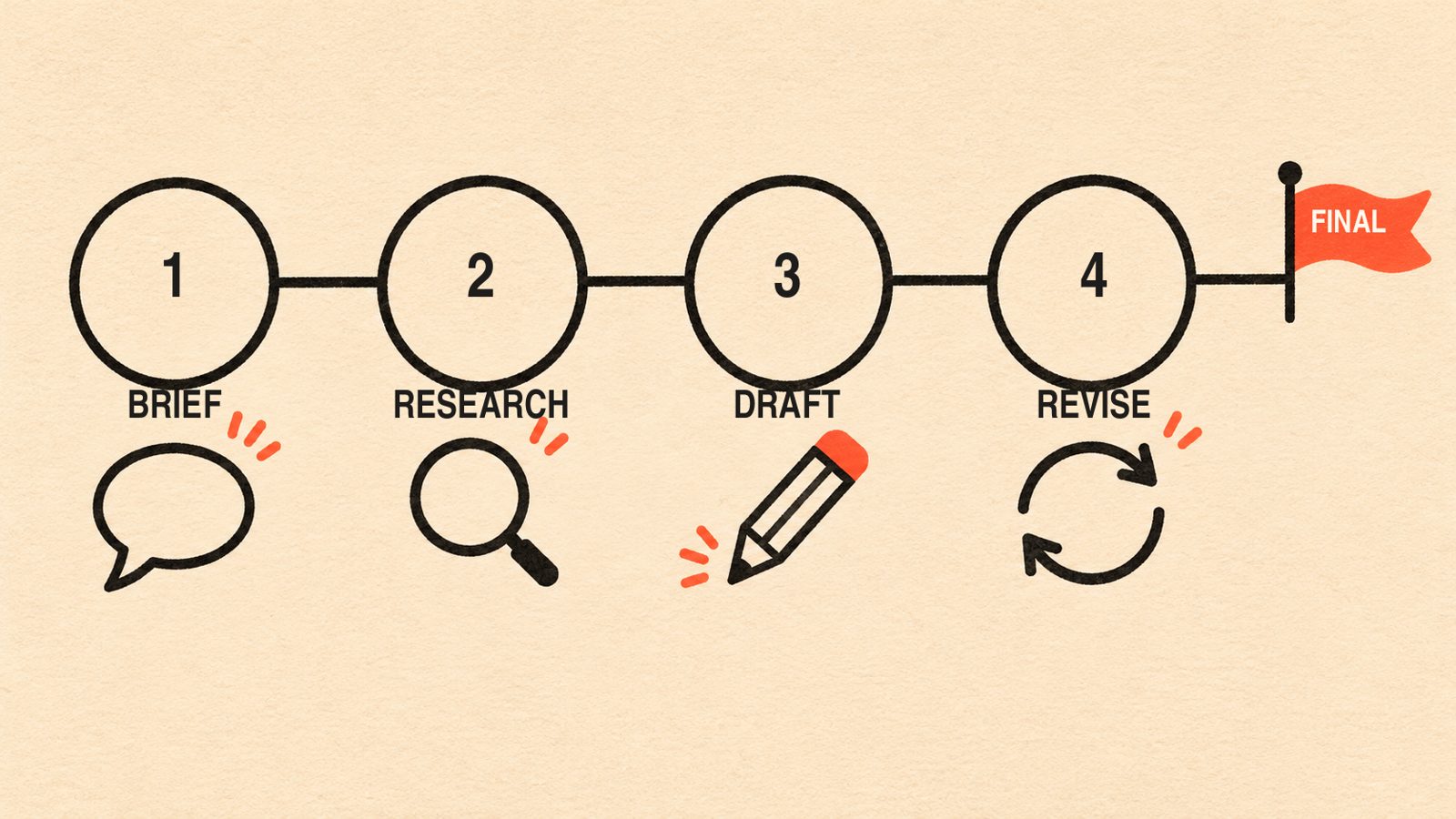
First comes a briefing. A competent copywriter asks about your business, your customer, what makes you different from competitors, and what you want the reader to do next. If nobody asks you these questions before quoting a price, that is worth noticing.
Then comes research. For anything beyond a short page, that usually means reading your existing materials, looking at competitors, and sometimes a short call or questionnaire about your customers' actual objections and questions.
Then a first draft, followed by one or two rounds of revision. Reasonable scope includes a defined number of revision rounds. Unlimited revisions sound generous but often signal an unclear brief at the start, which costs you time either way.
Finally, a finished draft that is yours to use. Before anything goes live, someone on your side should read it for accuracy: correct prices, correct claims, correct details about what you actually offer. A copywriter can make a sentence sound confident. Only you can confirm it is true.
Do you need a copywriter yet, or should you wait?
Hiring a copywriter works best once a few things are already in place. If you are not sure who your customer actually is, what makes you different, or what you want them to do on your site, a copywriter cannot invent that for you. They can shape it into clearer words, but the raw material has to come from somewhere, usually you.
A copywriter is a good use of money when: your website or a key page already gets visitors but does not convert well, you are launching something new and need it explained clearly from day one, you know your offer and audience but do not have time to write it up yourselves, or your current copy was written years ago and no longer matches what you actually offer.
It is usually worth waiting when: you have not yet settled on your core offer or pricing, you have very little traffic to the page in question (fix the traffic problem first), or you are still testing whether the business idea works at all. In those cases, a rough draft in your own words, even an imperfect one, often teaches you more than a polished page would.
As an example, a new service business with no customers yet usually gets more value from talking to its first few customers directly than from a professionally written homepage nobody has found yet.

What are the warning signs when hiring a copywriter?
A few patterns show up often enough to be worth naming directly.
A portfolio with no examples close to your situation. Good writing samples still need to be relevant. Someone whose only published work is fashion blogs and poetry may write beautifully and still struggle with a trades business explaining a quote process. Ask to see work for a business even loosely similar to yours, and if there is none, treat the first project as a test with a small scope.
No questions about your business before a quote. A number given before anyone has asked who your customer is or what you actually sell is usually a guess, not a quote.
Vague ownership of the final copy. Confirm in writing that once you pay, the copy is yours to use, edit and publish without further payment or approval. This is standard, but it should be written down, not assumed.
Promises about results. No copywriter can truthfully promise a specific increase in enquiries, sales or rankings, because too much of that depends on your offer, your market and your website beyond the words themselves. A confident promise about outcomes is a marketing claim, not a fact.
Pressure to decide quickly. A legitimate freelancer or agency can usually hold a start date for a few days while you compare options. Urgency that does not match the size of the project is worth questioning.
What do you actually get from hiring a dedicated copywriter?
- +Consistent voice across everything you publish
One person, or one small team, writing your website, emails and ads tends to sound like one business, instead of a patchwork of whoever wrote what.
- +Your time back
Writing well takes real, uninterrupted time. Handing it to someone else frees that time for running the business, even accounting for the time spent briefing and reviewing.
- +An outside read on your own message
Owners often assume customers already understand things that are actually unclear from the outside. A good copywriter asks the questions a confused customer would ask, before that customer ever leaves the page.
- +Copy built around action, not just description
A copywriter writing with a clear goal, such as booking a call or requesting a quote, tends to produce pages that ask for that action directly, rather than pages that describe the business well but never quite ask for anything.
What affects the cost of hiring a copywriter?
There is no single rate that applies to every project, because the word copywriting covers very different amounts of work. A few factors explain most of the spread you will see once you start asking for quotes.
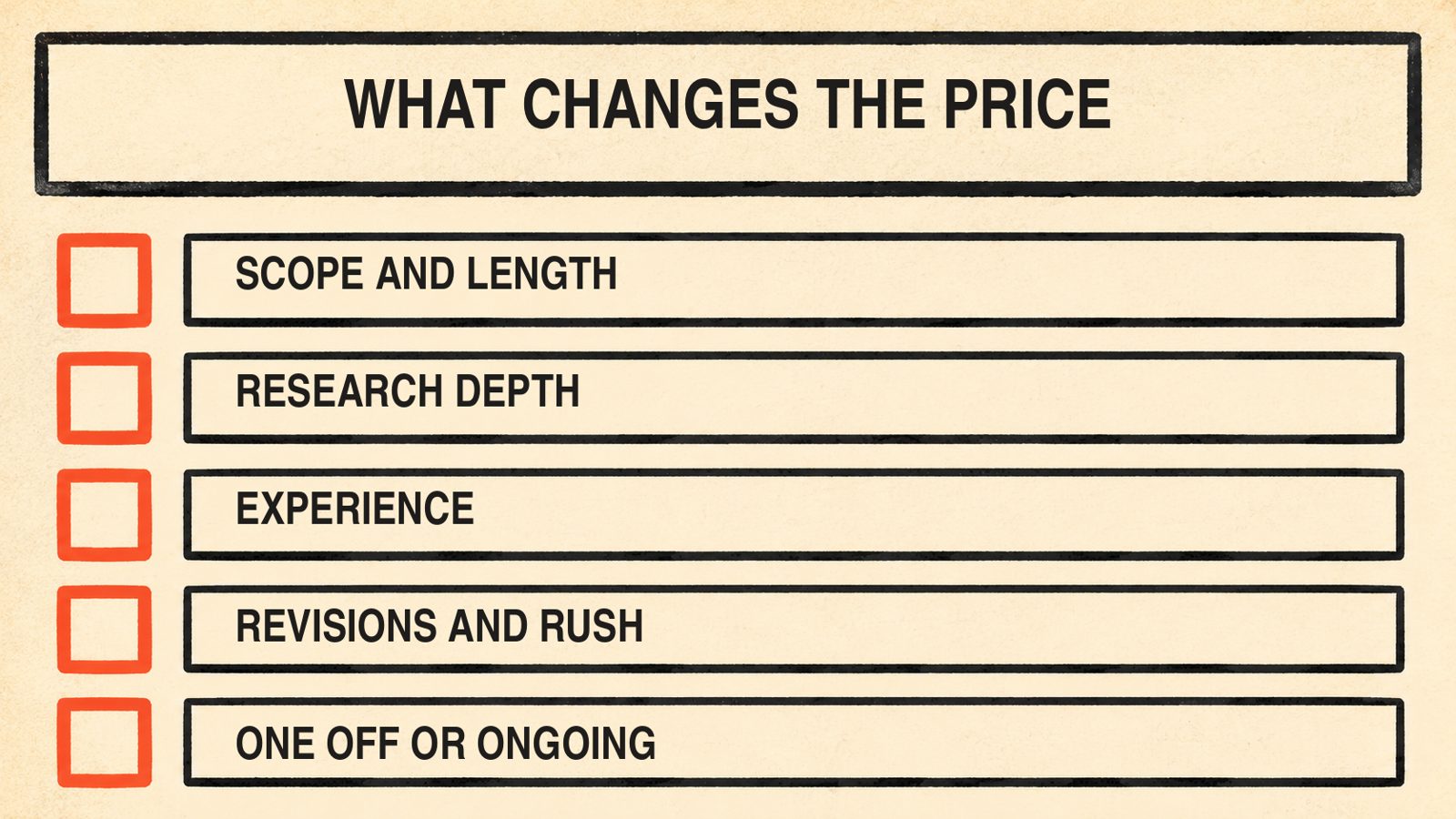
Scope and length matter most: a single homepage is a smaller job than a full site of ten pages, which is smaller again than an ongoing monthly arrangement. Research depth matters too: a project that needs real research into your industry and competitors takes longer than one where you can supply most of the detail yourself. Experience and specialization affect price as well; someone who writes specifically for your industry may charge more but need less back and forth to get the tone right. Revisions and rush turnaround are often priced separately from the base writing. And whether the arrangement is a one off project or an ongoing retainer changes how the total is structured, even when the underlying rate is similar.
Rather than asking what this should cost in the abstract, ask every person you are considering for a written scope: what exactly is included, how many pages or pieces, how many revision rounds, and what happens if you need more later. Compare scopes, not just the final number at the bottom of each quote.
If you would rather see how Underdog prices content work specifically, our content pricing page lays out what is included at each level. For questions about your specific situation, message us on WhatsApp at +1 306-518-7811 (https://wa.me/13065187811) or call the same number.
Where does a service like Underdog's Content Solutions fit in?
Hiring a freelance copywriter is one option. Doing it yourself is another. A third option worth knowing about is a content service that handles the writing as part of an ongoing relationship rather than a one off project.
Underdog's Content Solutions pairs AI-assisted drafting with a person reviewing and editing every piece before it goes out, rather than publishing AI output directly. For a small business, that usually means more consistent output over time than managing a single freelancer's availability, without losing the human judgment that catches a wrong claim or an off-tone sentence before it reaches a customer.
This matters most when content is only part of what needs fixing. A page of strong new copy sitting on a website that is slow, hard to find on Google, or unreadable by AI search tools like ChatGPT and Google AI Overviews will not perform the way it should. Underdog's Website Solutions work is built so pages are easy for both people and AI tools to read and understand, and an AI receptionist or basic automation can pick up where the writing leaves off, for example by responding instantly when someone reads a page and reaches out. None of this is a requirement. If you only need writing, that is a reasonable thing to hire for on its own.