// SMALL BUSINESS
AI Automation for Small Business: Growing a Side Business While You Still Have a Job
If you are building a small business around a full-time job, AI automation for small business is most useful on the tasks that eat your evenings: answering enquiries, booking time, sending reminders, and drafting the first version of routine writing. It will not run the business for you, and it will not replace the judgment calls that are yours to make, but it can give back some of the few hours you actually have. That is the plain version. A lot of what gets written about doing this is aimed at someone with unlimited time and no day job, or it promises income and speed that nobody can back up. If you are reading this at 9pm after a full day of work, with a family waiting and a business idea still mostly in your head, this is written for you specifically: the owner with the least spare time of anyone trying to get a business going, and the most reason to be careful about where that time goes.
Why does automation matter more when you have the least spare time of any business owner?
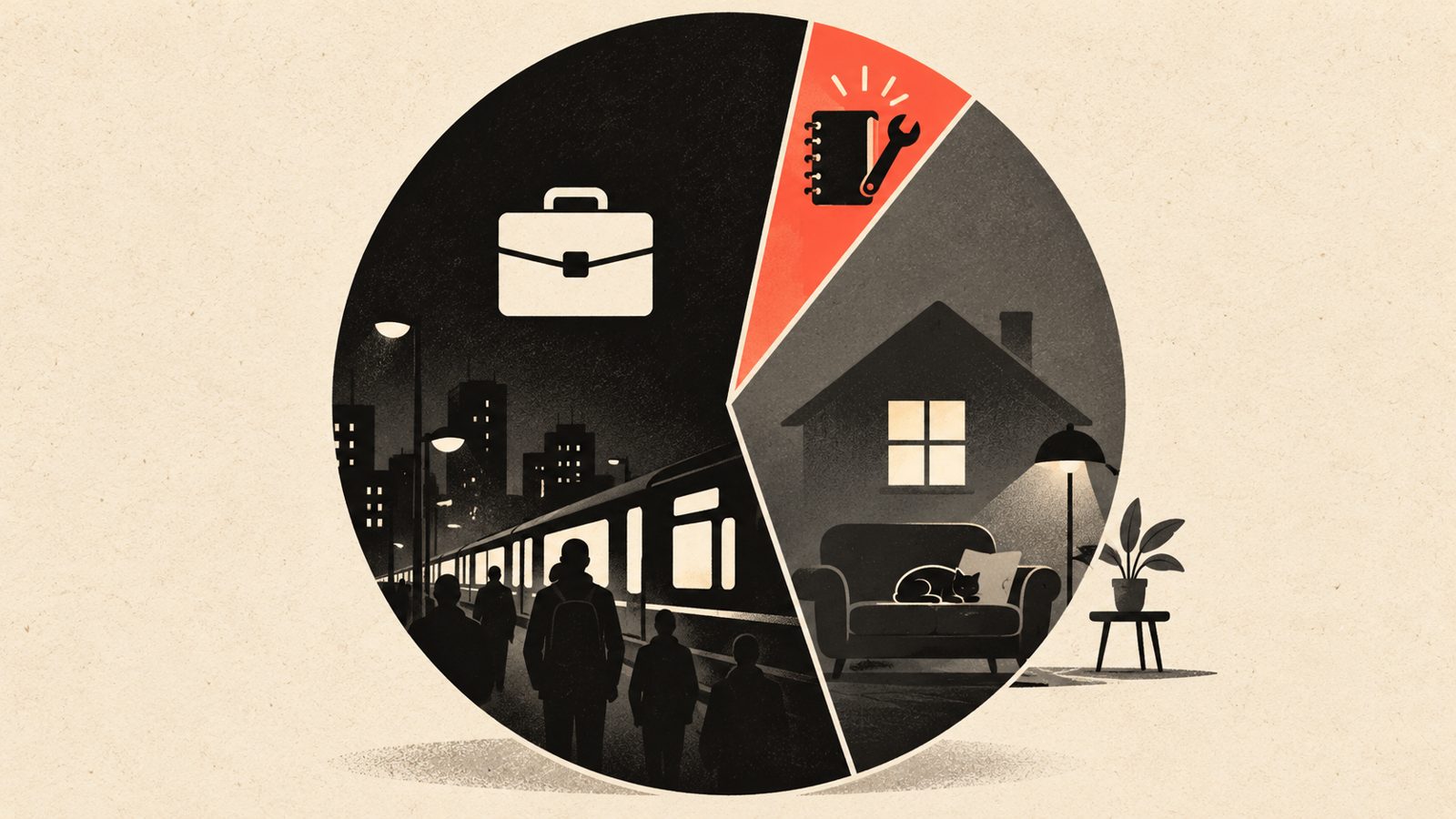
A business owner who has left their job to focus on a new venture full-time still has a limited day, but most of it belongs to the business. Someone building a business on the side has a smaller and more interrupted slice of time: an hour after the kids are in bed, part of a lunch break, a Saturday morning before errands. Every task that is not strictly thinking, deciding, or talking to a customer directly competes with sleep, family time, or the day job itself.
That is the real constraint this article is written around. The usual advice to work harder or get up earlier ignores that most people in this position are already close to their limit. The tasks worth automating first are not the ones that would save the most time in theory. They are the repetitive, low judgment tasks that currently eat into the hour or two a day you actually have free: replying to the same few questions, chasing a quote, writing a first draft of a post, or re-entering the same information into two different places.
This matters because the wrong starting point wastes the time you are trying to protect. Spending a whole weekend setting up a complicated system for a task that takes five minutes a week is not a good trade. Automating the task that currently takes an hour out of your Tuesday evening usually is.
What does AI automation for small business actually mean for a one-person side business?
For a side business, AI automation for small business usually means a handful of connected tools doing specific, narrow jobs: an AI receptionist or chatbot answering common questions and booking time on your calendar, a tool that drafts a reply to a routine enquiry for you to review and send, a service that turns a rough outline into a first draft blog post or social caption, or software that pulls a new enquiry straight into a simple list with the follow up already started.
It is not one piece of software that runs your business while you are at your day job. Every credible setup still has a person, you, checking the output, making the decisions that need judgment, and stepping in for anything unusual. The tools handle the repetitive first pass. You handle the parts that depend on knowing your customer, your pricing, and your own standards.
The practical difference for a side business is smaller scope than a full-time operation would use. You likely need two or three tools working together, not a dozen. Fewer moving parts means less time spent maintaining the system itself, which matters when maintenance time is as scarce as everything else.
Where should you start automating first?
Pick one task before anything else: the one that currently costs you the most evening or weekend time for the least judgment it requires. For most people building a side business, that is one of these.
Answering the same few questions. If customers keep asking about price ranges, availability, or how something works, a simple chatbot or AI receptionist trained on your actual answers can take the first pass, with anything unusual handed to you.
Following up on enquiries. A new lead who does not hear back within a day is often gone. A basic automation that sends an acknowledgement and books a time on your calendar closes that gap without you needing to be at your phone the moment someone writes in.
First drafts of routine writing. A social caption, a reply to a common email, or an outline for a blog post is faster to edit from a draft than to write from nothing. Treat anything generated this way as a draft, not a finished product, every time.
Admin you already dread. Invoicing, basic bookkeeping categorization, and scheduling links remove small repeated tasks, though the numbers they produce still deserve a periodic check, especially before tax time.
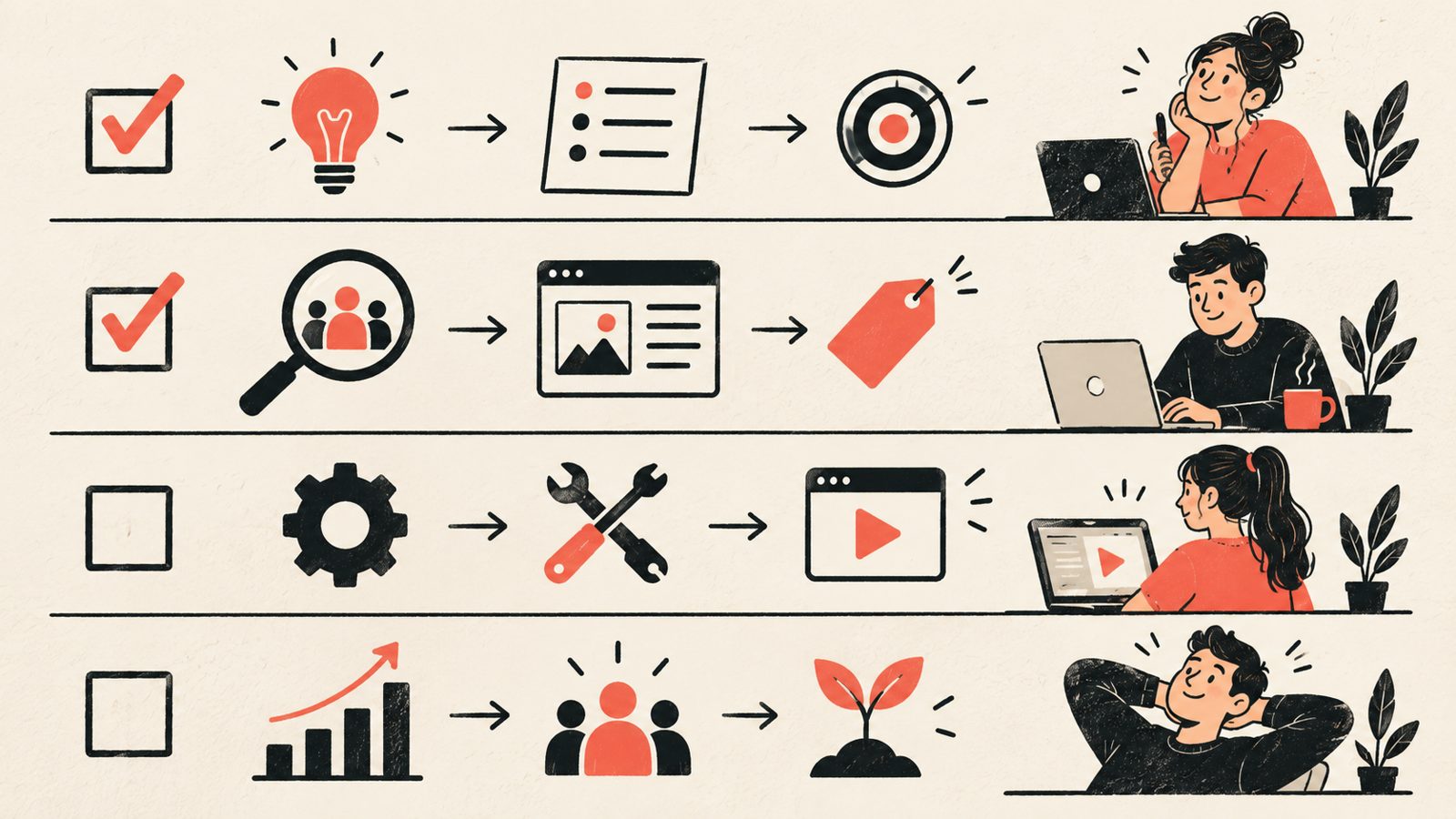
A realistic first month looks like this. Week one, pick the single task that is costing you the most time and set up one tool for it. Week two, use it, and note what it gets wrong. Week three, fix the obvious problems and let it run with light review. Week four, decide whether it earned its place before adding a second tool. Trying to automate five things in your first weekend usually means none of them get finished properly, and a half set up system can cause more problems than the one it replaced.
What should stay yours, even once automation is running?
Pricing decisions, judgment calls about an unusual request, and anything that depends on a relationship with a specific customer should stay with you. An automated reply can acknowledge a complicated question. It should not be the one deciding how to answer it.
Final review of anything customer facing matters too. A draft caption or email written by an AI tool can read naturally one day and oddly the next. Read everything before it goes out, especially early on, until you have a clear sense of what it tends to get wrong.
The decision about what work to take on at all is also yours. Automation can clear space in your week. It cannot tell you whether a project is worth the hours it will take once you win it, or whether this is the week to say no to a new customer because your day job is demanding more right now.
Is it safe to feed customer information into AI tools?
This is worth more caution than most guides on this topic give it. Many free AI tools are built for general use, not for handling someone else's personal or financial information. Before pasting a customer's name, contact details, address, or payment information into a chatbot or writing tool, check that tool's own data and privacy terms, not a summary of them written by someone else.
A few practical habits help. Use business grade versions of tools where one exists, since they generally come with clearer data handling terms than free consumer versions. Where possible, work with anonymized or generic examples when drafting something, and add the real customer detail yourself afterward. Keep a mental list of information you would not want repeated back to you by a tool you do not fully understand, and do not enter it.
If you collect any customer information at all, even just names and emails, it is worth understanding your basic obligations as a small business in Canada for how that information is stored and used. This is a question worth a short conversation with a professional if you are unsure, rather than a guess.
Should you tell your employer about a side business you're automating?
Check your employment contract before you build much further. Many Canadian employment contracts include a clause about outside work, moonlighting, or conflicts of interest, and some restrict competing with your employer or using their time, equipment, or client relationships for anything else. The automation tools themselves are not the issue. How and when you use them can be.
A few boundaries are worth setting for yourself regardless of what your contract says. Do not do side business work, including checking automated messages or approving drafts, during paid work hours or on your employer's equipment. Do not use contacts, data, or supplier relationships that belong to your job. Keep your side business's accounts, logins, and tools completely separate from anything your employer provided.
If your contract is unclear or you are building something close to your employer's industry, a short conversation with an employment lawyer is a reasonable step before you grow much further, not a sign that something is wrong. It is far easier to ask early than to untangle a conflict after the fact.
What changes once the right automation is in place
- +Fewer missed enquiries
A question asked at 10pm gets an acknowledgement and, where possible, a booked time, instead of waiting for you to see it the next evening.
- +A steadier first response
The same question gets a consistent answer every time, instead of whatever you can manage to type quickly between other things.
- +Faster first drafts
Routine writing starts from something instead of nothing, which tends to save more time on the days you have the least of it.
- +Cleaner basic records
Invoices and simple bookkeeping entries get created consistently, which makes the occasional review easier instead of a backlog you dread.
- +A more sustainable pace
The evening hours you do have go toward decisions, relationships, and the work only you can do, rather than repetitive admin.
Where Underdog fits if you want help setting this up
Underdog Creative Solutions works with small businesses across Canada, including people building a business around a full-time job, on the pieces that tend to matter most early on: a website that is easy for both customers and AI tools like ChatGPT and Google's AI features to find and understand, an AI receptionist that can answer calls and messages while you are at your day job, and AI business automation for the follow up, scheduling, and admin tasks described above. Content solutions are also available for anyone who wants consistent writing without spending every evening on it.
None of this is sold as a bundle you need all of. Most people building a side business start with one piece, usually whichever task from the list above is costing them the most time right now, and add more only if it earns its place. Setup, what stays with you to review, and how to escalate anything unusual are agreed before anything goes live, and nothing is promised about rankings, leads, or how any AI tool will respond to your business, because nobody can honestly promise that.
Talk to Underdog about your side business
What this costs depends on how much is being automated, how many tools need to work together, and whether you want ongoing support or a one time setup you manage yourself afterward. A single chatbot handling a few common questions is a smaller project than a connected system covering enquiries, scheduling, and follow up together. Rather than quote a figure that would not apply to your situation, the better approach is a short conversation about what you are trying to free up time for, followed by a plain answer about what that would involve.
Questions worth asking any provider, Underdog included: what exactly will be automated, what still needs your review, what happens when something unusual comes in, and what ongoing cost, if any, continues after setup.
Ready to talk? Message us on WhatsApp at +1 306-518-7811, or call +1 833-998-1234. You can also book a free 15 minute discovery call at underdogcreativesolutions.com/contact. We reply within four business hours.