// SMALL BUSINESS
Email Marketing for Small Business: What's Actually Worth Doing
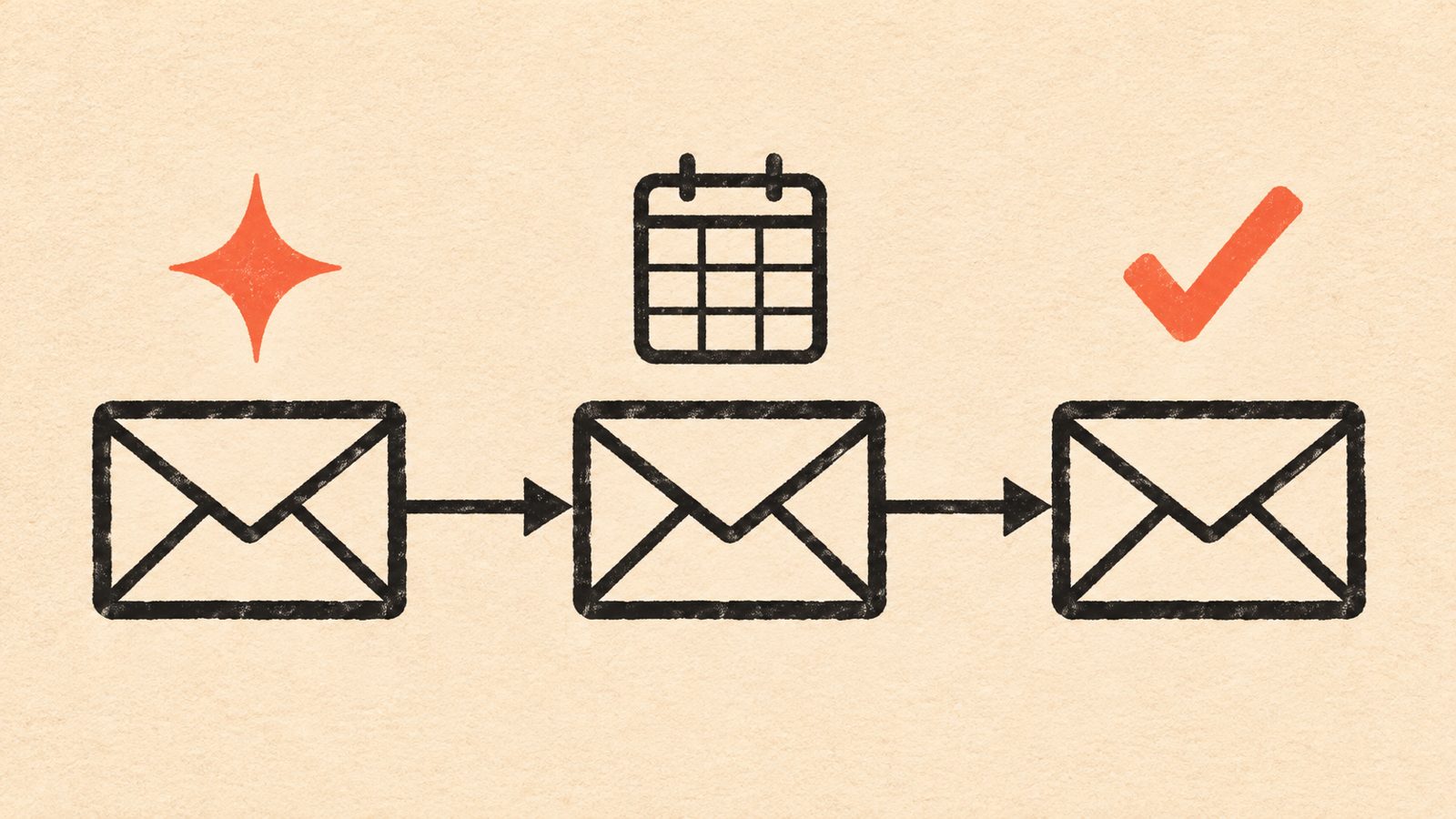
Most advice on email marketing for a small business falls into one of two piles. The first is a vendor's own blog telling you their software is the answer. The second is a listicle of twenty tips, with no sense of which three actually matter. Neither one tells you plainly whether email is worth your time in the first place, or what to send if it is. Here is the direct answer. For most small businesses, yes, it is worth doing, but only if you send a short, specific set of emails rather than trying to run a constant newsletter. Three kinds of emails do almost all of the useful work: a brief welcome message when someone first joins your list, an occasional update when you genuinely have something worth saying, and a follow up after someone buys from you or asks you a question. Everything past that is optional, and for a lot of small businesses, everything past that is also where email marketing quietly turns into a chore nobody keeps up with. This guide covers what is actually worth sending, how often, what Canada's consent rules require before you can email anyone, what it tends to cost once every piece is counted, and how it connects to the website and automation work a lot of small businesses are already doing.
Why does email marketing advice feel so contradictory for a small business?
Search for help with this and the results split into two unhelpful camps. One camp is email platform vendors, each explaining why their own tool is the right choice, with advice shaped around getting you onto their software rather than around what your specific business needs to send. The other camp is generic marketing content aimed at a reader who already has a content calendar, a design team, and a list of several thousand subscribers, none of which describes most small businesses.
Both camps tend to skip the question a small business owner actually has, which is simpler: do I need to do this at all, and if so, what is the minimum that is actually worth the time. A plain comparison of twenty platforms does not answer that. Neither does a tip list that assumes you already know you are doing this and just need help doing it faster.
There is also a quieter problem. A lot of small business owners already have a working list of customer emails sitting in their invoicing software, their booking system, or a spreadsheet, and have never used it for anything beyond the original transaction. The question is not really whether to start an email program from nothing. It is whether to start using something you already have.
What makes email actually different from social media or ads?
Email has one advantage that social media and paid ads do not: you own the list. A social media account depends on a platform's algorithm deciding to show your post to the people who follow you, and that algorithm changes without warning. A paid ad stops reaching anyone the moment you stop paying. An email list you have built and kept consent for is yours. If a platform disappears, changes its rules, or raises its prices, your list of customer email addresses is still usable.
The tradeoff is that email asks more of the content itself. A social post can be a single photo with a short caption and still do its job. An email that gets opened and then offers nothing worth reading trains people to stop opening the next one. This is the real reason email marketing has a reputation for being more work than it looks: not the sending, which is mechanically simple, but deciding what is actually worth putting in front of someone who gave you permission to reach their inbox directly.
Email also reaches people differently than a website does. A website waits for someone to come looking for you. An email goes to someone who already knows who you are and has already said, in effect, that they are open to hearing from you again. That is a genuinely different kind of attention than a stranger finding your site through a search, and it is worth treating it that way rather than copying whatever tone you use on social media.
What should a small business actually send?
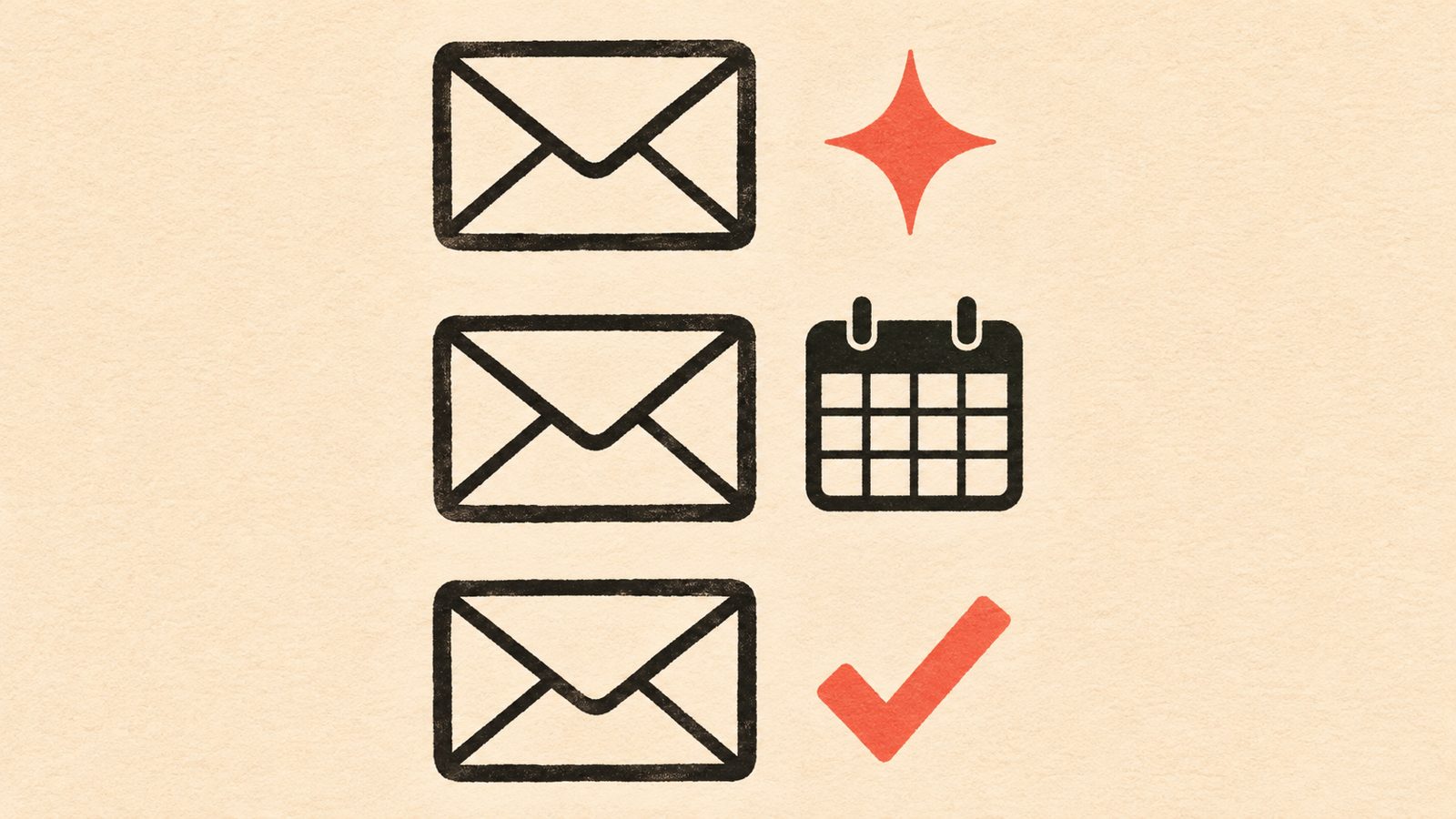
Three kinds of emails cover almost everything a small business genuinely needs, and each one is an example of the kind of message, not a rigid script to copy word for word.
Example: a welcome message. Someone signs up, buys for the first time, or books an appointment, and gets one short email soon after that thanks them, confirms what to expect next, and tells them one useful thing, such as your hours, how to reach you, or what to do if something goes wrong. This single email, sent automatically once and never again to that same trigger, does more practical work than most of what people picture when they hear "email marketing."
Example: an occasional update. This is the closest thing to a traditional newsletter, and the key word is occasional. It goes out when there is something real to say: a seasonal change in hours, a new service, a genuine tip relevant to your customers, or a short note about something happening in your business. It does not go out on a fixed schedule just because the calendar says it is time, since a newsletter padded out to hit a schedule is exactly the kind of email that trains people to stop opening.
Example: a follow up after an action. Someone buys something, asks a question, or has a service completed, and gets one follow up a reasonable time later: checking in, asking if everything is working as expected, or gently inviting them back if your business is the kind people return to on a cycle, such as a seasonal service or a repeat purchase. This is also the single most commonly skipped type, mostly because it feels obvious once someone names it and gets forgotten in the meantime.
Most small businesses can run on these three and genuinely do not need more. A fourth or fifth category, such as a dedicated promotional sequence or a multi part educational series, is worth adding later if the first three are working and there is a specific reason for it, not as a starting point.
How do you actually set this up, step by step?
Setting up a simple email program, whichever platform you eventually choose, tends to follow the same handful of steps.
First, gather the list you likely already have. Check your invoicing software, your booking system, your point of sale system, and any sign up sheet or form you have used, for email addresses from people who have already interacted with your business and would reasonably expect to hear from you again. This existing list, built from real relationships, is almost always more valuable than a list bought or scraped from somewhere else, and a bought list also creates real consent problems, covered in the next section.
Second, write the one welcome email first, before anything else. It is the single highest value email you will ever send, since it reaches someone at the exact moment they are most likely to open and read something from you, and it only needs to be written once.
Third, pick a sending platform based on what your business actually needs rather than the longest feature list. The factors that matter for a small business are the real monthly cost once your list size is counted (most platforms price by how many contacts you have, and the free tier often stops being free sooner than it looks), whether it has a simple way to confirm new subscribers properly consented, whether it is easy for someone on your team to actually use without training, and whether it connects to whatever system already holds your customer list so you are not retyping addresses by hand.
Fourth, write plainly, in your own voice, the way you would actually talk to a customer standing in front of you. A newsletter that sounds like a corporate press release gets skimmed and deleted. A short, direct email that sounds like a person wrote it tends to get read.
Fifth, send the occasional update only when you have something to say, and track, loosely, what gets opened or clicked over time, not to chase a specific number but to notice honestly if something you are sending is simply not landing.
Sixth, revisit it every few months. A list that is never cleaned builds up people who signed up once years ago and have long since stopped caring, and a sending habit that never gets reviewed tends to drift into either silence or, worse, into sending too often because nobody checked.
Do you need consent to email people in Canada?
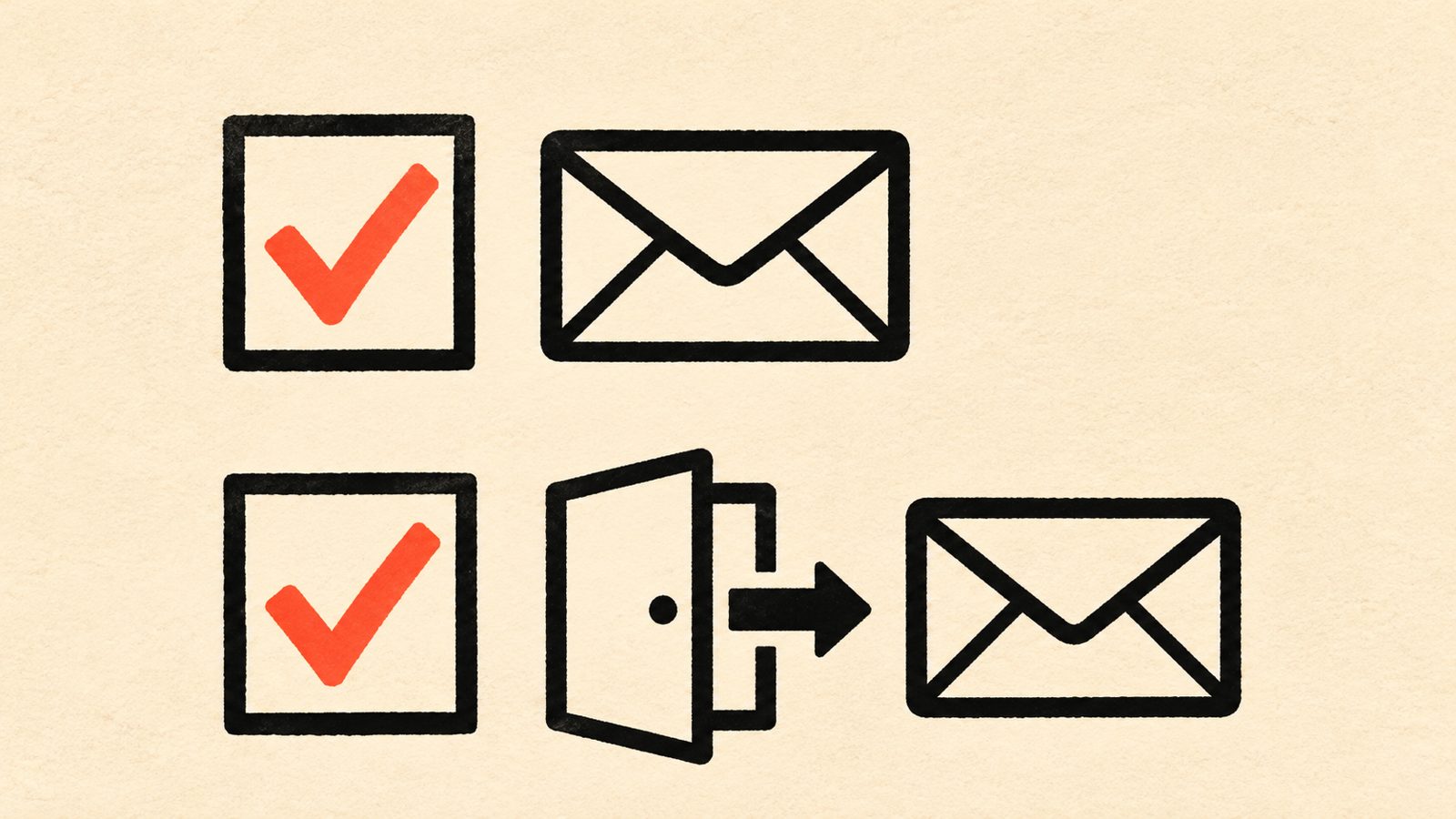
Yes, and this is worth getting right rather than guessing. Canada's anti-spam legislation governs commercial electronic messages, including marketing email, and the Business Development Bank of Canada summarizes the core of it in what it calls two golden rules: email recipients must give consent before receiving messages, and recipients must have a way to opt out of receiving future messages. (Source: Business Development Bank of Canada, bdc.ca.)
In practice, this means a few concrete things for a small business. Someone needs to have actually agreed to hear from you, whether that is a clear opt in on a form, a checkbox at checkout, or the kind of ongoing relationship implied by an existing customer asking you a direct question. It is not enough to add every email address you happen to have to a list and start sending. Every commercial email also needs a working, genuinely simple way to unsubscribe, and once someone unsubscribes, that has to be respected going forward, not just acknowledged and ignored.
This is a real compliance area with real consequences, not a minor suggestion, so if your business is building a list from anything other than people who have clearly and recently said yes to hearing from you, it is worth getting specific legal or compliance guidance for your situation rather than relying on general advice like this article. What this guide can say honestly, based on the source above, is the shape of what is required: consent first, and a real way out always available. Beyond that general shape, the exact rules around what counts as implied consent and how long it lasts are detailed enough that a direct answer for your specific list deserves a proper look rather than a guess.
How often should you actually email customers?
There is no single correct number, and most of the frequency advice circulating online is really a vendor's guess dressed up as a rule. What matters more than a fixed schedule is consistency without padding. If you only truly have something worth saying once a season, sending once a season and doing it well beats forcing a monthly email that increasingly says less each time.
A reasonable starting rhythm for most small businesses is the three email types from earlier, running on their own natural triggers: the welcome message fires automatically whenever someone joins, the follow up fires automatically a set time after a purchase or service, and the occasional update goes out whenever there is genuinely something to say, which for many small businesses lands somewhere between once a month and once a season. If you find yourself struggling to fill an update because nothing has actually happened, that is useful information. It means the schedule is ahead of the content, not that you need to try harder to think of filler.
Watch two warning signs rather than chasing a number. If you notice people unsubscribing in a noticeable run right after a particular email, that email probably felt like noise rather than something they signed up for. And if you are dreading writing the next update, that is usually a sign the cadence has outrun what you actually have to say, and slowing down is the fix, not pushing through.
Who does email marketing suit, and who should wait?
Email marketing tends to suit a small business that already has some list of customer or client emails sitting in existing software, has at least occasional real news or updates worth sharing, and sells something people buy more than once or refer others for, so a relationship worth nurturing over time actually exists.
It is probably not the first priority yet if your business has no real list to start from and no natural way to build one, since starting from zero with cold contacts raises both the consent problem covered above and the practical problem of nobody opening email from a sender they do not recognize. In that case, a clear website that collects interest honestly, such as a simple sign up for people who ask for it, is worth building before a sending program, not instead of one.
It is also probably not worth the time yet if nobody on the team has even a little time to write a short, honest email every month or two. A newsletter that goes quiet after two sends does more harm to how your business looks than not starting one at all, since an abandoned list sitting unused for a year and then suddenly emailed again tends to generate confusion and unsubscribes rather than re-engagement.
What good email marketing can add, once it fits
- +A direct line you actually own
Unlike a social media following, an email list does not depend on a platform's algorithm or policies to reach the people on it.
- +Fewer forgotten follow ups
A simple automatic follow up after a purchase or booking catches customers who would otherwise just never hear from you again.
- +A record of what you have told people
A written update is something you can point back to later, rather than a conversation that only one person remembers.
- +A natural home for real updates
Seasonal changes, new services, and genuine tips have somewhere specific to go instead of being squeezed into a single social post that disappears from a feed within a day.
- +Low cost relative to ads
A list built from real relationships, used sparingly and honestly, generally costs far less to maintain than ongoing paid advertising aimed at the same audience.
- +A foundation other channels can build on
A clear list and a habit of writing short, honest updates make it easier to add other kinds of content and automation later, without starting from nothing.
What does email marketing actually cost, and what should you ask?
Email sending platforms are usually priced by how many contacts are on your list, with a free or very low tier for a small list that increases as your list grows, and features such as automation, segmentation, or removing the platform's own branding often reserved for higher tiers. The real monthly cost for most small businesses lands in a modest range once list size and the features you would actually use are counted honestly, but we do not quote a specific figure here, since it depends entirely on your list size and which features your business would use, and a single number would not fit every situation.
Beyond the software subscription, the real cost of email marketing is mostly time: the time to write the welcome email once, the time to write an occasional update when there is something to say, and the time to review results and clean the list every few months. For most small businesses this adds up to a modest, manageable amount of time, not a full time job, provided the list of what gets sent stays close to the three types described earlier rather than growing into a constant content calendar.
What is worth asking directly, whether you are comparing platforms yourself or talking to anyone who offers to help: what is the real monthly cost once your actual list size is counted, not the lowest advertised tier? Does the platform make it straightforward to confirm proper consent and handle unsubscribes automatically? And realistically, who on your team has the time to write the occasional update, and is that time actually available every month or two?
A sensible next step is a short, low pressure conversation about your specific situation. Message us on WhatsApp at +1 306-518-7811 or call +1 (306) 518-7811. You can also book a free 15-minute discovery call at underdogcreativesolutions.com/contact.
How Underdog approaches content and email together
Underdog Creative Solutions is a Saskatoon based agency working with small and growing businesses across Canada and the United States. We treat email as one piece of a business's overall content, not a separate project bolted on afterward, so the welcome message, the occasional update, and the follow up after a purchase draw on the same voice and the same real information as the rest of a business's content, rather than sounding like a different department wrote them.
This also connects naturally to the other services we offer. A modern website that Google and AI tools such as ChatGPT can read gives people a reason and a place to sign up for email in the first place. Ongoing content gives the occasional update something genuine to say instead of filler. An AI receptionist captures a caller's details accurately, which is often where a usable email address actually comes from for a service business. And business automation, including CRM and workflow automation, is what quietly sends the welcome message and the follow up on their own, rather than relying on someone remembering to do it by hand.
You do not need all four to start, and we would rather help you work out which single piece is causing the most day to day friction than sell you a bundle you do not need yet.
Frequently asked questions
Talk to Underdog about your business
Have questions about your website, content, AI receptionist or business automation? Message us on WhatsApp at +1 306-518-7811 or call +1 (306) 518-7811. You can also email support@underdogcreativesolutions.com.
Follow Underdog Creative Solutions on Facebook, Instagram, LinkedIn, and YouTube for practical AI and marketing ideas for Canadian small businesses.