// SMALL BUSINESS
Content Marketing for Winnipeg Small Businesses: A Realistic Starting Plan

If you run a small business and you have started researching content marketing Winnipeg options, you have probably noticed that search results mostly turn up agency pitch pages, directory listings and marketing courses selling a package, not a plan you could realistically run yourself starting this month. The honest starting point is smaller than most of that content suggests: pick one or two content types you can keep up with, publish on a cadence you can actually sustain, and build from there once it is working, rather than committing to five platforms and a daily schedule you cannot maintain past the first few weeks. This guide is that starting plan: what kind of content actually builds trust for a service business, a realistic publishing cadence for a small team, worked examples across a few kinds of Winnipeg businesses, how to judge honestly whether it is working, and when it makes more sense to bring in outside help than to keep doing it yourself.
Why does content marketing in Winnipeg feel so overwhelming to start?
Part of the problem is advice overload. Search for guidance and you will find conflicting cadence recommendations, long lists of content types you are told to produce all at once, and agency pages that understandably frame the solution as hiring them. None of it tells you what is actually realistic for a business with no marketing staff and a full workload already.
The second problem is that most of what ranks for a search like this is written for an agency trying to win your business, or for a much larger company with a dedicated marketing person. A five person trades or service business in Winnipeg does not have the same starting point as a national retailer, and advice that does not say so out loud usually leads to a plan that collapses within a month.
The third problem is vague advice about what to post. Being told to share your expertise or post engaging content does not tell you what to actually open a laptop and write on a Tuesday afternoon. The rest of this guide tries to be specific enough to act on, without pretending that more content always means more business, because it does not.
What does content marketing actually mean?
Content marketing means publishing useful, honest material (writing, photos, short videos or a mix) that answers real questions your customers already have, so that people find you, trust you, and remember you when they are ready to buy. It is different from advertising, where you pay to put a message in front of people directly. Content marketing earns attention over time instead of renting it.
For a small business, content marketing Winnipeg owners can realistically manage usually means some combination of a handful of pages on your own website that answer common customer questions, a small number of social media posts that keep your business visible to people who already follow you, and occasionally sharing real examples of finished work or honest reviews. It rarely means running a blog with a new post every day, and it does not require video production equipment or a professional photographer to start.
What it is not: a guarantee of more leads by a specific date, a replacement for a working website or an answered phone, or something that works the same way for every business. A landscaping company and an accounting firm need genuinely different content, because the questions their customers ask are different.
Content Marketing in Winnipeg: What a Realistic Plan Actually Includes
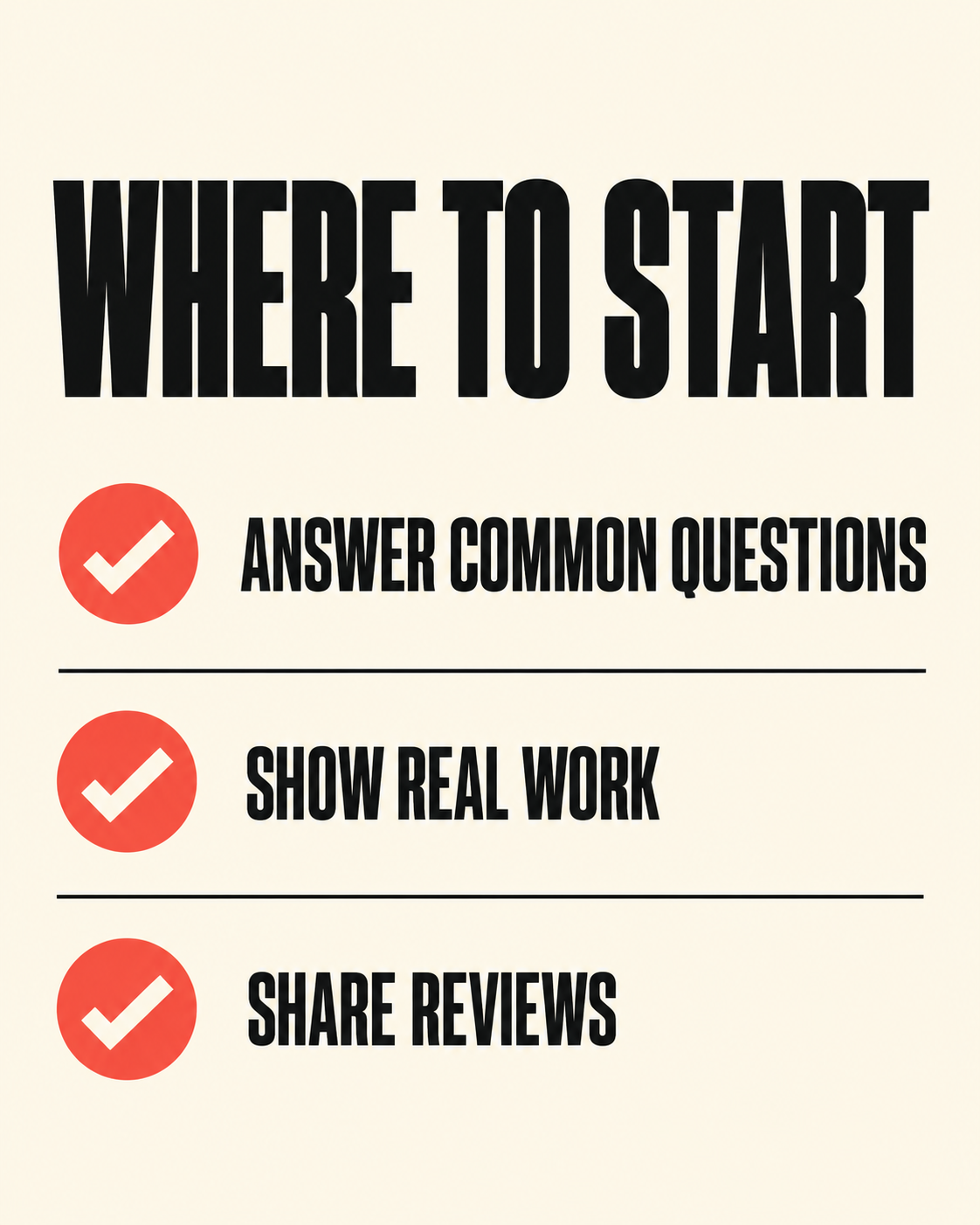
A workable starting plan has three parts, in this order.
Answers to the questions you already get asked. Every business answers the same five or six questions over and over, on the phone, by email, or in person. Write those down as plainly as you would explain them to a customer standing in front of you, and you already have your first few pieces of content. This is almost always the highest value content a small business can produce, because it is already proven to matter.
A small, honest window into the work. Photos or a short description of a finished job, a project in progress, or a typical day gives people outside your existing customer base a sense of who they are dealing with. This does not need to be polished. A clear phone photo with an honest caption usually performs better than an overproduced one, because it reads as real.
A place your reviews and recommendations can live. Word of mouth already happens for most small businesses. Content marketing's job here is simply to make it visible: sharing a genuine review with the customer's permission, pointing people to your Google Business Profile, or mentioning a long standing customer relationship in passing.
Notice what is missing from this list: trend chasing, a content calendar covering five platforms, and daily posting. Those things are not wrong for every business, but they are rarely the right starting point for an owner operated Winnipeg business trying to find an hour or two a week for this.
How often should you actually publish?
The honest answer is less often than most advice implies, and consistency matters more than frequency. A realistic starting cadence for a small business with no dedicated marketing person is one or two pieces of content a week, on one or two platforms, not five. That might be one social media post and one small addition to your website every other week.
Posting daily sounds impressive, but a daily schedule that collapses after three weeks teaches your audience, and search engines, that you are inconsistent, which is worse than posting less often on a schedule you can actually keep. If you are not sure what cadence you can sustain, pick the lower number. It is much easier to add more once a schedule is working than to recover from an abandoned one.
A simple way to set a realistic cadence: block a fixed hour or two in your week, every week, specifically for this, the same way you would block time for invoicing. If you cannot find that time most weeks, your cadence is too ambitious, not your discipline too weak.
Should you do this yourself, or bring in help?
Doing it yourself tends to make sense when you are the person who best understands your customers' questions, when you have a consistent hour or two a week you can actually protect, and when your business is still working out who its ideal customer is, since that is easier to learn by writing the content yourself than by briefing someone else to guess at it.
Bringing in help tends to make more sense once you know your content is worth doing but cannot find the time no matter how small you make the plan, once you want content produced at a quality or frequency beyond what a quiet hour a week can realistically deliver, or once you want someone tracking what is working well enough to adjust the plan instead of guessing.
A middle option worth knowing about: some businesses handle the writing themselves but get help with scheduling, basic design templates, or occasional photography, rather than handing the whole thing over. If the idea of hiring a full agency feels like overkill, ask whether a smaller, specific piece of help is available before assuming it is all or nothing.

How do you know if it is working?
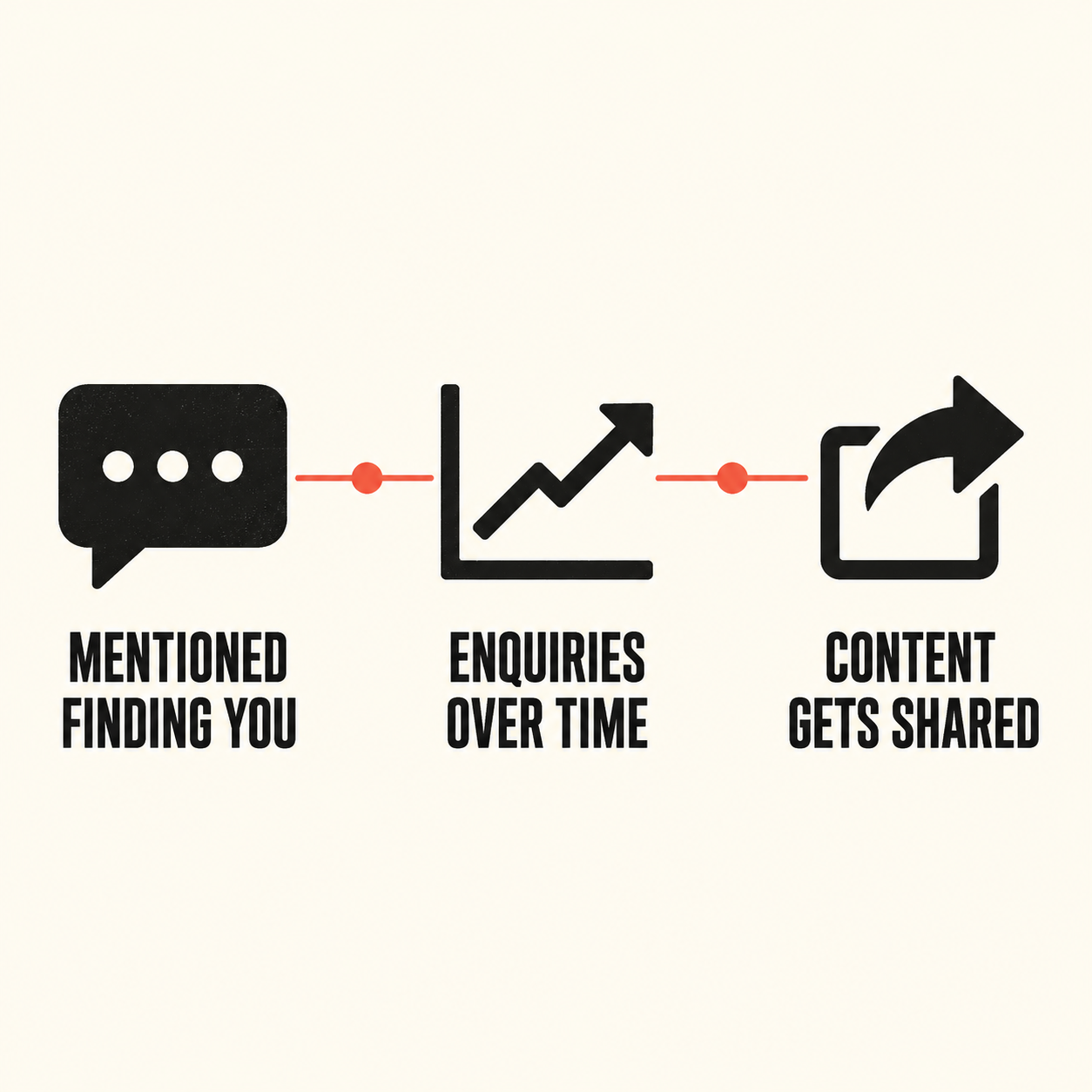
Be honest about what you can actually measure as a small business, which is usually less than marketing dashboards suggest. Three signals are realistic to track without special tools: whether new contacts mention finding you through something you posted, whether your Google Business Profile views or website enquiries move over a few months rather than a few weeks, and whether the same few pieces of content keep getting shared, saved, or asked about.
What is not realistic to promise yourself: a guaranteed increase in sales tied directly to a single post, a specific ranking position on Google, or that any particular AI tool such as ChatGPT, a Google AI overview, or Perplexity will recommend or cite your business because of your content. Nobody, including an agency, can promise that outcome, and treating any claim to the contrary as a red flag will save you money.
Give a new content habit three to six months before judging it. Content marketing is closer to building a reputation than running an ad campaign, and reputations take longer to move than a single month of posting.
What this looks like for different Winnipeg businesses
These are examples only, meant to show how the plan above adapts to different businesses, not a record of any specific Winnipeg client or a promise of what any particular plan would produce.
Example: a residential contractor or tradesperson. The highest value content is honest, dated photos of finished jobs with a short plain description of the work and the general area served, plus straightforward answers to the questions customers ask most, such as how an estimate works, what a typical timeline looks like, and what is included in a quote. A cadence of one post every week or two, tied to finished jobs rather than a fixed schedule, is usually realistic.
Example: a small retail shop. Content here tends to work best as a mix of new arrivals or seasonal changes, a behind the scenes look at the shop itself, and reposting genuine customer photos with permission. Consistency around seasonal moments, such as spring, back to school, and the holidays, tends to matter more than a strict weekly schedule.
Example: a professional services firm, such as a bookkeeping or consulting practice. Trust matters more than volume here. A small number of clear, plainly written answers to the questions prospective clients actually ask before hiring, published on the website itself rather than only on social media, tends to outperform frequent but shallow social posts for this kind of business.
What a steady content habit can add
- +Fewer repeated phone calls
Answers to common questions posted where people can find them means fewer calls spent explaining the basics.
- +A reason for people to come back to your page
Even occasional, honest content gives past customers and followers a reason to check in and remember you.
- +A stronger, more current Google Business Profile
Regularly posted photos and updates help keep your profile looking active, which matters to people comparing options.
- +A head start on being found by AI tools
Clear, accurate content about what you do and where you operate gives AI tools such as ChatGPT or a Google AI overview something real to read, though no content plan can guarantee they will recommend you.
- +A record you can point to
A small library of finished work and honest answers becomes something you can send a hesitant prospect instead of writing a fresh explanation every time.
- +A habit that is easier to grow later
A small, sustained cadence is a much better foundation to expand from than an ambitious plan that stalled after a month.
What does content marketing cost, and what should you ask about price?
Cost depends on how much of this you do yourself versus hand off, how often you publish, and whether you need photography, video or paid promotion alongside the organic content. Because that range is so wide between a business doing its own writing and a business that wants a fully managed content calendar, we do not publish a single figure here, and a quote that does not ask about your current content, your cadence goals and what you can realistically do yourself is hard to trust.
What is worth asking directly: what exactly is included in a proposed package, such as writing, design, scheduling, photography and reporting, how the cadence was decided and whether it matches what your business can sustain even after the engagement ends, how results will actually be measured and reported, and what happens to the content and any accounts if you stop working together.
A sensible next step is a short, low pressure conversation about what your Winnipeg business actually needs. Message us on WhatsApp at +1 306-518-7811 or call +1 833-998-1234. You can also book a free 15-minute discovery call.
How Underdog approaches content for Winnipeg businesses
Underdog Creative Solutions is a Saskatoon based agency working with small and growing businesses across Canada and the United States, including small businesses in Winnipeg. We build a content plan around what your business can actually sustain, starting from the questions your customers already ask, rather than handing every client the same template calendar regardless of size or team.
For many Winnipeg businesses, content connects naturally to the rest of what we do. A website that Google and AI tools can read properly gives your content somewhere solid to point back to, an AI receptionist makes sure the enquiries that content generates actually get answered, and simple business automation can help keep track of who found you and how.
You do not need all of that to start. Most businesses begin with content alone, since it is usually the lowest cost and lowest risk piece to try first, and we would rather help you find a sustainable starting cadence than sell a bundle you are not ready for.
Frequently asked questions
Talk to Underdog about your Winnipeg business
Have questions about your website, content, AI receptionist or business automation? Message us on WhatsApp at +1 306-518-7811 or call +1 833-998-1234. You can also email support@underdogcreativesolutions.com.
Follow Underdog Creative Solutions on Facebook, Instagram, LinkedIn, and YouTube for practical AI and marketing ideas for Canadian small businesses.