// SMALL BUSINESS
Phone Systems for a Small Business: Where an AI Receptionist Fits In
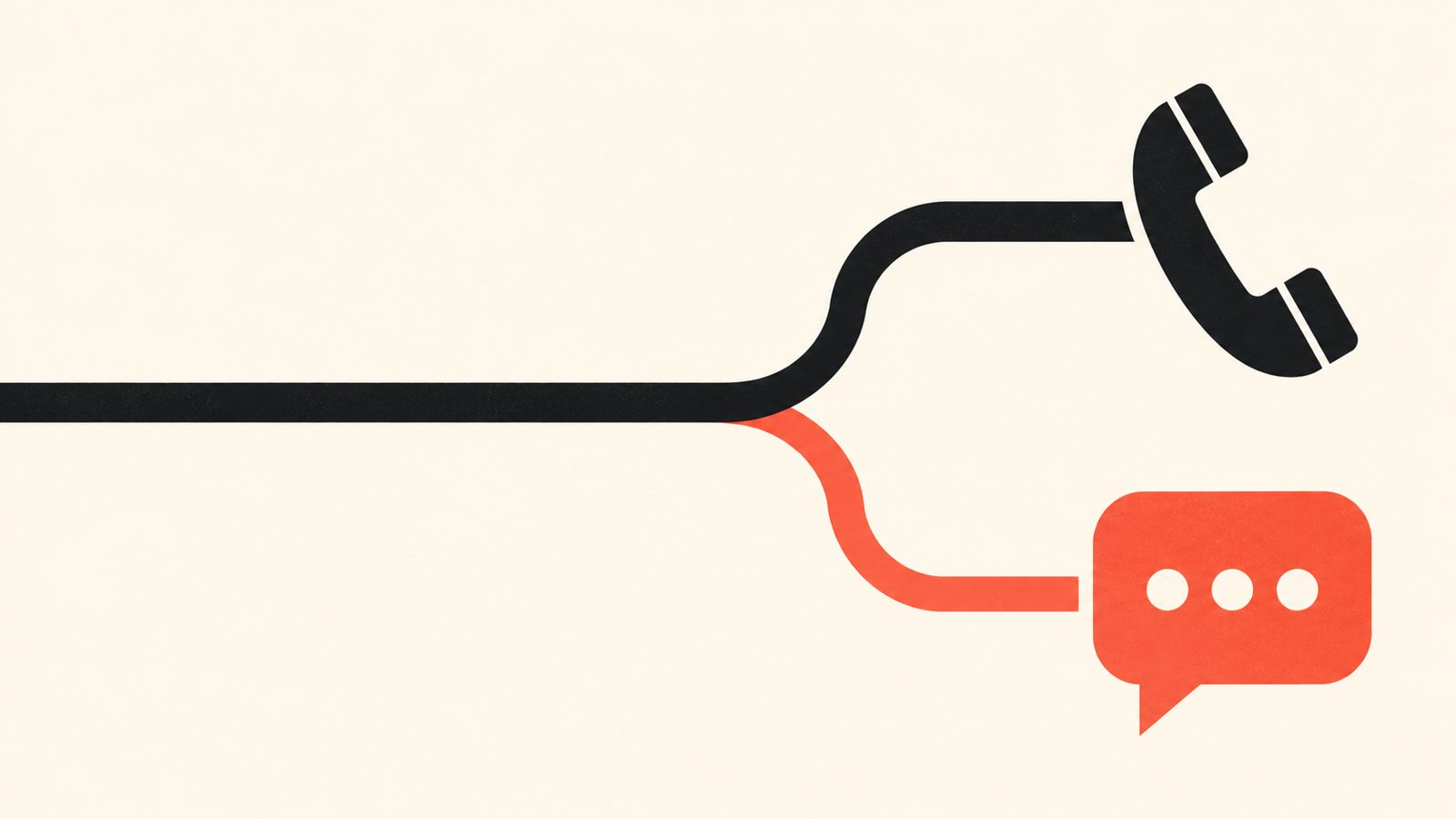
A small business phone system and an [AI receptionist](/ai-receptionist) are two different things that solve two different problems. The phone system is the line itself, whether that is a landline, a mobile number, or a VoIP service, and its only job is to get a call to you. An AI receptionist decides what happens on that line when nobody is free to pick up. Most small businesses eventually need some version of both, not one instead of the other. The confusion is understandable. Search for a small business phone system and you land on pages comparing VoIP providers by price and features. Search for an AI receptionist and you land on pages comparing AI answering services by minutes included and monthly cost. Almost nothing puts the two decisions side by side, which leaves an owner guessing whether they need to replace their phone system, add an AI receptionist, or both. This guide separates the two decisions so each one can be made on its own terms.
Why This Decision Feels More Confusing Than It Should Be
Most owners do not start out asking "do I need a phone system or an AI receptionist." They start out noticing a symptom: a customer mentioned they called twice and gave up, a voicemail sat unheard for two days, or a slow season suddenly had more calls than anyone could answer. From there, the search for a fix tends to land on whichever vendor's marketing page the owner happens to click first, and that vendor naturally frames the whole problem as something only their product can solve.
A VoIP provider's website will suggest the fix is a better phone system. An AI answering company's website will suggest the fix is an AI receptionist. Neither is lying, exactly, but neither is positioned to tell an owner when their product is not actually the right first move. That leaves two common and expensive mistakes: paying to overhaul a phone system that was never the problem, or layering an AI receptionist onto a phone system that cannot support it properly (no call forwarding, no reliable line, no way to route an unanswered call anywhere).
The two questions are truly separate, and answering them in the wrong order wastes money either way. A business with a perfectly good VoIP setup does not need to switch providers to fix missed calls. A business with an unreliable, decade old phone system is not going to solve its problems by bolting an AI receptionist onto a line that drops calls to begin with.

What a Phone System Actually Does, and What an AI Receptionist Actually Does
A business phone system is infrastructure. It is the technology that carries a call from a customer's phone to yours; a traditional landline, a mobile number, or VoIP (voice carried over the internet instead of a traditional phone line). Its job is limited and mechanical: route the call, ring the right line or extension, record a voicemail if nobody picks up, and in many cases connect to a basic auto attendant (the "press 1 for sales, press 2 for support" menu). A phone system does not decide anything. It moves sound from one place to another and follows a fixed set of rules when nobody answers.
An AI receptionist is a different layer entirely. It is software that picks up when a human cannot, and instead of a recorded menu or a voicemail prompt, it holds something closer to an actual conversation. It can answer common questions about hours, services, or availability, collect the details of what a caller needs, book or reschedule an appointment directly into a calendar, and text a confirmation afterward. When something falls outside what it is set up to handle, it hands the situation to a person instead of guessing.
In practice, an AI receptionist usually sits on top of whatever phone system already exists rather than replacing it. Calls are typically forwarded to it when a line goes unanswered, after hours, or during overflow, using the business's existing number. The phone system is still doing its job of carrying the call. The AI receptionist is the one deciding what to do when nobody else can.
How the Two Work Together in Practice
There are a few common ways this plays out for a small business, depending on what is actually missing.
The lightest setup keeps the existing phone system exactly as it is and adds an AI receptionist only for the calls that would otherwise go to voicemail: after hours, during lunch, or when every line is already busy. Nothing about the phone system changes. The AI receptionist is simply the backstop for the gaps that already exist.
A more involved setup routes every call through the AI receptionist first, with a person stepping in only for anything flagged as unusual or urgent. This suits a business where almost every call needs the same handful of questions answered (availability, pricing structure, booking) and a person's time is better spent on the calls that actually need judgement.
The third situation is the one that looks like a phone system problem because it is one. An old landline with no voicemail to email, no way to forward calls to a mobile number, and no record of who called and when is a genuine limitation, separate from whether an AI receptionist exists on top of it. In that case, moving to a modern VoIP service and adding an AI receptionist often happen at the same time, not because the two are the same decision, but because the old system was holding back more than just call answering.
It is worth separating an AI receptionist from a basic automated phone system as well, since the two get confused constantly. An automated phone system, in the sense of an auto attendant or interactive voice response menu, follows a fixed script: press this number for that department. It cannot answer a question it was not explicitly programmed with, and it cannot hold anything resembling a conversation. An AI receptionist works differently: a caller can ask something in their own words, and the system responds based on what was actually said, not on which button was pressed.
A Simple Framework for Deciding What You Actually Need
Before spending money on either a new phone system or an AI receptionist, it helps to answer a short set of questions plainly and in good faith, ideally with a week or two of real call data rather than a guess.
How many calls go unanswered in a typical week, and when do they happen. Evenings and lunch hours point to a timing problem. Missed calls spread evenly across the day point to a staffing or volume problem instead.
Who answers the phone right now, and what happens when that person is on a job, in a meeting, or off for the day. If the honest answer is "nobody, most of the time," the gap is bigger than a single feature can close.
Does the current phone system support call forwarding, multiple lines, and voicemail to email or text. If the answer is no, that is very likely the actual limiting factor, independent of anything AI related.
Is the real issue call timing (calls arriving when nobody is free) or call volume (more calls than any reasonable setup could field). An AI receptionist solves the first. Neither an AI receptionist nor a new phone system solves the second; that calls for more people, not more software.
Is the business planning to add staff, locations, or extensions in the next year. A phone system that cannot grow with the business is worth fixing regardless of what else changes.
As a general rule: if the phone system itself works fine and the problem is purely about who answers and when, an AI receptionist layered on top is usually the simplest and least disruptive fix. If the phone system itself is outdated or unreliable, that upgrade is overdue on its own, whether or not an AI receptionist comes with it. If the problem is simply too many calls for too few people, no tool replaces hiring.
This works best for a business that already loses calls to voicemail, or where a caller hangs up unsure whether anyone will call them back. It is not the right starting point for a business that already answers nearly every call and takes a truly small volume of calls overall; in that case, the cost of either tool is unlikely to be worth it yet.
Three Examples of How This Plays Out
These are illustrative examples, not case studies of actual Underdog clients, and they are meant to show how the same framework applies differently depending on the starting point.
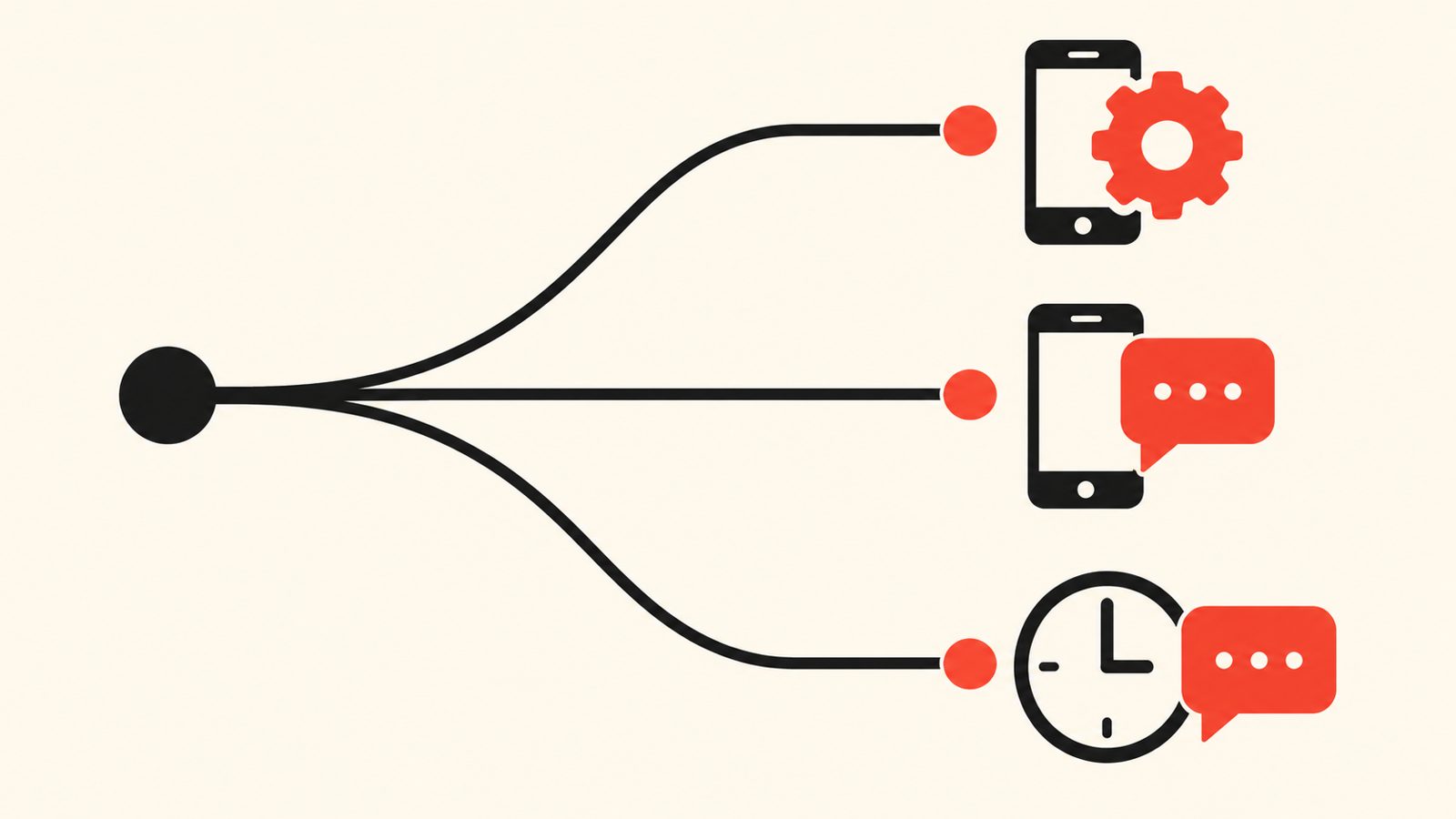
Example one: a small trades business running an aging landline with no mobile forwarding, no voicemail to email, and calls that simply ring out after hours with no record left behind. Here, the phone system itself is the limiting factor, so moving to a modern VoIP setup and adding an AI receptionist at the same time makes sense: the old system could not have supported an AI receptionist properly even if one were added on top of it.
Example two: a small professional services business that already runs a modern VoIP phone system with a mobile app and call forwarding, but calls after five o'clock and during lunch go to voicemail, and most callers do not leave a message. Here, nothing about the phone system needs to change. Adding an AI receptionist for after hours and overflow coverage, using the number that already exists, solves the actual gap without touching anything else.
Example three: a seasonal or appointment heavy business that gets the bulk of its calls during one or two predictable peak windows each day and is otherwise quiet. Rather than running an AI receptionist around the clock, it makes more sense here to route only the peak window overflow to it, while a person continues to answer everything else. This is a case where matching the tool to the actual pattern of calls, rather than defaulting to "always on," keeps the setup proportionate to the problem.
What a Properly Matched Setup Actually Gets You
- +A missed call becomes a visible, logged event instead of silence
Once the right piece is in place, a call that would have gone to voicemail either gets answered or at minimum leaves a clear record of who called and why, instead of disappearing.
- +One phone number that behaves consistently
Whether a person or the AI receptionist answers, a caller reaches a response rather than a dead end, and the experience feels like one business, not two separate systems bolted together.
- +Fewer calls turning into lost bookings
Calls that would have gone unanswered can turn into a booked appointment or a logged enquiry handled the moment it comes in, rather than waiting for a callback that may or may not happen.
- +Information that carries forward cleanly
Details collected during a call can be handed to whoever follows up next, instead of relying on a scribbled note or a half remembered voicemail.
- +Room to grow without rebuilding everything
A phone system and AI receptionist set up properly from the start can usually add a line, an extension, or a new routing rule without starting over.
- +A record you can actually check
Most modern phone systems and AI receptionists both keep a log of calls and outcomes, which means an owner can look back and see what is actually happening on the line instead of relying on impressions.
What Actually Influences the Cost
Neither a phone system nor an AI receptionist has one standard price, and any page that quotes a single number without asking about your business is skipping the questions that actually determine cost. A handful of factors drive the real figure in both cases.
For a phone system: the number of lines or users, whether the service is VoIP or a traditional line, which features are included (call recording, auto attendant, integrations with other software), and whether the provider bills monthly or requires a longer contract. Installation and equipment (if any physical handsets are needed) can also add to the total.
For an AI receptionist: call or minute volume, how many workflows it needs to handle (simple message taking versus full appointment booking and rescheduling), how much setup and customization the business needs, and whether ongoing support and adjustments are included or billed separately.
The only way to get an accurate number for your own business is to have a real conversation about your call volume, your current setup, and what you actually need handled. If you want a plain, pressure free look at whether your situation calls for a new phone system, an AI receptionist, or both, message us on WhatsApp at +1 306-518-7811 or call +1 833-998-1234. You can also book a free 15 minute discovery call at underdogcreativesolutions.com/contact, and current AI receptionist pricing is posted at underdogcreativesolutions.com/ai-receptionist-pricing.
How Underdog Creative Solutions Approaches This
Underdog Creative Solutions does not start by assuming a business needs a full package of a new website, an AI receptionist, and automation all at once. The first step is working out where the actual gap is, because the fix for a missed call problem is not always the same as the fix for a slow website or a lead that never gets followed up on.
If the pain point is specifically calls not being answered, that is a plain AI receptionist conversation, and it may not need anything else to change. If the deeper issue is that a website is not built in a way that search engines and AI tools like ChatGPT can read and understand, that points toward website solutions instead, since a receptionist cannot answer a call that never comes in because nobody could find the business online. If the problem is that calls and enquiries are being handled fine in the moment but nothing happens afterward (no follow up, no record kept, nothing synced to a calendar or a simple CRM), that points toward AI business automation rather than the phone system at all.
A real person reviews what is actually happening before anything changes, and nothing is switched on or billed without that conversation happening first. The goal is matching the right piece to the actual gap, not selling the biggest package available.