// SMALL BUSINESS
Why a Missed Call Is a Customer Who Already Chose You (and How a Virtual Receptionist Changes That)
When someone picks up the phone and calls your business, they have usually already made a decision. They searched, they compared, and they chose to dial your number instead of a competitor's. A missed call is not just a missed conversation. It is a customer who already chose you, left free to choose someone else instead, often within minutes. A virtual receptionist, whether a trained person, an AI system, or a blend of both, exists to make sure that moment is not wasted. This guide explains what a virtual receptionist actually does, how the human, AI, and hybrid versions differ, what a virtual receptionist costs to run without quoting figures nobody can verify for your specific business, and where a person still needs to be involved no matter how capable the technology becomes.
Why does a missed call cost more than it seems?
Most small business owners treat a missed call as a minor annoyance rather than a finished sale that walked away. That instinct underestimates what actually happened on the other end of the line.
By the time someone calls a business rather than just browsing its website, they have typically already cleared the harder decisions. They know roughly what they need, they believe this business can provide it, and they are ready to book, order, or ask a specific question that will move them toward paying. A phone call is usually the last step before a transaction, not the first step of casual research.
That is what makes a missed call different from a missed email or an unanswered contact form. Email and web forms feel asynchronous to most people; a reply tomorrow is still a reasonable reply. A phone call that goes to voicemail feels like a decision was ignored. Many callers do not leave a message at all. They simply call the next business on their shortlist, and that business answers.
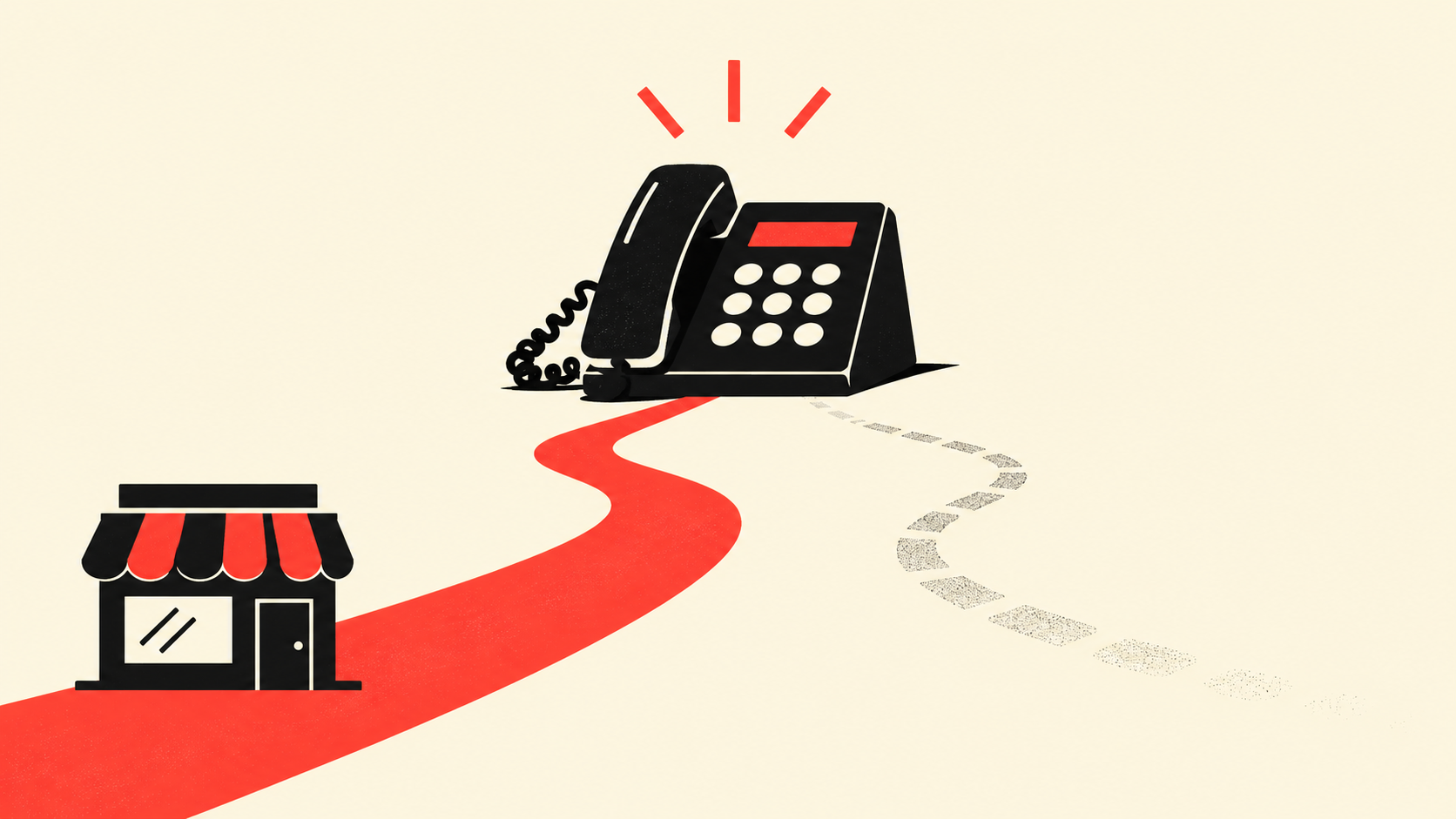
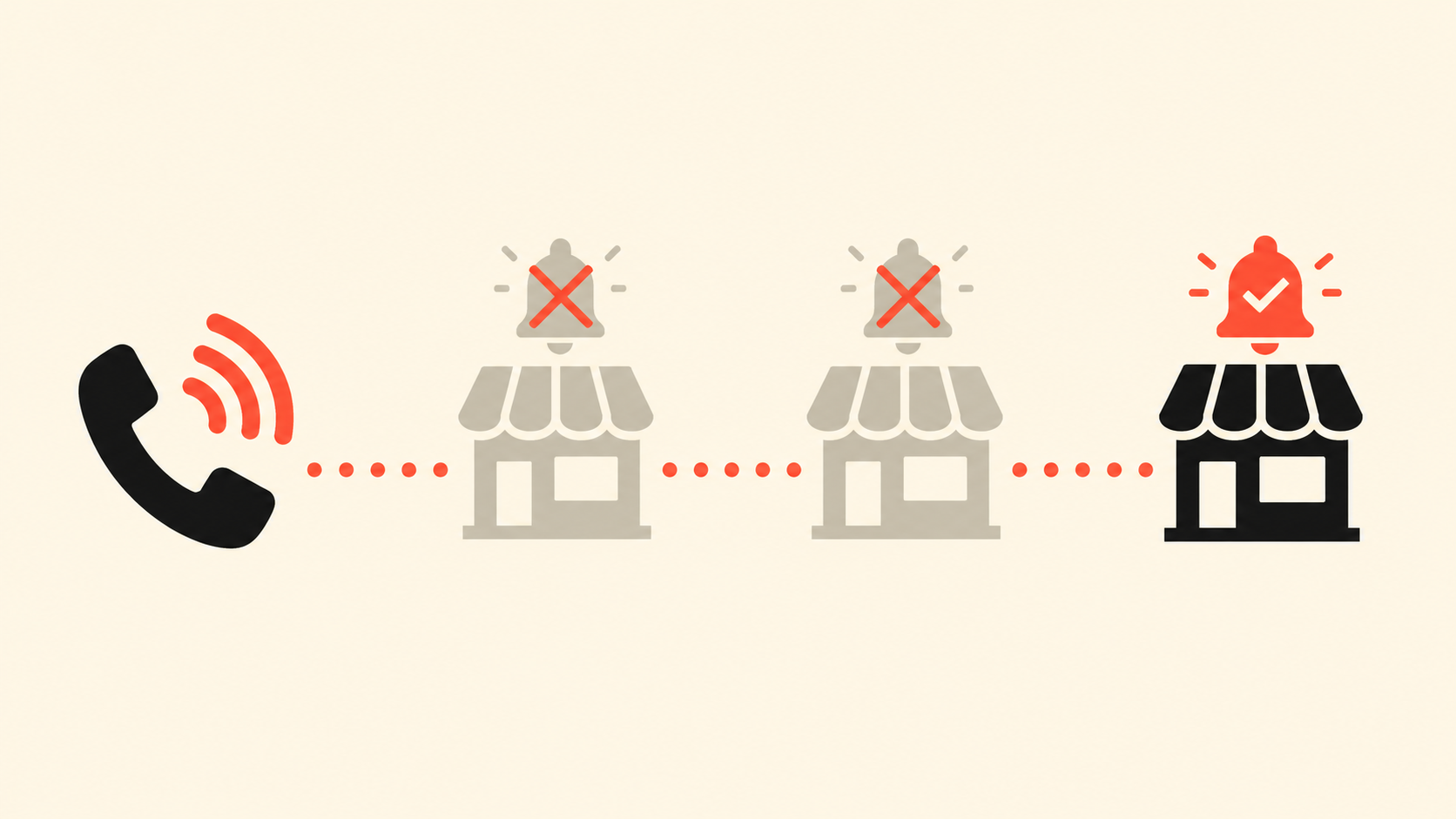
Example: a homeowner calls three fencing companies after getting quotes from two online directories. The first goes to voicemail. The second rings out with no voicemail set up at all. The third answers, asks two or three questions, and books a time for someone to come take a look. The third company did not win the job by being cheaper or better reviewed. It won by being the one that picked up.
This article focuses on that decision stage moment: what happens right when the phone rings, and what a virtual receptionist does with it. If you want the fuller picture of what a pattern of missed calls can mean for a business over a month or a year, our guide on the cost of missed calls works through that math in more detail.
What is a virtual receptionist?
A virtual receptionist answers calls and messages on behalf of a business without sitting at a desk in that business's building. The call is answered somewhere else, by a remote person, by an AI system, or by a combination of the two, and the caller is handled as though they had reached someone at the front desk.
A virtual receptionist is not the same as voicemail. Voicemail stores a message for later; a virtual receptionist responds in the moment, asks follow up questions, and can often resolve the call or book an appointment on the spot. It is also not the same as a basic automated phone menu that routes calls with pre-recorded prompts and no real understanding of what the caller is asking for. A virtual receptionist, human or AI, is meant to actually handle the conversation rather than just direct traffic.
For a small business, a virtual receptionist for small business use typically covers a narrower, more practical set of tasks than what a large call centre handles: answering routine questions about hours, services, and pricing structure, booking or rescheduling appointments, capturing the caller's details and reason for calling, and recognizing when something needs to go straight to a person. For a broader look at how this fits together end to end, our complete guide to AI receptionists in Canada covers the wider picture; this article stays focused on the specific missed call problem.
How does a virtual receptionist actually handle a call?
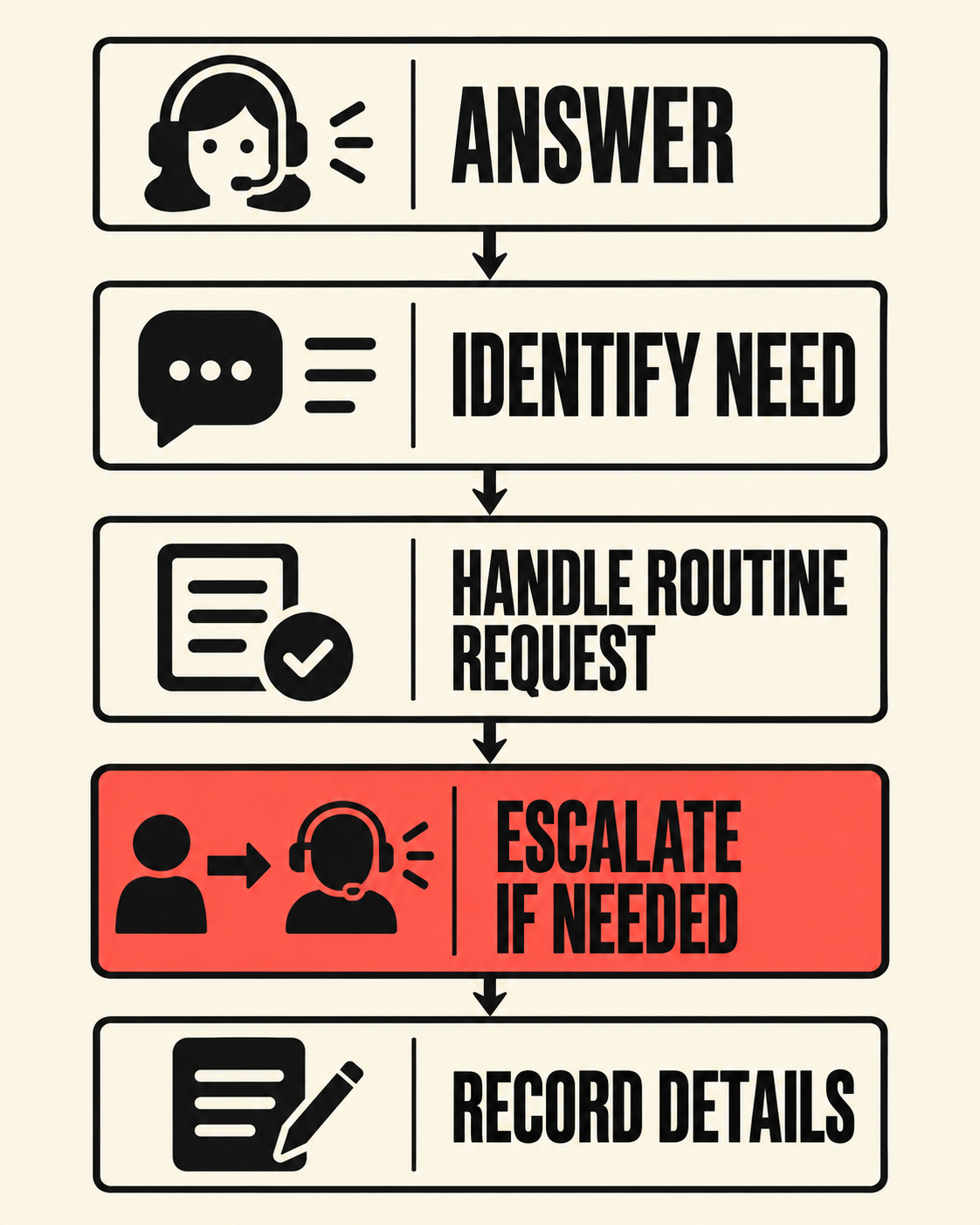
Most virtual receptionist setups, human or AI, follow a similar shape once you strip away the marketing language.
The call is answered quickly, usually within a few rings, with a greeting that identifies the business by name so the caller knows they reached the right place.
The caller's reason for calling gets identified early. A good virtual receptionist asks a short, specific question rather than a vague one, since callers rarely explain themselves clearly on the first sentence of an unplanned call.
Routine requests get handled directly. Booking an appointment, answering a question the business has already approved standard wording for, or confirming a service area are the kinds of tasks that get resolved without anyone else being involved.
Anything outside that routine gets escalated. A complicated question, a complaint, an unusual request, or anything that sounds urgent gets passed to a real person, either immediately by transferring the call or shortly afterward through a flagged message.
The details get recorded somewhere useful. A name, a number, and the reason for the call should land in one place the business can actually check, rather than scattered across sticky notes or a phone's missed call list.
Is a virtual receptionist a person, AI, or both?
This is where the term gets confusing, because virtual receptionist is used to describe three different setups.
A traditional virtual receptionist is a real person, usually working remotely for an answering service company, who answers on behalf of several businesses using a script and account notes specific to each one. The caller is speaking with an actual human, just not one sitting in the business's own office.
An AI receptionist is software, sometimes called an ai receptionist, that answers the call using voice recognition and a defined set of responses built around that business's services, hours, and common questions. No person is on the line unless the AI hands off to one.
A hybrid setup uses AI to answer first and handle the routine traffic, with a real person available for anything the AI is not confident about or anything flagged as sensitive. This is increasingly common because it combines the AI version's constant availability with a person's judgment for anything that needs it.
None of the three is universally better. A human virtual receptionist tends to handle unusual or emotionally charged calls more naturally. An AI receptionist tends to be more consistent, available at any hour without staffing gaps, and less expensive to scale as call volume grows. For a closer comparison of how the AI and traditional versions actually differ in practice, see our AI vs virtual receptionist comparison.
What happens to a call a virtual receptionist cannot handle?
Any well built virtual receptionist setup, AI or human, should have a clear answer to this question, and if a provider cannot explain theirs plainly, that is worth treating as a warning sign rather than a detail to sort out later.
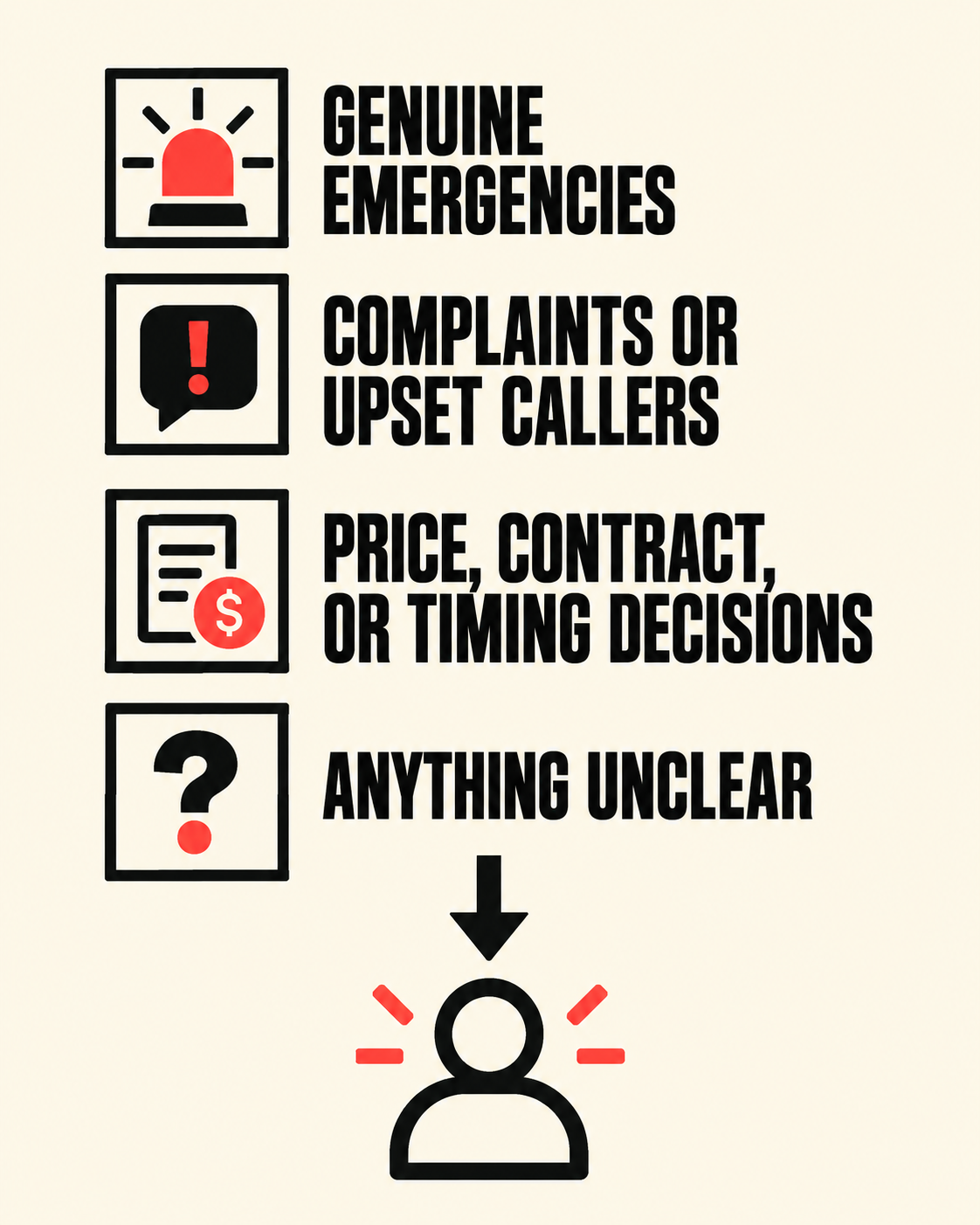
Genuine emergencies should always reach a person immediately, through an escalation path the business sets up in advance rather than something improvised during the call.
Complaints and upset callers should go to a person quickly rather than being handled entirely by a script, since frustration usually needs to be heard by someone who can actually make a decision.
Anything involving a price negotiation, a contract term, or a promise about timing should stay with a person, since this is exactly the kind of judgment call that should not be automated away even when the technology is capable of attempting it.
Requests the system plainly does not understand should be acknowledged as such, with the caller's details taken and a person following up, rather than the system guessing and giving a confident but wrong answer.
The practical test is simple: if getting something wrong on this call would upset a customer, cost real money, or create a legal or privacy problem, that moment belongs in front of a person, even if an AI system drafted the first response or gathered the initial details.
What a good virtual receptionist setup can add
- +Calls answered outside business hours
Evenings, weekends, and lunch breaks are exactly when a solo operator or small team is least able to answer, and exactly when a competitor's missed call becomes their gain.
- +Consistent information every time
A caller asking about service area or basic pricing structure gets the same accurate answer whether it is the owner's first call of the day or the fortieth.
- +Leads captured before they look elsewhere
A caller who reaches a person, human or AI, and gets their details taken is far less likely to simply call the next business on their list.
- +One place to see every call
Names, numbers, and reasons for calling land somewhere the business can actually review, instead of being scattered across a missed call log nobody checks.
- +Less pressure on whoever currently juggles the phone
In many small businesses, the person answering calls is also doing the actual work, and every interruption competes with a job that needs their hands.
How much does a virtual receptionist cost?
Cost depends on a handful of concrete factors rather than one number that applies to every business: how many calls come in each month, what hours need covering, whether the setup is a human service, an AI receptionist, or a hybrid of both, how much the system needs to integrate with existing booking or customer software, and whether ongoing support and adjustment after launch is included.
Because those factors vary this much between businesses, publishing a single virtual receptionist cost figure here would not be an estimate, it would be a guess. What is worth asking directly, whether you are talking to Underdog or anyone else quoting virtual receptionist pricing, is what exactly is included at the quoted price, what would trigger an additional charge, how calls outside the plan's usual volume are handled, and what happens if you want changes or support after the service is already live. For a closer look at typical cost ranges and what drives them across Canada, see our guide on AI receptionist cost in Canada.
The clearest way to get a useful answer is to describe your actual call volume and the kind of calls you get, then ask a provider to price that specific situation, rather than asking for a generic number that cannot reflect what your business actually needs.
A sensible next step is a short, low pressure conversation about your business. Message us on WhatsApp at +1 306-518-7811 or call +1 833-998-1234. You can also book a free 15-minute discovery call.
How Underdog approaches AI receptionist service
Underdog Creative Solutions is a Saskatoon based agency working with small and growing businesses across Canada and the United States. Our AI receptionist service is built around one goal: making sure a caller who already decided to choose you actually reaches someone, human or AI, who can move that decision forward instead of losing it to voicemail.
For many businesses, the AI receptionist works best alongside the rest of what we do, not as an isolated piece of software. A modern website that Google and AI tools such as ChatGPT can actually read brings enquiries in to begin with. Ongoing content keeps bringing people back and answering questions before they ever pick up the phone. AI business automation connects what the receptionist captures to the tools you already use, so a caller's details do not have to be retyped somewhere else by hand.
You do not need all of that to start. Most businesses begin with the one problem causing the most missed opportunity, which for many is simply the phone going unanswered at the wrong moment, and we would rather help fix that specific problem than sell a bundle a business does not need yet.
Frequently asked questions
Talk to Underdog about answering every call
Have questions about a virtual receptionist, an AI receptionist, your website, or content for your business? Message us on WhatsApp at +1 306-518-7811 or call +1 833-998-1234. You can also email support@underdogcreativesolutions.com.
Follow Underdog Creative Solutions on Facebook, Instagram, LinkedIn, and YouTube for practical AI and marketing ideas for Canadian small businesses.