// HOME SERVICES
AI Lead Follow Up for Edmonton Home Service Businesses: Why Speed Matters
If your business depends on new enquiries turning into booked jobs, the single biggest lever you control is how fast you respond. AI lead follow up for home service businesses means a system that sends an immediate acknowledgement to every new enquiry within minutes, while a real person still handles the quote, the scheduling judgment calls, and anything unusual. The business that replies first usually wins the job, not necessarily the business that does the best work. Picture a Friday evening in [Edmonton](/locations/alberta/edmonton). A homeowner's furnace has stopped blowing warm air, the temperature outside is dropping fast, and they are searching for help on their phone while standing in a cold kitchen. They do not call one company and wait politely. They call three or four, in quick succession, and they book with whichever one answers first or texts back fastest. The company that eventually calls back an hour later, even with a fair price and a great reputation, has already lost that job. This guide is about that specific moment, the minutes right after a new enquiry comes in, not about [AI business automation](/services) in general. It explains what AI lead follow up actually automates, how it is different from simply buying a new CRM, what should always stay a manual step, and how to tell if your business is ready to try it.
Why a slow reply costs Edmonton home service businesses real jobs
Most home service businesses lose enquiries quietly. Nobody gets an alert that says a lead went cold. The homeowner simply stops responding, or books with someone else, and the business never finds out why. The job just never shows up on the schedule.
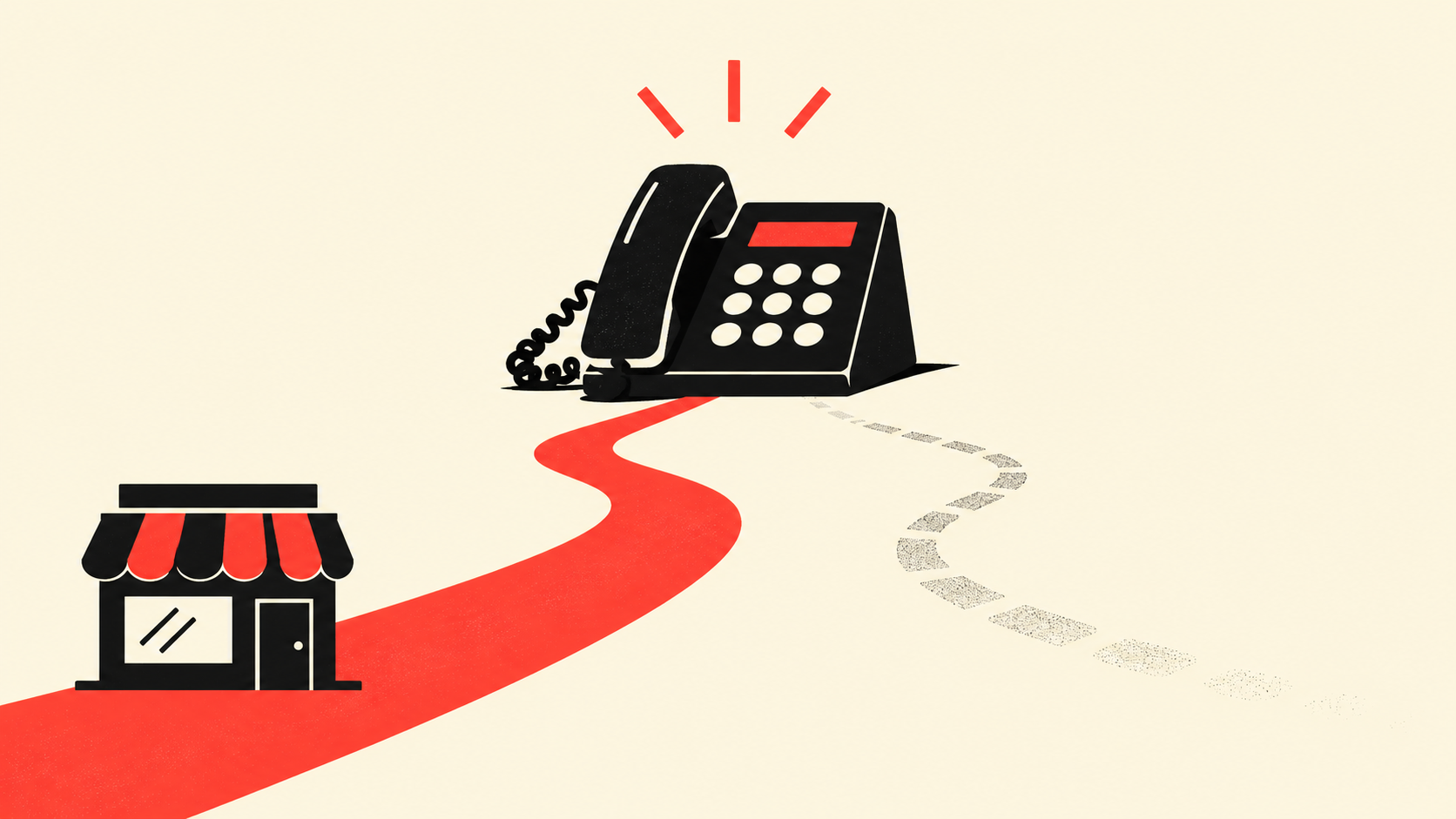
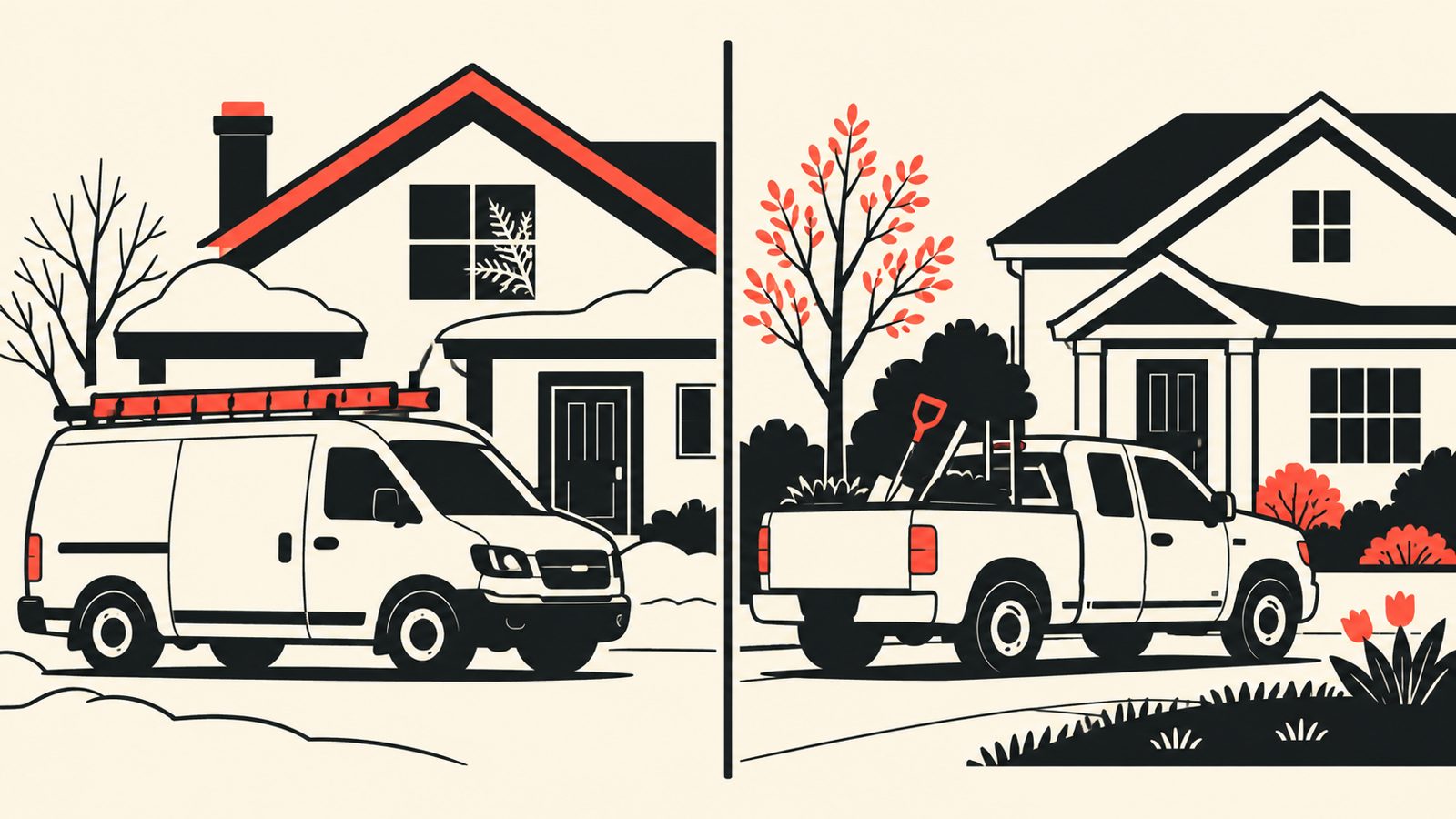
The pattern is familiar to anyone who has run a trades or home service business in Edmonton. A cold snap in January brings a wave of furnace and plumbing calls all at once. A spring thaw brings a wave of eavestrough, landscaping, and roofing enquiries in the same short window. During that wave, the phone rings while someone is already on another call, already on a job site with their hands full, or already on hold with a supplier. Every enquiry that goes to voicemail or sits unread in a text thread for a few hours is a real chance the homeowner has already booked with a competitor by the time anyone replies.
This is not a story about a badly run business. It is simply what happens when the number of incoming enquiries during a busy stretch outpaces the number of people available to answer them in the moment. A homeowner comparing quotes on a cold evening is not being disloyal by calling the next name on the list. They are doing what anyone would do when nobody has answered yet.
What AI lead follow up actually automates
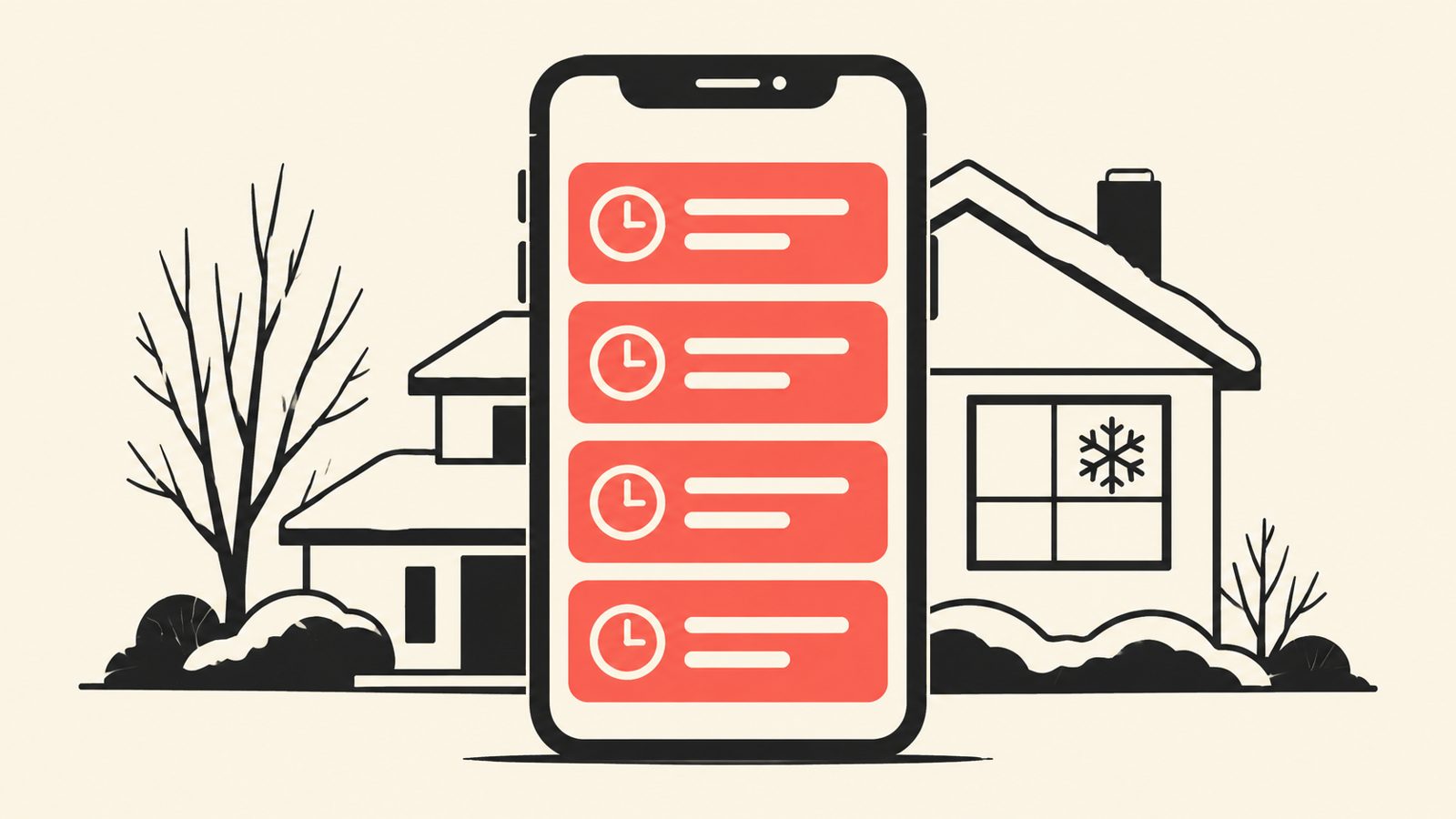
AI lead follow up is a narrower, more specific idea than AI business automation generally. It focuses on one moment: the gap between when a new enquiry arrives and when a person can give it real attention.
In practice, it means a new enquiry, whether it comes in as a missed call, a text, a website form, or a message on Facebook or Instagram, triggers an immediate acknowledgement. That first reply confirms the enquiry was received, asks the one or two questions that matter most for that type of job (what is the problem, is it urgent, what is the address), and lets the homeowner know roughly when a person will follow up with a quote or a booking time.
It is worth being plain about what this is not. It is not a chatbot negotiating a price. It is not a system that books a job without anyone checking it first. It is a fast, consistent first response that buys the business time to do the actual work of quoting and scheduling properly, instead of losing the lead before anyone even sees it.
How automated lead follow up is actually built
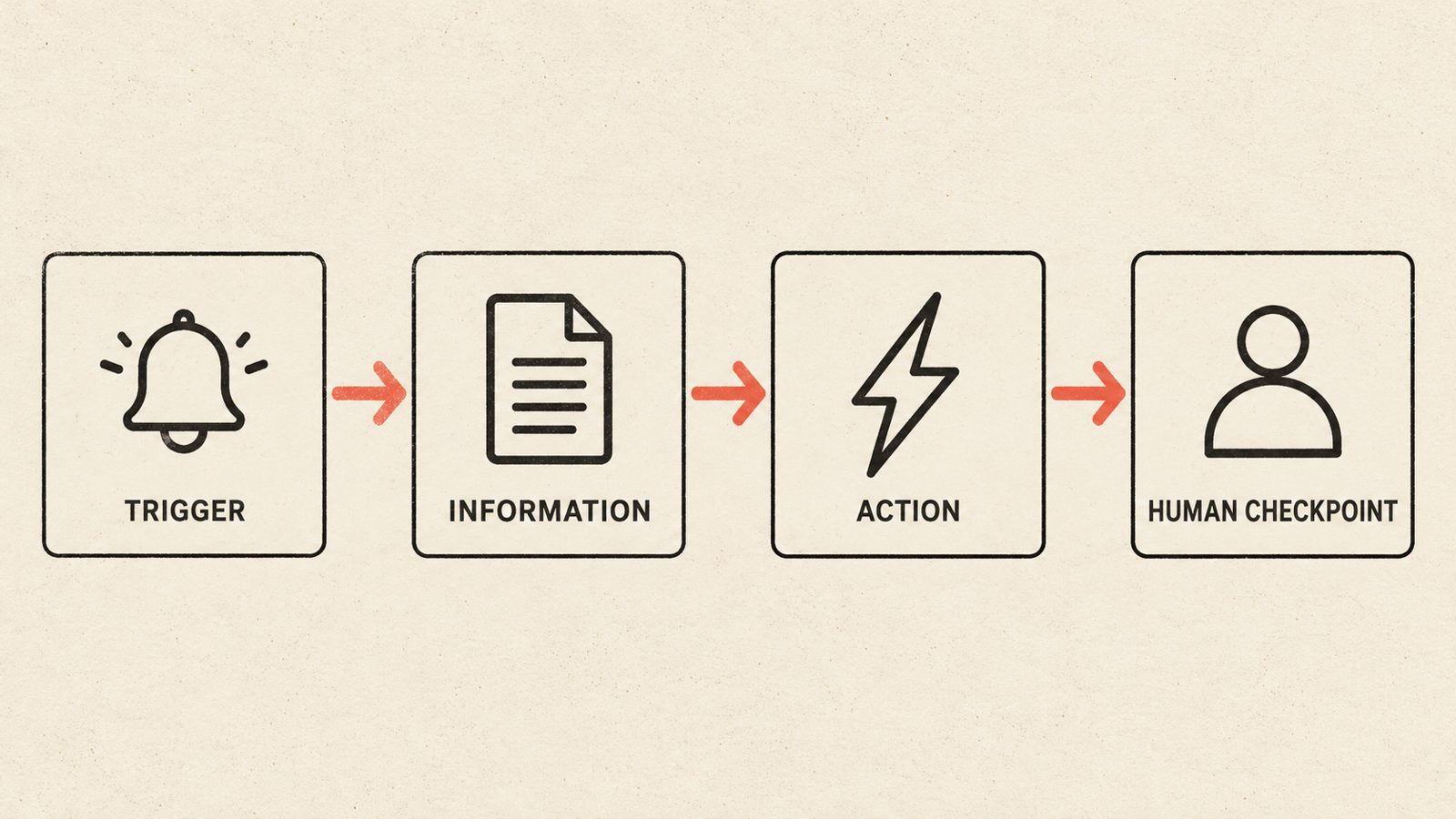
Like most useful automation, lead follow up comes down to four parts working together.
Trigger: a new enquiry arrives through any channel the business uses, a missed call, a text message, a website contact form, or a message on social media.
Information: the system pulls together what it can from the enquiry itself (the phone number, any details typed into a form) and, where relevant, asks a short follow up question to capture what is missing, such as the type of job or whether it is an emergency.
Action: an acknowledgement goes out within minutes, confirming the enquiry was received and setting a realistic expectation for when a person will follow up. The details are logged somewhere the team can see them, instead of living only in a phone's call history or a single person's head.
Human checkpoint: a person reviews the details, prepares the quote, checks the schedule, and makes the actual call about price, timing, and whether the job is a good fit. The automation never quotes a price or confirms a booking on its own.
The part that actually matters for winning the job is how early that first step happens. A reply sent within minutes, even a short one that just says the business received the message and will follow up shortly, keeps the homeowner from moving on to the next search result.
What should always stay a manual step
Good lead follow up automation is deliberately narrow. A few things should never be left to an automated system alone.
Pricing and quotes. The acknowledgement can confirm an enquiry was received. It should not quote a price, since every real job has details that change the number.
Scheduling judgment calls. A person should decide how to prioritize a true emergency against a routine booking, especially during a busy week when every slot matters.
Anything unusual. A complicated request, an unhappy caller, or a situation that does not match the usual pattern should be handed to a person quickly rather than forced through a standard script.
Final confirmation of any booking. A person should check the details before a job is locked into the calendar, even if the automation drafted the initial time slot.
The goal is not to remove people from the conversation. It is to make sure the homeowner hears something back in the first few minutes, so the business still has a chance to have that actual conversation at all.
Examples: what this could look like for Edmonton home service businesses
These are examples to show how the pieces fit together, not a guarantee of what any specific setup will achieve. What is realistic always depends on the tools a business already uses and how it actually operates.
A furnace and HVAC company during a cold snap. A homeowner's heat goes out on a Friday night and they text three local companies. An automated acknowledgement goes out within minutes to confirm the message was received, asks whether there is any risk of frozen pipes, and lets them know a technician will call back shortly to confirm timing. The business still decides which emergency gets handled first and what the actual callout involves.
A landscaping or lawn care business in spring. Quote requests arrive in a short window once the snow clears, often faster than anyone can call each one back individually. An automated reply confirms receipt, asks for the property size and the type of work wanted, and tells the homeowner when to expect a quote. A person still visits or reviews photos and sets the price.
A general contractor handling renovation enquiries. Many enquiries describe a project only loosely, a kitchen remodel, a basement finish, with no budget or timeline attached. An automated first reply asks the two or three questions that actually matter for scoping the job, so the contractor is not starting a phone call from zero when they do call back.
A moving company during the busy summer season. Enquiries often arrive late in the evening after someone has finished apartment hunting for the day. An automated acknowledgement confirms the move date and the rough size of the move, so the office can prepare a realistic quote before calling back the next morning instead of starting the conversation cold.
Is this different from getting a new CRM?
Not quite, but the two solve different problems. A customer relationship management system, or CRM, is where customer details and the history of a job or conversation live. Lead follow up automation is the piece that reacts the moment a new enquiry arrives, often before anyone has even opened the CRM that day.
Some businesses already use a CRM that can trigger an automatic first reply on its own. Others run lead follow up through a separate tool that then logs the result into whatever system the business already uses, a CRM, a spreadsheet, or a booking calendar. Either approach can work. What matters more than the specific software is that the first reply goes out fast and the details end up somewhere the team can actually see them, rather than being retyped from memory later. For a broader look at choosing and using a CRM well, see our guide to CRM for small business.
Who this suits, who should wait, and what to do first
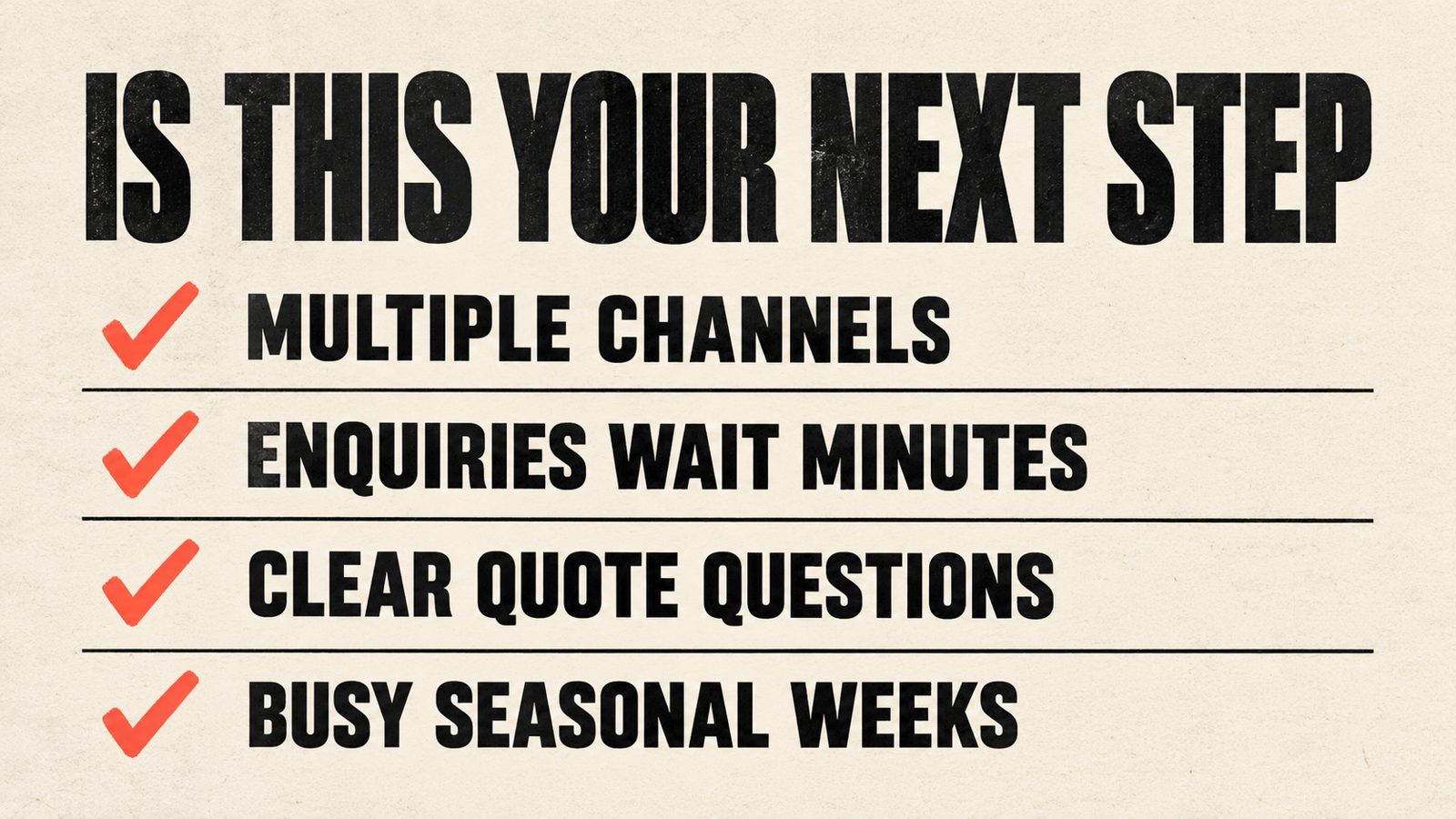
This tends to suit Edmonton home service businesses that get a steady run of new enquiries through more than one channel, phone calls, texts, a website form, and social media messages, and where those enquiries are not always answered within a few minutes because the team is on job sites or with customers. It also suits businesses with a clear sense of what information they actually need from a new enquiry before they can quote it.
It is probably not the right time if enquiries are still rare enough that a person can reply to every one within minutes already, since there is little speed to gain. It is also too early if the business has not settled on what questions actually matter for a quote, since automating an unclear process just moves the confusion faster.
What to do first: for one week, write down every new enquiry as it comes in and the time between when it arrived and when someone actually replied. If several enquiries sit for more than fifteen or twenty minutes, especially during a busy stretch, that gap is the specific problem lead follow up automation is built to close. If most replies already happen within a few minutes, the time may be better spent elsewhere.
What well planned lead follow up can help with
- +Faster first replies
New enquiries get an acknowledgement within minutes instead of whenever someone next checks their phone.
- +Fewer enquiries that quietly go cold
Every new enquiry is logged somewhere visible, instead of living only in one phone's call history.
- +A clearer picture before the callback
The person who calls back has the key details already, instead of starting the conversation from zero.
- +Less pressure during weather driven rushes
A cold snap or a spring thaw does not have to mean choosing which enquiries simply get missed.
- +Consistency across the team
Every new enquiry gets the same prompt first response, whoever happens to be busy at the time.
What it costs and how to take the next step
The cost of setting up lead follow up automation depends on how many channels it needs to watch, how it connects to the tools the business already uses, how much the questions and responses need to be tailored to the type of work, and whether ongoing support and adjustments are wanted afterwards. Because those factors vary so much between businesses, there is no single figure that applies to everyone, and it is worth being cautious of anyone who quotes a firm price before understanding how enquiries currently come in.
A sensible next step is a short, low pressure conversation about how your enquiries actually arrive today and where the delays tend to happen. Message us on WhatsApp at +1 306-518-7811 or call +1 833-998-1234. You can also book a free 15-minute discovery call at underdogcreativesolutions.com/contact.
How Underdog approaches lead follow up for Edmonton home service businesses
Underdog Creative Solutions is a Saskatoon based agency working with small and growing businesses across Canada and the United States, including Edmonton. Our AI business automation work includes custom AI agents, CRM automation, and AI integrations, which in practice means connecting the tools a business already uses so a new enquiry gets a fast, useful first reply without being handed off blindly.
We also build websites, create content, and set up AI receptionists, and for many Edmonton home service businesses these connect naturally with lead follow up. An AI receptionist can be the channel that answers a missed call in the first place. Lead follow up automation is what happens next, carrying those details into a booking, a quote request, or a reminder instead of leaving them to be retyped later. A clear, easy to find website gives homeowners a reliable way to reach you in the first place, including AI tools such as ChatGPT that increasingly read the web when someone asks for a recommendation.
You do not need every piece at once. We would rather help you work out which single step closes your biggest gap right now than sell a bundle you do not need yet.
Frequently asked questions
Talk to Underdog about your leads
Have questions about your website, content, AI receptionist, or business automation? Message us on WhatsApp at +1 306-518-7811 or call +1 833-998-1234. You can also email support@underdogcreativesolutions.com.
Follow Underdog Creative Solutions on Facebook, Instagram, LinkedIn, and YouTube for practical AI and marketing ideas for Canadian small businesses.