// SMALL BUSINESS
AI Business Automation for Regina Small Businesses: Where to Start
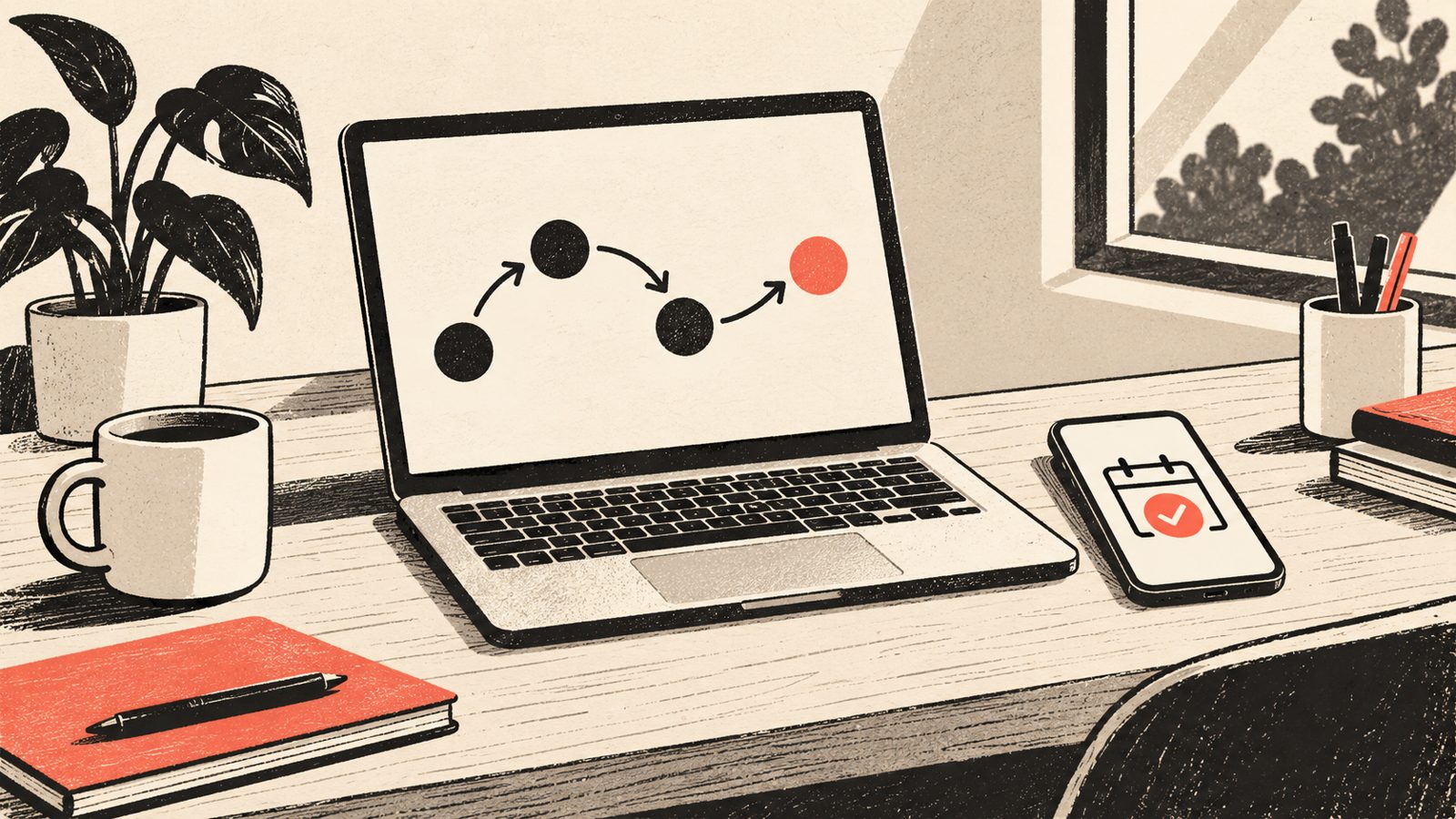
A phone rings while a Regina contractor is halfway up a ladder. A text about a cancelled appointment comes in while a bookkeeper is mid invoice run. A new enquiry lands in the inbox while the owner of a small marketing shop downtown is in a client meeting. None of this is unusual. It is simply what running a small business looks like when there is no dedicated admin person, and it is exactly the kind of repetitive, time sensitive work that AI business automation is actually good at. AI business automation in Regina does not mean replacing the owner's judgement or installing something complicated. In plain terms, it means connecting the tools a business already uses, such as a calendar, an invoicing app, a spreadsheet or a messaging inbox, so that routine information moves between them on its own, with a person stepping in only where a decision actually needs to be made. The honest starting point is one task, not an overhaul: pick the single most repeated piece of admin work, automate that first, and judge the result before going any further.
Why AI Business Automation Matters for Regina Small Businesses
Most small businesses in Regina are not short on hard work. They are short on hands. A trades company, a salon, a bookkeeping practice or a small retailer is usually run by an owner who is also the main technician, stylist, accountant or buyer, with one or two staff covering the rest. There is rarely a dedicated person whose only job is admin.
That means the same few tasks get repeated by hand, over and over: copying a customer's details from a phone call into a booking calendar, typing an invoice from a paper work order, following up with a lead who enquired three days ago and never heard back, or sending the same appointment reminder text every single day. None of this requires expertise. It just requires time, and time is the one thing a small team rarely has spare.
Economic profiles of the city note that government offices and Crown corporations such as SaskTel and SGI are among Regina's largest employers, with agriculture and energy still carrying real weight across the wider region. For a small business competing for staff and attention in that environment, the admin work that quietly eats an evening is not a minor inconvenience. It is the difference between following up on a lead while it is still warm and losing it to whichever competitor answered first.

What AI business automation actually is
AI business automation is the practice of connecting the software a business already uses, such as a booking calendar, an invoicing tool, a customer list or a messaging inbox, so that information moves between them automatically, with AI handling the parts that used to require someone to read, decide and retype.
It is not one piece of software. It is usually a set of small, specific workflows, each one built around a single repeated task. A new enquiry comes in, gets logged, gets a first reply, and gets added to a follow up list, all without anyone opening three different apps to make it happen. A completed job triggers an invoice draft. A booked appointment triggers a reminder text the day before.
The word AI in AI business automation usually means two things working together: automation rules that move information between tools on a trigger, and language based AI that can read a message, summarize it, draft a reply or sort it into the right category, the way a person would, but without waiting for someone to be free to do it.
It is also worth being clear about what it is not. It is not a way to stop talking to customers, make decisions no one reviews, or guarantee more leads or sales. Anything built responsibly keeps a person in the loop for judgement calls, exceptions, and anything a customer would expect a human to handle.
How an automated workflow is actually built
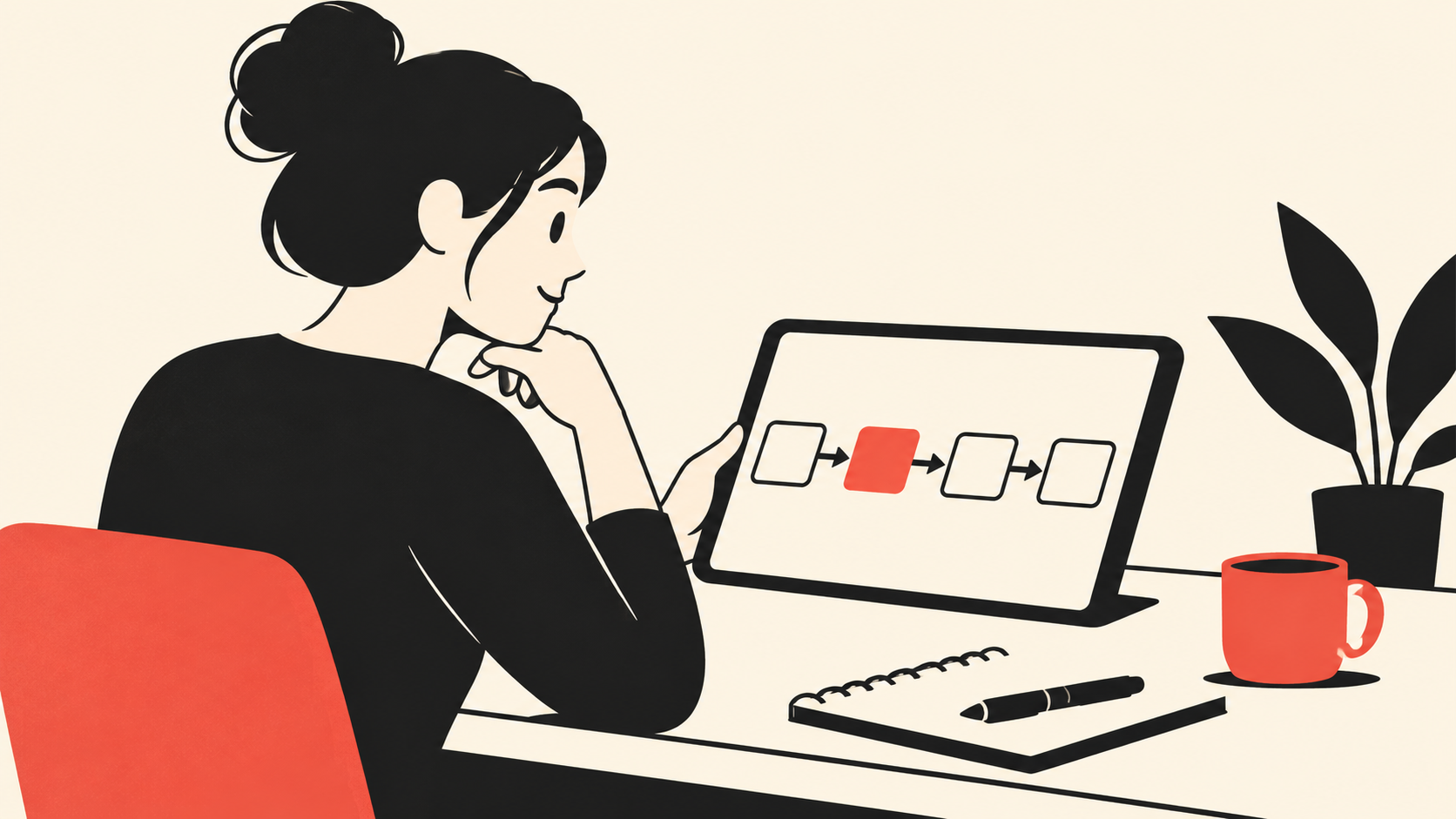
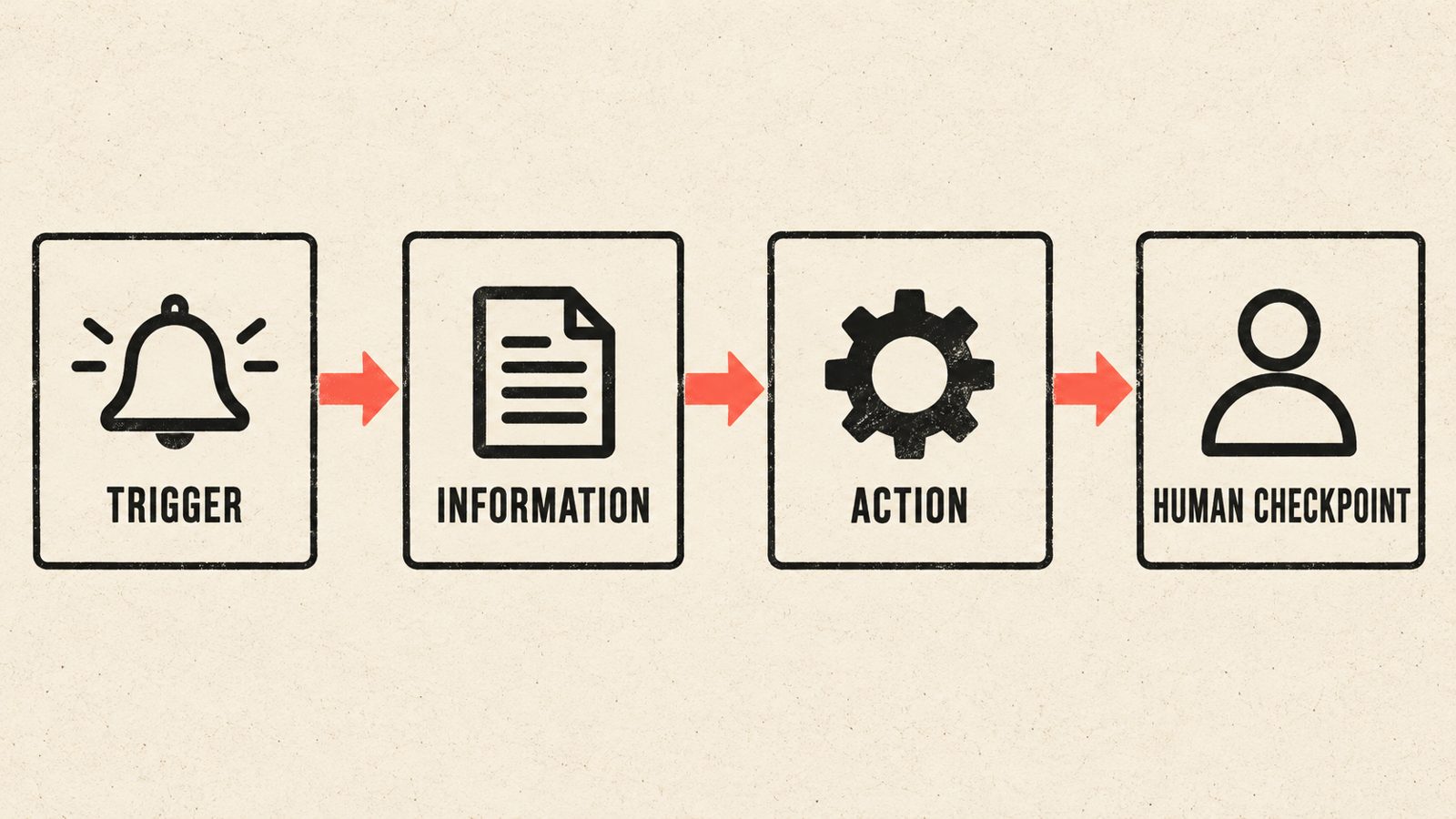
Every useful automation, however small, is built from the same four parts.
Trigger. Something happens that starts the workflow: a form is submitted, a call ends, an appointment is booked, an invoice becomes overdue.
Information. The workflow pulls in what it needs to act: the customer's name and number, the service requested, the appointment time, the amount owed.
Action. The workflow does something with that information: sends a text, drafts an email, creates a calendar event, updates a spreadsheet row, adds a task to a list.
Human checkpoint. Somewhere in the sequence, a person reviews, approves or steps in, especially for anything unusual, high value, or likely to upset a customer if it is handled wrong.
That fourth part is the one worth taking seriously. A well built automation does not quietly run in the background without anyone checking it. It is built so that routine cases move through on their own, and anything outside the routine gets flagged for a person, rather than being guessed at.
Where to actually start: pick one task, not a whole system
The biggest mistake a small business makes with automation is trying to fix everything at once. A more realistic starting point is to pick the single task that is repeated the most often and causes the most friction when it is missed, and automate only that.
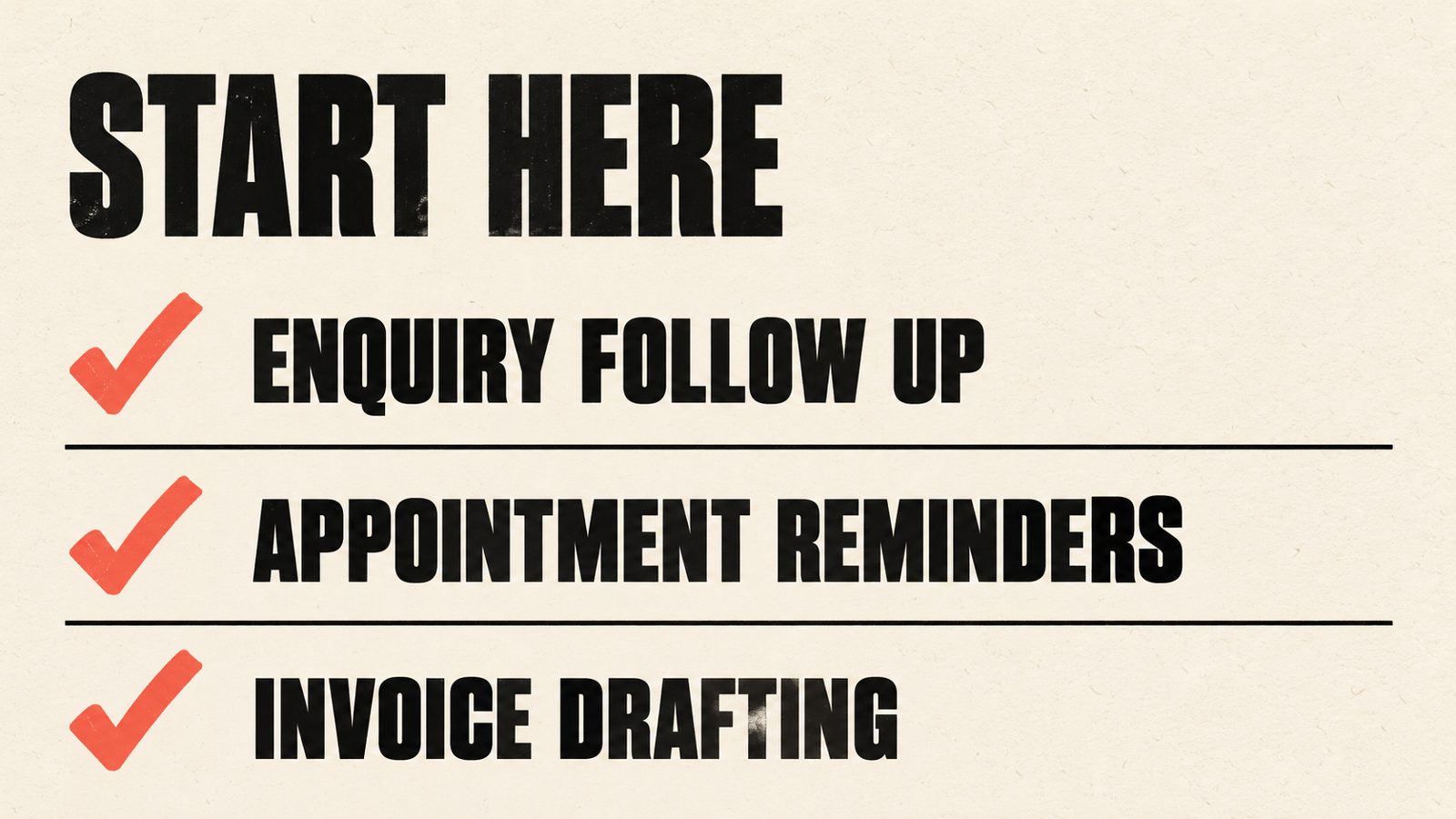
For most Regina small businesses, that first task is one of three things: following up with a new enquiry within minutes instead of hours, sending appointment reminders so fewer people forget to show up, or moving a completed job straight into an invoice draft instead of retyping it from notes.
Enquiry follow up is usually the strongest place to begin, because the cost of getting it wrong is the most visible: a lead who does not hear back quickly looks elsewhere, and there is rarely a way to know how many of those were lost. Starting with one workflow, watching it for a few weeks, and only then deciding whether to automate the next task keeps the whole project realistic and reviewable.
What this could look like for different Regina businesses
These are examples only, meant to show the shape of a workflow rather than a promise of results for any particular business.
Example: a residential trades company. A customer fills out a short online form describing a repair. The system sends a text confirming the enquiry was received, adds the job to a simple intake list with the details already filled in, and reminds the owner if no one has followed up within a set number of hours. The owner still calls back, quotes the job and decides whether to take it.
Example: a salon or personal care business. A client books online. The system sends a confirmation and a reminder the day before, and if the client cancels, it offers the open slot to the next person on a waiting list automatically, rather than leaving a gap no one notices until the appointment time arrives.
Example: a bookkeeping or small professional services practice. When a project is marked complete in a tracking sheet, a draft invoice is generated with the client's details and the agreed scope already filled in, ready for the owner to check the amount and send. Nothing goes out to a client without that review.
In each case, the automation handles the repetitive first step. A person still makes the judgement call.
Who this suits, and who should wait
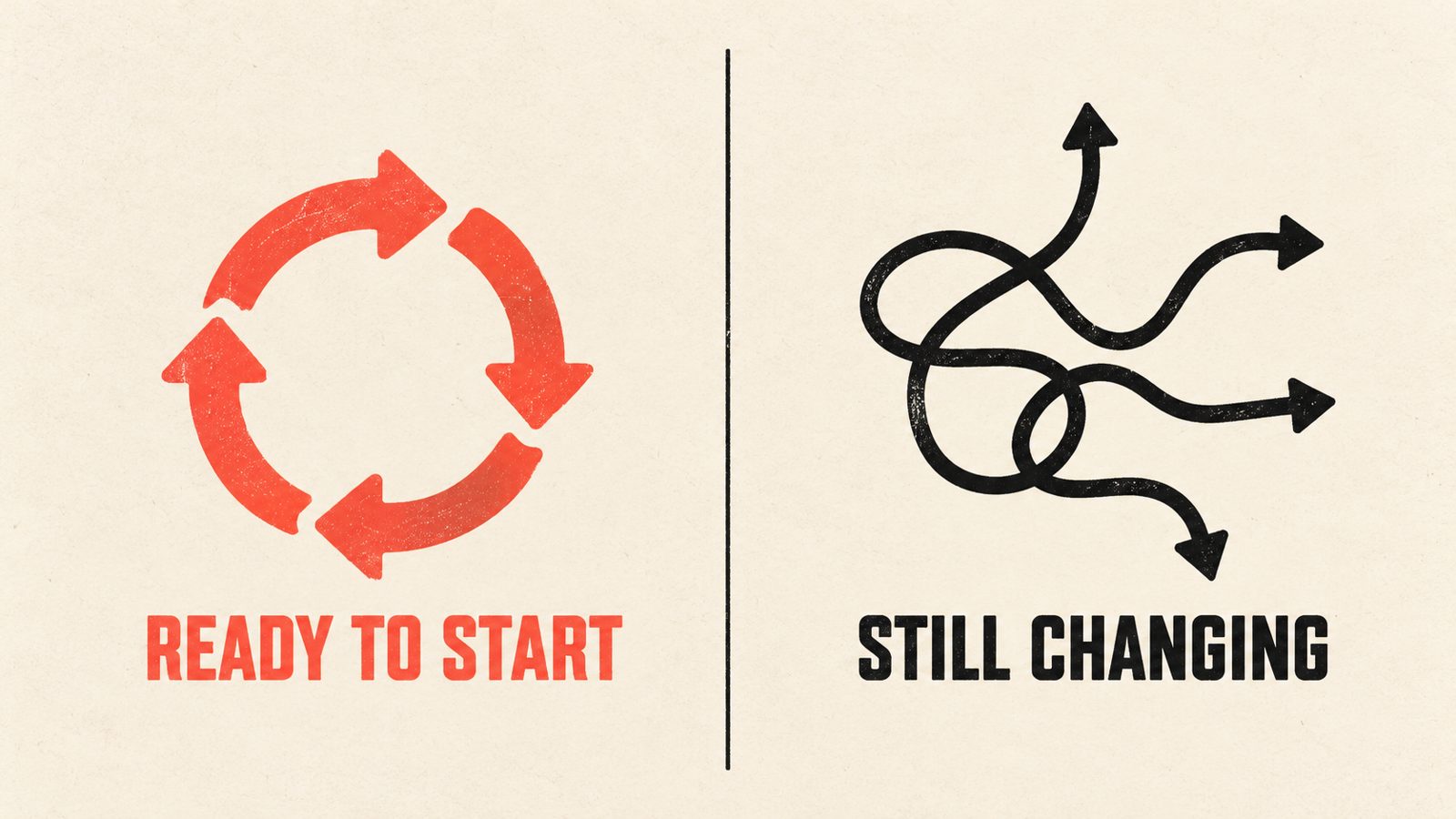
AI business automation tends to help most when a business already has a repeatable process that is simply being done by hand: the same intake questions every time, the same reminder every time, the same invoice format every time. If that describes part of the job, automating it usually pays for the time it takes to set up.
It makes less sense to start here if the business does not yet have a consistent process to automate. In that case, writing down how a task is actually done today, even informally, is a better first step than automating something that still changes every time. It also makes less sense to automate a task that depends heavily on reading a specific customer's tone or circumstances, since that kind of judgement is exactly what should stay with a person.
A business that is already stretched thin on technology, with no one comfortable checking that an automated workflow is doing what it is supposed to, should start smaller and slower than a business with someone willing to review the first few weeks of results closely.
What a well built automation actually changes
- +Faster first response
A new enquiry gets an acknowledgement in minutes instead of whenever someone next checks messages, so fewer leads cool off while waiting.
- +Fewer dropped follow ups
A lead who went quiet gets a scheduled nudge instead of relying on someone remembering to circle back.
- +Less retyping
Information entered once, such as a customer's details on a booking form, does not need to be typed again into an invoice or a spreadsheet.
- +More predictable admin time
Routine tasks move through on a schedule instead of competing for attention with whatever feels most urgent that day.
- +A clearer paper trail
Automated steps tend to log what happened and when, which makes it easier to check later whether something was actually done.
What AI business automation costs to set up
There is no single price for AI business automation, and any guide that quotes one specific figure for every business is guessing. Cost depends on how many workflows are being built, how many existing tools need to be connected, whether those tools have the integrations needed to talk to each other, and how much testing and adjustment happens before everything is left to run on its own.
A useful way to think about cost is as a handful of real questions to ask any provider, including Underdog: what exactly will be automated in the first phase, what tools does it need access to, what happens when something does not match the expected pattern, who checks the automation's work in the early weeks, and what ongoing cost, if any, applies once it is running. A proposal that cannot answer those plainly is worth treating carefully.
If you are weighing whether AI business automation makes sense for your Regina business, Underdog Creative Solutions can walk through one realistic starting workflow with you, with no assumption that it has to turn into anything bigger. Message us on WhatsApp at +1 306-518-7811 or call +1 833-998-1234, or book a free discovery call at underdogcreativesolutions.com/contact.
Where Underdog fits, and where it does not
Underdog Creative Solutions builds AI business automation, AI receptionist, website and content work for small businesses across Canada, including Regina. On the automation side, the approach is deliberately narrow at the start: identify the one workflow causing the most friction, build it, watch it run for a real stretch of time, and only then talk about what comes next.
That is a different starting point from an agency that proposes a full automation suite before understanding how the business actually operates day to day. It is also a different starting point from building something entirely alone with off the shelf tools, which can work well for a business with the time and technical comfort to maintain it, but often stalls once the person who built it gets busy with the rest of the business.
There is no promise here that automation will generate more leads, higher search rankings, or that any AI tool, including ChatGPT or Google's AI Overviews, will recommend or cite a particular business. What a well built automation can realistically do is make sure the repetitive parts of the job happen reliably, so the time an owner does have goes toward the calls and decisions that actually need them.
Frequently asked questions
Ready to look at one workflow?
If one task in your business keeps getting repeated by hand, that is usually the right place to start, not a full automation project. Message Underdog Creative Solutions on WhatsApp at +1 306-518-7811 or call +1 833-998-1234 to talk through what that first workflow could look like for your Regina business. You can also book a free 15 minute discovery call at underdogcreativesolutions.com/contact. We reply within four business hours.